
Cabbage looper identification & organic control
Trichoplusia ni
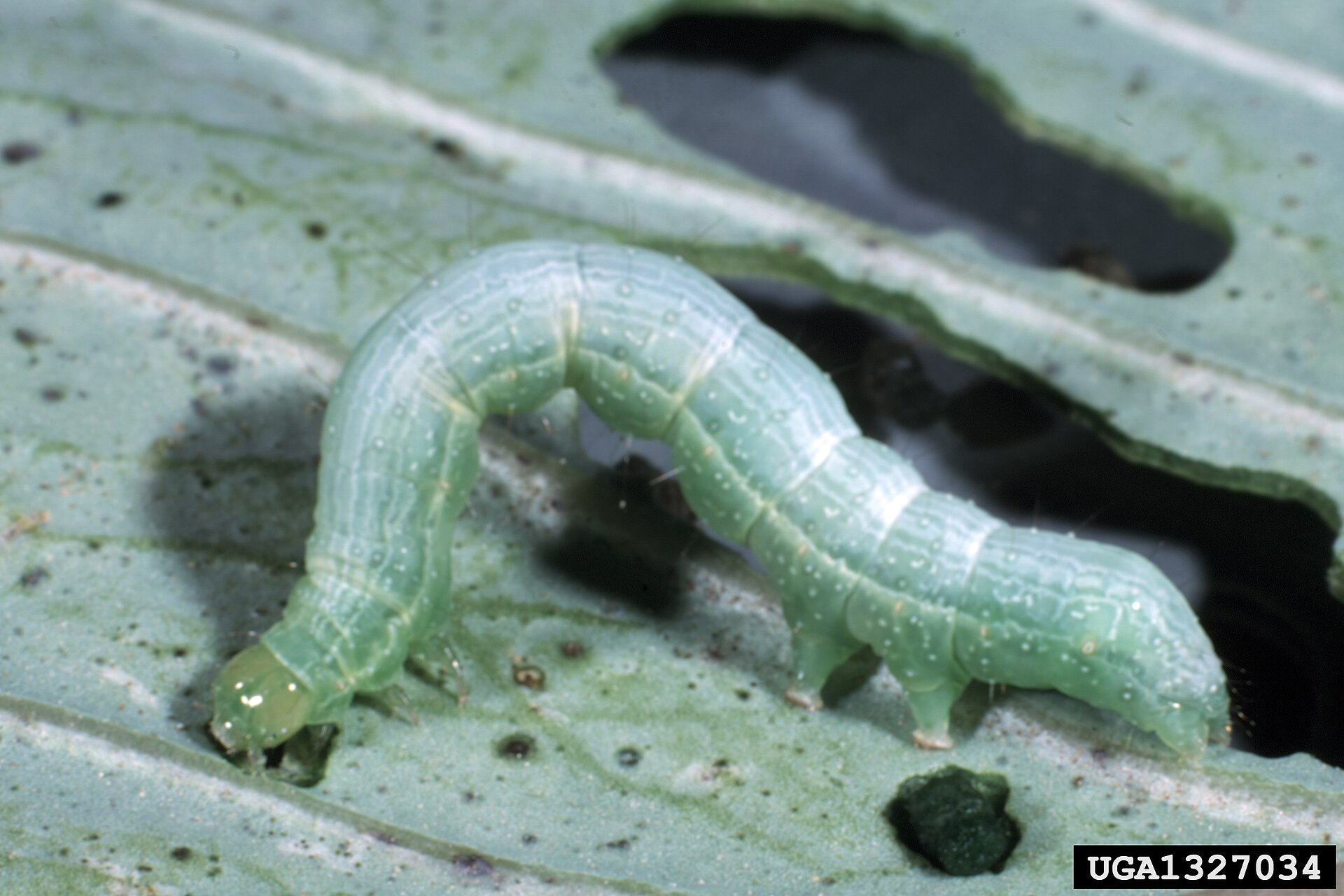
How to identify cabbage looper
A pale-green caterpillar that arches its back into a loop as it crawls, lacking the middle prolegs true caterpillars have. The adult is a mottled brown-gray moth active at night.
Crops attacked by cabbage looper
Cabbage, Broccoli, Kale, Collards, Lettuce, Cauliflower.
Chews large, ragged holes in leaves and can bore into heads; feeds alongside imported cabbageworms and is often mistaken for that species.
Life cycle
- Egg (Spring–fall) — Single ribbed white eggs on leaf undersides.
- Larva (2-4 weeks) — The looping caterpillar does nearly all the damage.
- Pupa (1-2 weeks) — Thin cocoon on the underside of a leaf.
- Adult moth (Multiple generations, spring–fall) — Nocturnal; lays the next round of eggs.
Natural, organic cabbage looper control
- 1. Handpick · low effort
Check leaf undersides for the looping caterpillar; drop in soapy water.
When: Weekly
- 2. Bt kurstaki spray · low effort
Caterpillar-specific, bee-safe; reapply after rain.
When: At first chew damage
- 3. Row cover · medium effort
Keeps egg-laying moths off transplants entirely.
When: From transplant
Fastest-fix products
- Monterey Bt (Bacillus thuringiensis) — Kills only caterpillars; harmless to bees and people. · Garden centers, Amazon
- Lightweight row cover — Blocks egg-laying moths outright. · Johnny's Selected Seeds, Amazon
Prevention
- Clear old brassica debris where pupae overwinter.
- Rotate brassica beds yearly.
- Encourage parasitic wasps with dill and yarrow.