
Grape berry moth identification & organic control
Paralobesia viteana
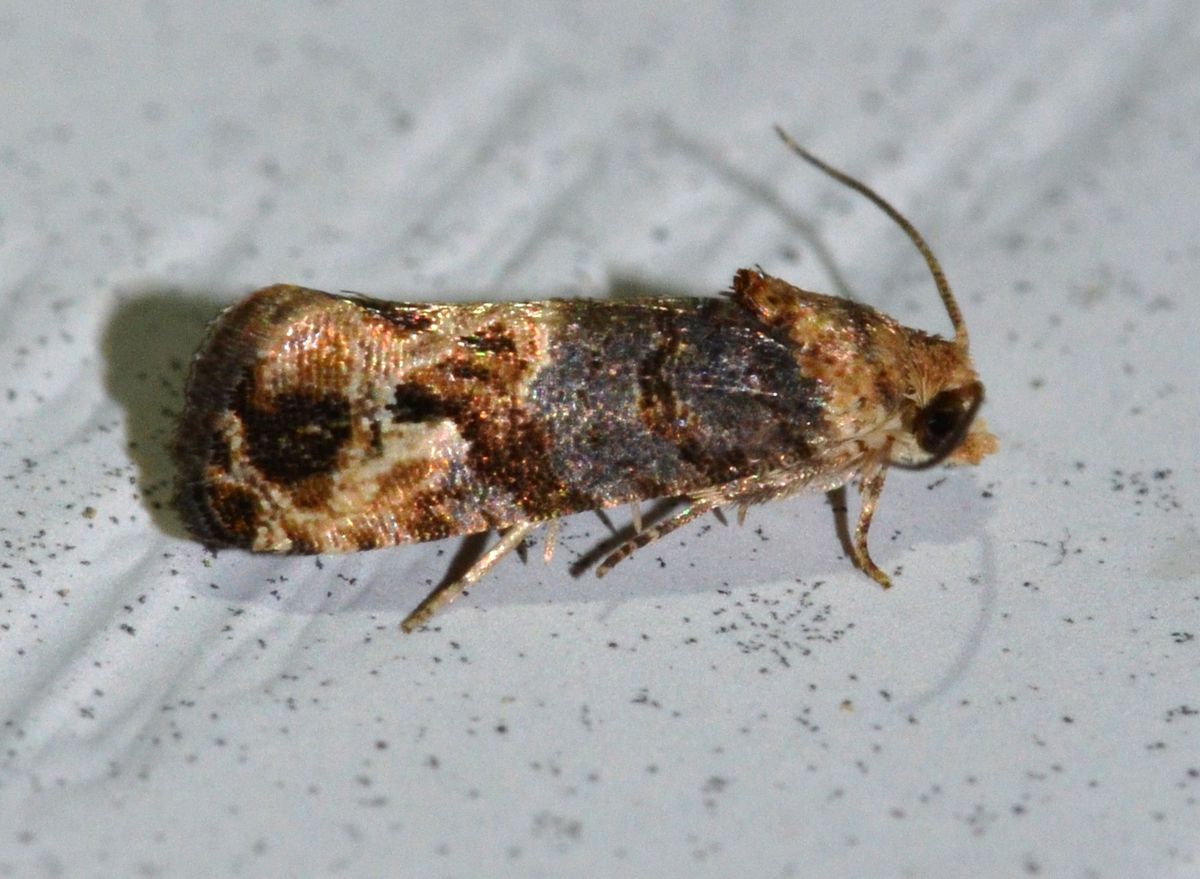
How to identify grape berry moth
A small caterpillar that webs together grape berries and tunnels inside them, causing early coloring and rot on individual berries within a cluster well before the rest ripen.
Crops attacked by grape berry moth
Grape.
Larvae web berries together and tunnel inside, causing premature purple coloring on individual berries and introducing rot organisms into the cluster.
Life cycle
- Overwintering pupa (Winter (in leaf litter)) — None.
- Adult moth flight (Spring, at bloom) — Lays eggs on flower clusters and young berries.
- Larva (2-3 weeks per generation) — Webs and tunnels berries; the destructive stage.
- Additional generations (Summer–early fall) — 2-3 generations per season, worsening as harvest nears.
Natural, organic grape berry moth control
- 1. Rake and destroy fallen leaves in fall · low effort
Removes the leaf litter where pupae overwinter.
When: Fall cleanup
- 2. Remove webbed/discolored berries promptly · low effort
Picking off affected berries as soon as spotted reduces the next generation.
When: Through the season
- 3. Maintain an open canopy · medium effort
Good airflow and sun exposure from proper pruning make clusters less attractive and easier to inspect.
When: Dormant pruning
Fastest-fix products
- Pheromone trap for grape berry moth — Helps time any interventions to actual moth flights. · Arbico Organics, orchard suppliers
Prevention
- Clean up fallen leaves and grape debris every fall without exception.
- Keep vines well-pruned for airflow and easy cluster inspection.