
Grasshopper identification & organic control
Melanoplus spp.
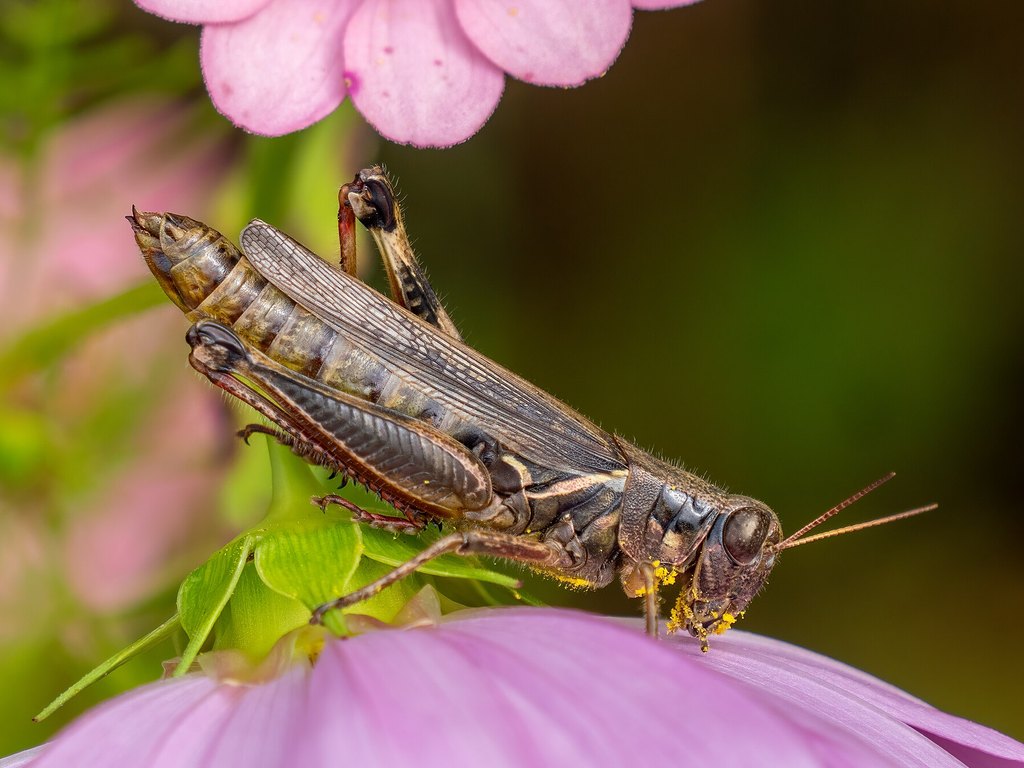
How to identify grasshopper
Strong-jawed jumping insects that hatch in weedy field margins and move into gardens as those margins dry out. In hot, dry years populations boom and a garden can be stripped in a week. They are hardest to fight once adults are flying.
Crops attacked by grasshopper
Bean, Lettuce, Corn, Carrot tops, Squash, Onion, Young fruit trees.
Chews large ragged holes and eats leaves from the margin inward, often leaving only midribs. Also gnaws stems, fruit skin, and bark on young trees.
Life cycle
- Overwintering egg pods (Winter) — Pods of 20-120 eggs buried in undisturbed sod and field edges.
- Hatch (nymphs) (Late spring) — Wingless nymphs feed near hatching sites. The one window control really works.
- Nymph development (Early summer) — 5 instars over 5-6 weeks; damage increases with each molt.
- Winged adults (Mid-summer → fall) — Mobile, hard to control, migrate into gardens and lay next year's eggs.
Natural, organic grasshopper control
- 1. Target the nymph stage in field margins · medium effort
Treat or mow the weedy hatching areas at the edge of your property while hoppers are small and wingless. Waiting for adults is a losing game.
When: Late spring
- 2. Nosema locustae bait · medium effort
A grasshopper-specific protozoan bran bait; nymphs eat it, sicken, and infect others. Apply while they're small.
When: At hatch
- 3. Floating row cover / insect netting · medium effort
Physical exclusion on high-value beds is the only certain protection during an outbreak year.
When: Outbreak years
- 4. Encourage birds and chickens · low effort
Poultry ranged along garden margins, plus perches for kestrels and bluebirds, meaningfully cuts numbers.
When: All season
Fastest-fix products
- Semaspore / NOLO Bait (Nosema locustae) — Organic, grasshopper-specific, and spreads through the population. · Arbico Organics, Amazon
- Insect netting (Agribon / ProtekNet) — Sturdier than lightweight row cover. Grasshoppers chew through thin fabric. · Johnny's, DuBois
- Kaolin clay (Surround WP) — Deters feeding on foliage and young tree bark. · Arbico Organics
Prevention
- Till or heavily mulch bare, weedy ground where egg pods are laid.
- Keep a mowed strip between garden and pasture to slow nymph migration.
- Plant a border trap crop of tall grass or sorghum and treat that strip.