
Common stalk borer identification & organic control
Papaipema nebris
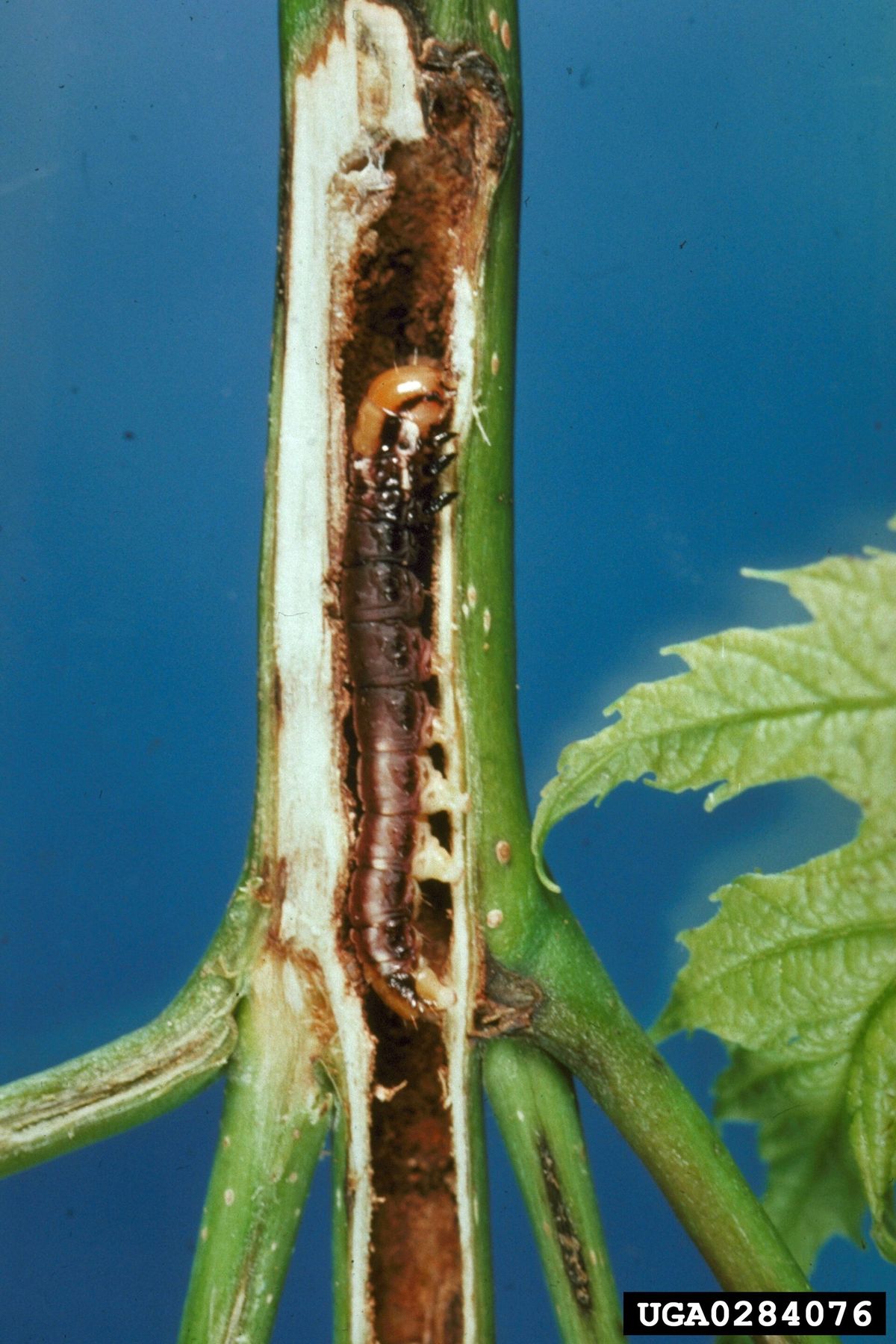
How to identify common stalk borer
A purple-and-cream banded caterpillar that starts life in weedy grass stems, then moves into garden crops, boring into stalks and causing wilting above the entry point.
Crops attacked by common stalk borer
Sweet corn, Tomato, Pepper.
Tunnels inside stems and stalks, cutting off water flow; wilting above the tunnel is the giveaway, often with a small entry hole and frass visible at the base.
Life cycle
- Overwintering egg (Winter (on grass stems)) — Laid on grasses and weeds the previous fall.
- Larva (in weeds) (Spring) — Feeds in grassy weed stems first.
- Larva (migrates to crops) (Early summer) — Moves into garden stalks; the destructive stage.
- Pupa (Late summer) — In soil or plant debris; one generation per year.
Natural, organic common stalk borer control
- 1. Mow grassy weeds around the garden in spring · low effort
Removes the borer's early host before it migrates into crops.
When: Early-mid spring
- 2. Slit the stem and remove the larva · high effort
If a stalk wilts, split it lengthwise above the frass, remove the borer, and mound soil over the wound; many plants recover.
When: At first wilt
Fastest-fix products
- Sharp garden knife — For the stem-slitting rescue technique on valuable plants. · Any hardware store
Prevention
- Keep a mowed border between the garden and grassy or weedy areas.
- Scout for sudden wilting in a single stalk early, before the borer tunnels far.