
Chinch bug identification & organic control
Blissus leucopterus
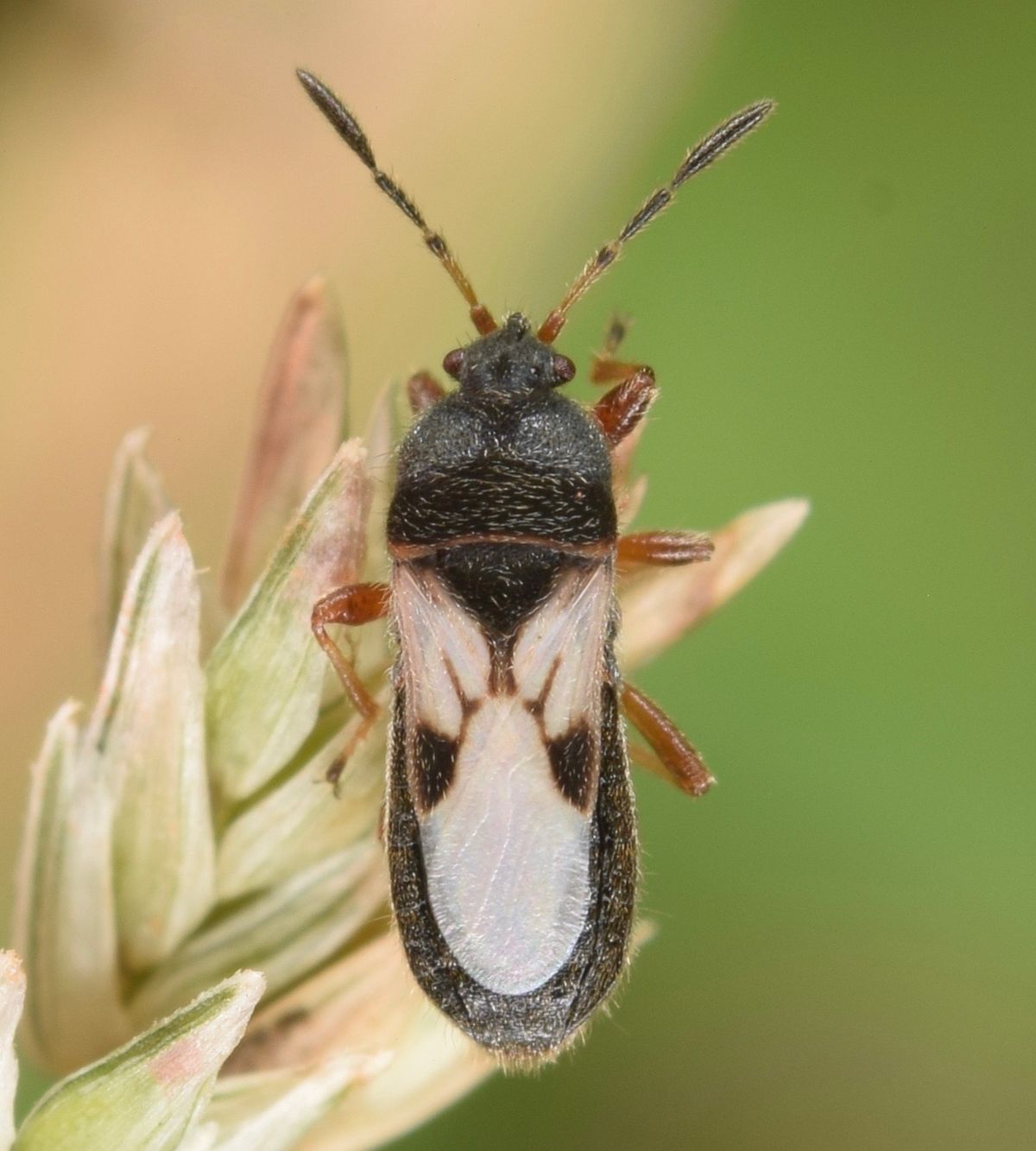
How to identify chinch bug
A small black-and-white bug that feeds at the base of grass blades, causing irregular patches of turf to yellow and die, especially in hot, dry, sunny areas of the lawn.
Crops attacked by chinch bug
Lawn/turf.
Nymphs and adults suck sap from grass crowns while injecting a toxin, causing yellow patches that expand and merge in hot weather, often mistaken for drought stress.
Life cycle
- Overwintering adult (Winter (in thatch)) — None.
- Adults emerge and mate (Spring) — Move into sunny turf areas to lay eggs.
- Nymph (4-6 weeks) — The main damaging stage in hot, dry weather.
- Second generation (Mid-late summer) — Damage often peaks in late summer heat.
Natural, organic chinch bug control
- 1. Float test to confirm · low effort
Cut both ends off a coffee can, push into the lawn edge at a damaged patch, fill with water; chinch bugs float to the surface within minutes.
When: When yellow patches appear
- 2. Reduce thatch and water deeply · medium effort
Dethatching and deep, infrequent watering (rather than daily shallow watering) makes turf far less favorable to chinch bugs.
When: Ongoing lawn care
- 3. Overseed with endophytic grasses · medium effort
Endophyte-enhanced fescues and ryegrasses are naturally more resistant to chinch bug feeding.
When: At overseeding
Fastest-fix products
- Coffee-can float trap — Free, reliable way to confirm the diagnosis before treating. · DIY with household items
Prevention
- Avoid over-fertilizing with nitrogen and letting thatch build up.
- Water deeply and infrequently rather than daily light sprinkling.