
Garden ants identification & organic control
Lasius spp., Tapinoma spp.
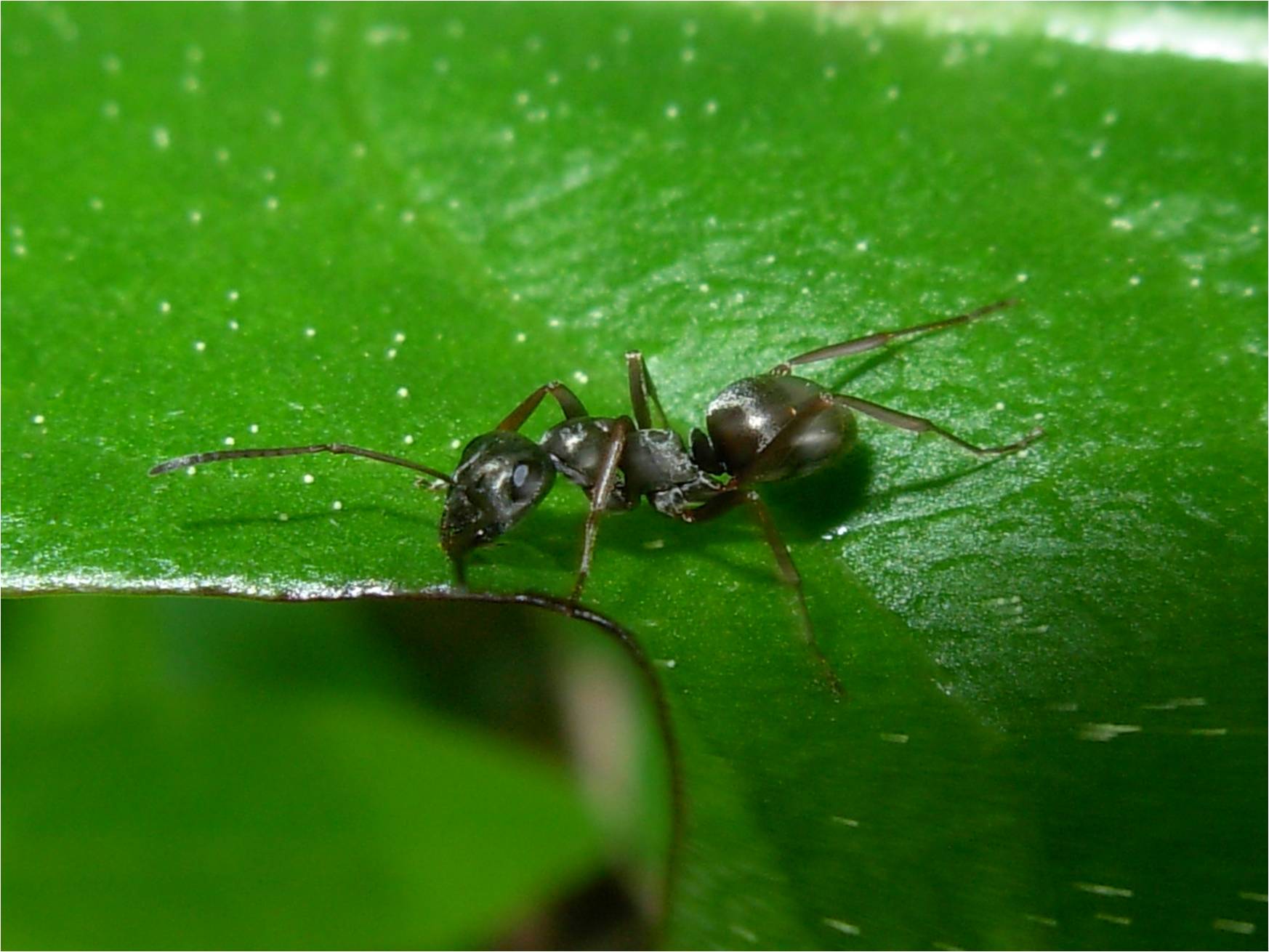
How to identify garden ants
Most garden ants do little direct plant damage themselves, but they farm aphids, scale, and mealybugs for honeydew, protecting those pests from predators and moving them to new growth.
Crops attacked by garden ants
Tomato, Pepper, Bean, Kale.
Ants rarely chew plant tissue; the real cost is protecting and spreading honeydew-producing pests like aphids and scale, which then do the actual feeding damage.
Life cycle
- Overwintering colony (Winter (underground)) — Dormant.
- Colony activity resumes (Spring) — Workers forage and begin tending aphid colonies.
- Peak farming activity (Summer) — Ants actively move and protect aphids/scale on plants.
- New queens disperse (Late summer) — Colonies expand to new nest sites.
Natural, organic garden ants control
- 1. Control the aphids, not just the ants · low effort
Since ants are farming aphids for honeydew, knocking back the aphid colony removes their reason to be there.
When: As soon as aphids appear
- 2. Sticky barrier on trunks/stakes · low effort
A band of horticultural sticky product around a trunk or tomato stake blocks ants from reaching aphid colonies above.
When: Early season
- 3. Diatomaceous earth around mounds · low effort
Food-grade DE dusted dry around ant mounds discourages nesting without broad-spectrum poison baits.
When: Dry weather
Fastest-fix products
- Sticky tree/stake bands — Physically blocks ants from climbing to aphid colonies. · Garden centers, Amazon
Prevention
- Keep aphid and scale populations low; ants have far less incentive to farm a clean plant.
- Avoid sugary spills and exposed compost near beds, which draw ants in.