Shrew identification & organic control
Sorex spp. / Blarina spp.
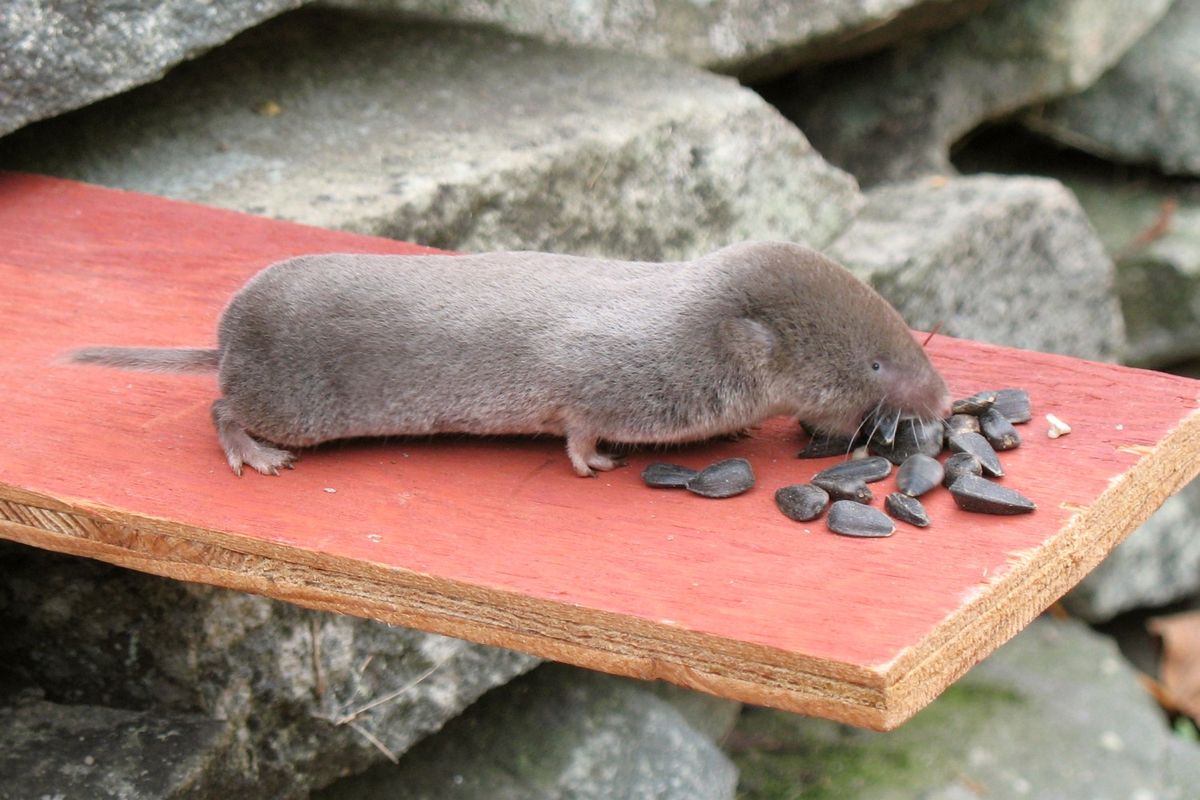
How to identify shrew
A tiny, mole-like insectivore often mistaken for a mouse, but with a pointed snout and a voracious appetite for insects, grubs, slugs, and earthworms. Shrews eat little to no plant material and are one of the most overlooked garden allies: most 'shrew damage' reports are actually voles using the same runways.
Crops attacked by shrew
.
Feeds almost entirely on insects, grubs, slugs, snails, and earthworms; does not eat seeds, roots, or foliage, though it will travel through vole tunnels and surface runways looking for prey.
Life cycle
- Active year-round (All year (including under snow)) — Constant insect and grub predation; no plant damage.
- Breeding (Spring–fall) — Multiple litters per year; more mouths hunting garden pests.
- Population peaks (Late summer–fall) — More individuals patrolling mulch and leaf litter for prey.
Natural, organic shrew control
- 1. Leave it be · low effort
Shrews are a genuine ally: they eat slugs, grubs, and insect pests and do not damage plants. There is rarely a good reason to control them directly.
When: Always
- 2. If runways in the lawn bother you, address the voles instead · medium effort
Shrews use existing vole tunnels; solving a vole problem removes the shared runway system.
When: If tunneling is a concern
Prevention
- No prevention needed: shrews are beneficial predators, not pests.
- If mistaken for mice, look for the pointed snout and tiny eyes to correctly identify before taking any action.