
Tomato hornworm identification & organic control
Manduca quinquemaculata
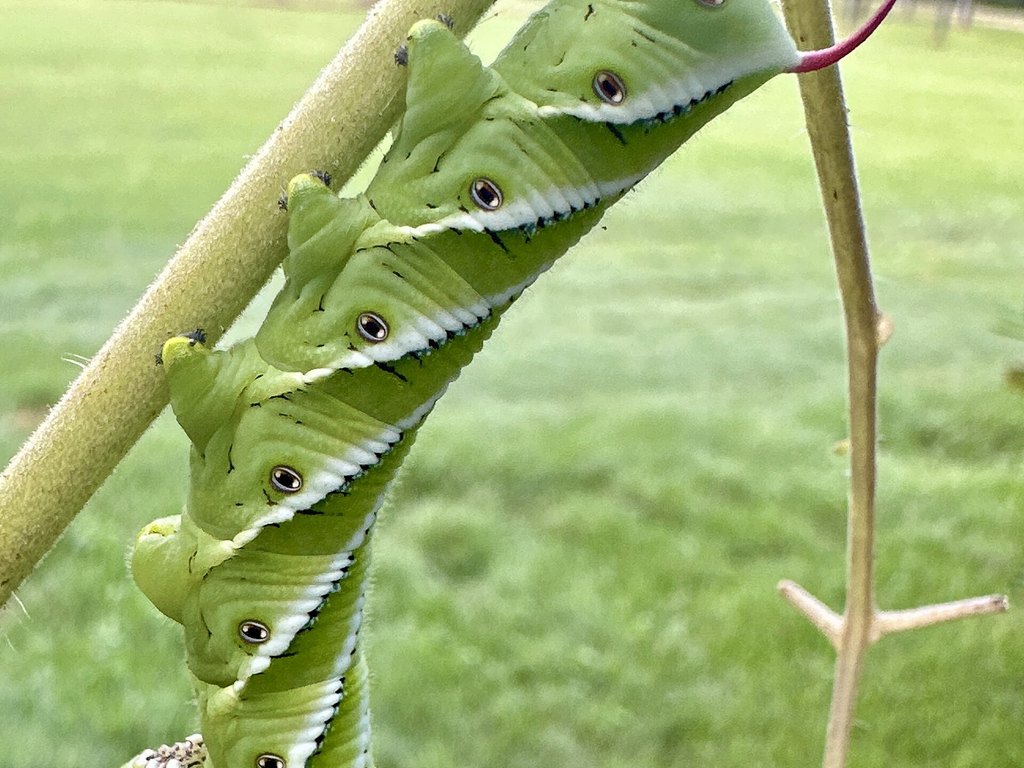
How to identify tomato hornworm
The tomato hornworm is a 3-4 inch bright-green caterpillar with white V-shaped stripes and a soft, curved 'horn' on the rear. Camouflaged perfectly against tomato foliage, one worm can strip a plant overnight.
Crops attacked by tomato hornworm
Tomato, Pepper, Eggplant, Potato.
Chews entire leaves and green fruit, working from the top of the plant down. First sign is usually pencil-tip-sized dark-green droppings (frass) on the leaves below the caterpillar.
Life cycle
- Overwintering pupa (Winter (in soil)) — None. 2-inch brown pupa 4 in below the surface.
- Adult sphinx moth (Late spring) — Hummingbird-sized moth lays 1-5 pale-green eggs on leaf undersides.
- Caterpillar (5 instars) (Early → late summer) — 3-4 weeks of intense leaf and fruit stripping. The destructive stage.
- Pupation (Late summer → fall) — Drops to soil; 2nd generation possible in warm climates.
Natural, organic tomato hornworm control
- 1. Handpick at dusk with a UV flashlight · low effort
The horn and body fluoresce blue-green under 395 nm UV. Drop worms in soapy water. This is the single most effective method.
When: Nightly during outbreaks
- 2. Leave parasitized worms alone · low effort
White rice-like cocoons on a worm's back are braconid wasps. That worm will die and hatch more wasps that hunt other hornworms: biological gold.
When: Any time you spot them
- 3. Bacillus thuringiensis (Bt kurstaki) · medium effort
Spray leaves per label: the caterpillar eats it and stops feeding within hours. Harmless to bees, birds, pets, humans.
When: Small caterpillars, heavy pressure
- 4. Till the soil in fall · medium effort
Turn the top 4 in of soil after harvest to expose pupae to birds and freezing temperatures.
When: After first frost
Fastest-fix products
- UV flashlight (395 nm) — Turns nighttime hornworm-hunting into a 5-minute chore. Best $10 you'll spend all season. · Amazon, hardware stores
- Monterey Bt (Bacillus thuringiensis) — OMRI-listed. Caterpillar-specific. Will not harm any other insect. Fastest kill for a heavy outbreak. · Garden centers, Amazon
Prevention
- Plant dill and borage nearby. Braconid wasps (their natural predator) feed on the flowers.
- Rotate nightshades out of the bed every 2-3 years to interrupt overwintering pupae.
- Till the tomato bed each fall to expose pupae.