
Onion maggot identification & organic control
Delia antiqua
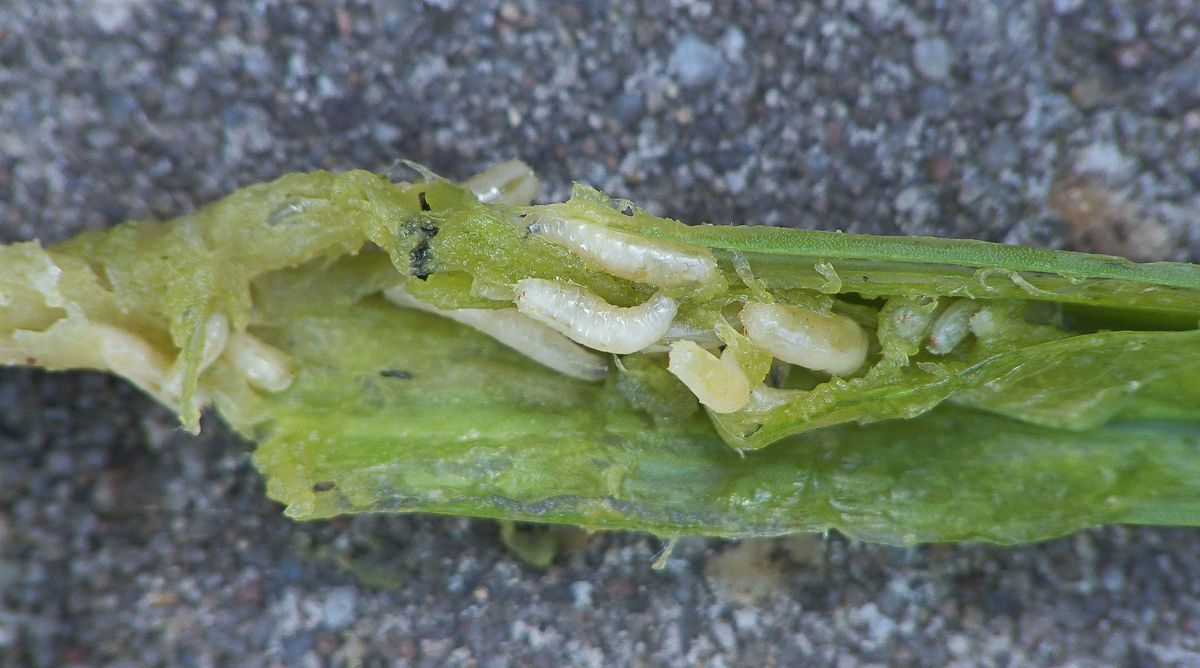
How to identify onion maggot
A close relative of the cabbage maggot fly whose larvae tunnel into onion, garlic, and leek bulbs, often entering through the base. Seedlings wilt and topple; established bulbs develop soft, rotten cores.
Crops attacked by onion maggot
Onion, Garlic, Leek.
Maggots feed inside the bulb and stem base, killing seedlings outright and creating entry points for soft rot in mature bulbs.
Life cycle
- Overwintering pupa (Winter (in soil)) — None.
- Adult fly (Spring) — Lays eggs at the base of onion plants.
- Larva (maggot) (2-3 weeks) — Bulb and stem tunneling; the destructive stage.
- Additional generations (Summer) — Later generations attack maturing bulbs.
Natural, organic onion maggot control
- 1. Row cover from seeding to bulbing · medium effort
Keeps egg-laying flies off the crop entirely.
When: Seeding through early summer
- 2. Rotate onions each year · low effort
Avoid planting alliums in the same bed in consecutive years to break the cycle.
When: Yearly planning
- 3. Remove and destroy infested plants promptly · low effort
Pull and discard (not compost) wilting seedlings to stop the maggot from maturing.
When: As soon as noticed
Fastest-fix products
- Floating row cover — The most reliable organic control for this fly. · Garden centers, Amazon
Prevention
- Rotate alliums on a 3-4 year cycle.
- Clear onion and garlic debris promptly after harvest.