
Mexican bean beetle identification & organic control
Epilachna varivestis
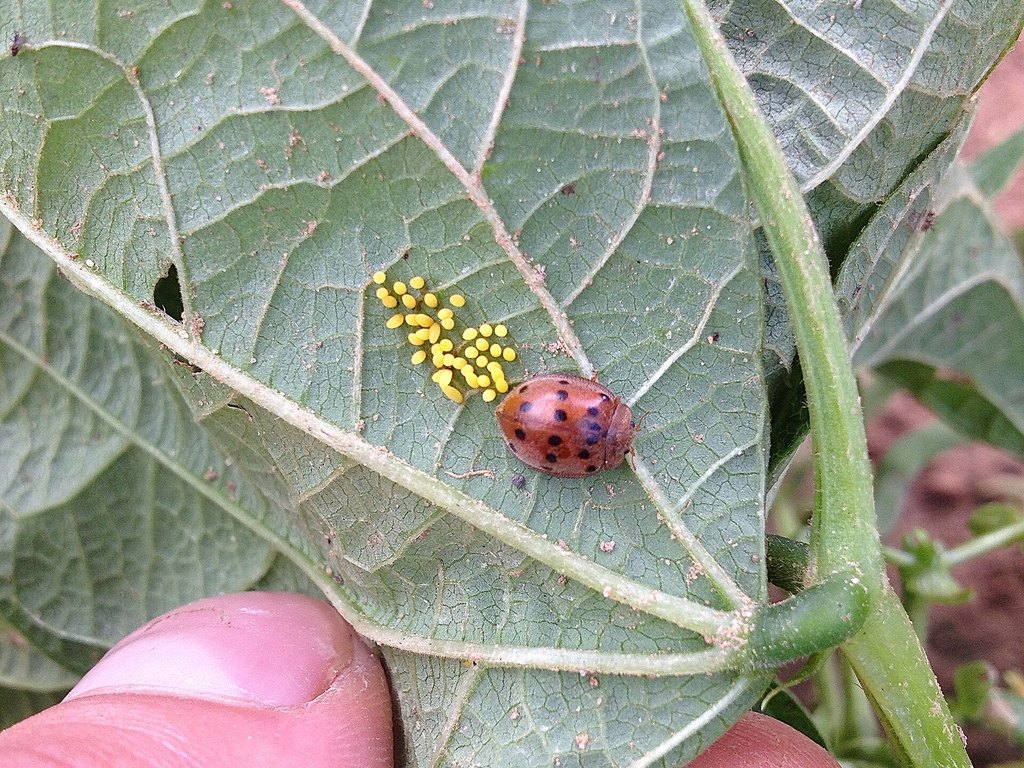
How to identify mexican bean beetle
A lady-beetle relative gone rogue: coppery-orange with 16 black spots, and its fuzzy yellow spiny larvae are the real destroyers. Both feed on the underside of bean leaves, leaving a lacy skeleton.
Crops attacked by mexican bean beetle
Bean, Snap bean, Lima bean, Cowpea, Soybean.
Scrapes leaf tissue from the underside between veins, leaving a lace-like skeleton that browns and dies. Heavy pressure defoliates plants and scars pods.
Life cycle
- Overwintering adults (Winter) — Hidden in leaf litter and hedgerows.
- Adults + yellow egg clusters (Late spring) — Adults chew light feeding scars; 40-60 yellow eggs laid upright on leaf undersides.
- Spiny yellow larvae (Early → mid summer) — The peak damage stage: skeletonized foliage in days.
- Pupae & second generation (Mid → late summer) — Yellow pupae glued to leaves; 2-3 generations stack up by fall.
Natural, organic mexican bean beetle control
- 1. Crush the yellow egg clusters · low effort
Flip leaves twice a week and wipe off the upright yellow egg rafts: the cheapest control there is.
When: Weekly from first bloom
- 2. Handpick larvae and adults · low effort
Shake plants over a soapy pan in the cool morning; the spiny larvae drop easily.
When: During outbreaks
- 3. Row cover young beans · medium effort
Beans self-pollinate, so covers can stay on through much of the season.
When: From seeding
- 4. Pull and compost spent bean plants immediately · low effort
Removing the crop right after the last picking cuts the next generation off at the knees.
When: After harvest
Fastest-fix products
- Lightweight floating row cover — Full exclusion on a self-pollinating crop. Near-total control. · Johnny's, Amazon
- Pediobius foveolatus parasitic wasps — A commercial biocontrol released specifically for this beetle; excellent in the mid-Atlantic. · NJDA Beneficial Insect Lab, Arbico
- Insecticidal soap or neem — Contact control for larvae when handpicking can't keep pace. · Garden centers
Prevention
- Plant beans early to beat the second generation.
- Rotate beans away from last year's rows.
- Clean up leaf litter and hedgerow debris in fall.