
Tarnished plant bug identification & organic control
Lygus lineolaris
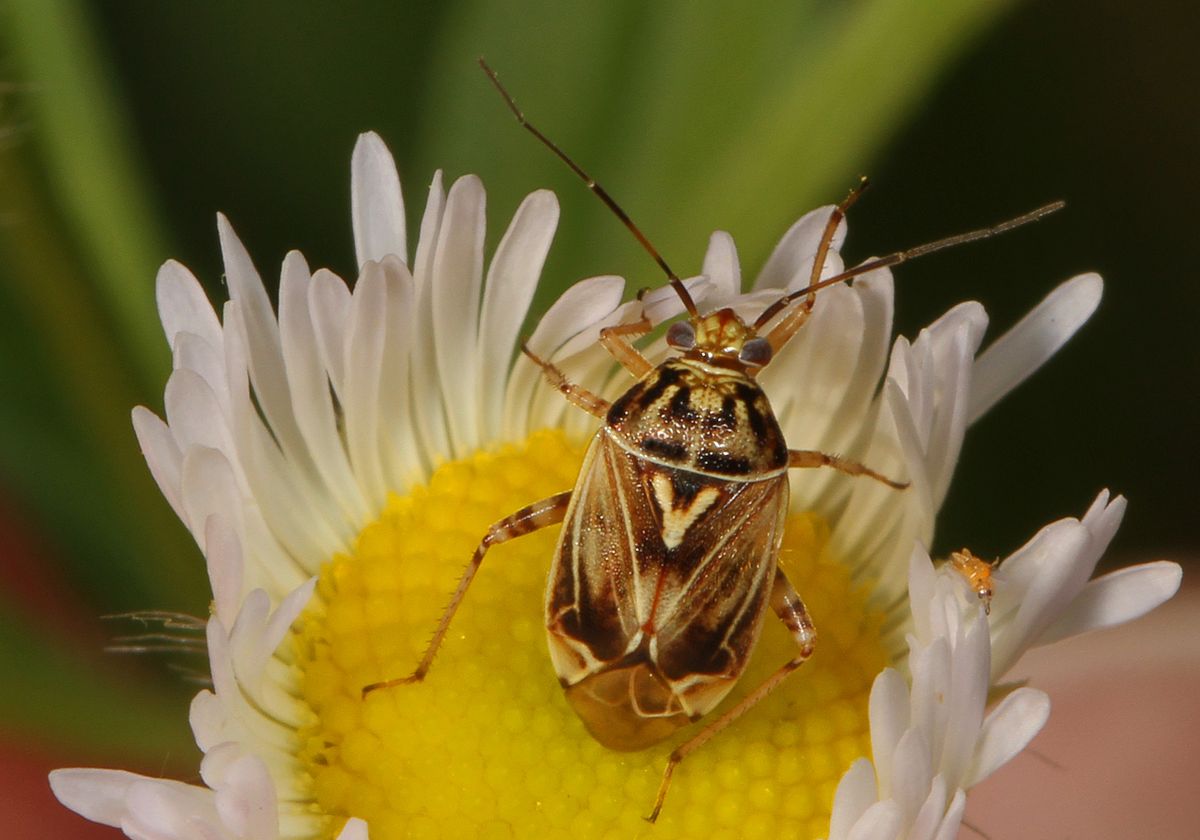
How to identify tarnished plant bug
A fast-moving, mottled brown-and-yellow bug about a quarter-inch long that injects toxic saliva as it feeds, killing tissue around each feeding site. It attacks a very wide range of vegetables and fruit.
Crops attacked by tarnished plant bug
Strawberry, Bush bean, Celery, Potato, Lettuce.
Feeding kills small areas of tissue, causing 'catfacing' (dimpled, deformed fruit) on strawberries, blackened terminal growth, and pitted seeds in beans.
Life cycle
- Overwintering adult (Winter (in debris/weeds)) — None.
- Adults emerge (Early spring) — Feed on early growth and weeds.
- Nymphs (Spring–summer) — Most damaging stage; feed on developing fruit and buds.
- Multiple generations (Through fall) — 3-5 generations per year in most regions.
Natural, organic tarnished plant bug control
- 1. Keep the garden and margins weeded · low effort
Removes overwintering and breeding sites in broadleaf weeds.
When: Ongoing
- 2. White sticky traps · low effort
Tarnished plant bugs are drawn to white cards more than yellow; monitor and knock back numbers.
When: Early season
- 3. Insecticidal soap on nymphs · medium effort
Nymphs are soft-bodied and susceptible to contact sprays; adults are harder to hit.
When: When nymphs are spotted
Fastest-fix products
- White sticky traps — More effective than yellow for monitoring this species. · Amazon, garden centers
Prevention
- Clean up weedy field edges in early spring before overwintered adults move in.
- Grow strawberries under row cover during bloom to reduce catfacing.