
Earwig identification & organic control
Forficula auricularia
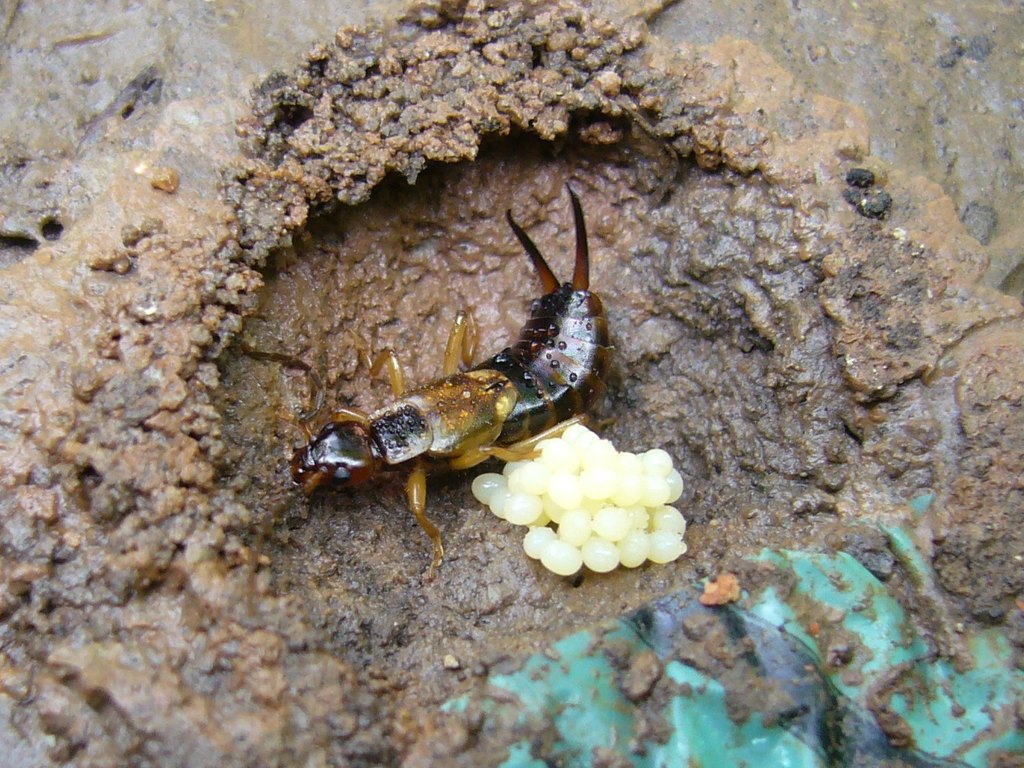
How to identify earwig
Flat reddish-brown insects with rear pincers, active at night and hiding in tight damp crevices by day. They're genuinely double-edged: they eat aphids and insect eggs, but in numbers they shred seedlings, corn silks, and soft fruit.
Crops attacked by earwig
Lettuce, Seedlings, Corn, Strawberry, Basil, Dahlia, Stone fruit.
Chews ragged, irregular holes in tender leaves and petals overnight and hollows out soft fruit; on corn they clip silks. Damage looks like slug work but with no slime trail.
Life cycle
- Overwintering adults (Winter) — Female guards eggs in a soil nest: none above ground.
- Nymph hatch (Early spring) — Mother tends young; light feeding on detritus.
- Nymphs (4 instars) (Spring → early summer) — Increasing seedling and leaf damage.
- Adults (Summer → fall) — Peak nighttime feeding on fruit, silks, and flowers; second brood possible.
Natural, organic earwig control
- 1. Rolled newspaper or bamboo traps · low effort
Lay damp rolled newspaper or short bamboo tubes in beds at dusk; shake the sheltering earwigs into soapy water each morning.
When: Nightly during outbreaks
- 2. Oil-and-soy-sauce pitfall traps · low effort
A shallow tuna can with 1/2 in of vegetable oil plus a splash of soy sauce sunk to soil level. Cheap and very effective.
When: Set weekly
- 3. Dry the hideouts · low effort
Pull mulch back 2 in from stems, lift boards and pots, and water in the morning: earwigs need damp shelter.
When: All season
- 4. Tolerate low numbers · low effort
A modest earwig population eats aphids and codling moth eggs. Only control when you see actual leaf or fruit damage.
When: Always
Fastest-fix products
- Vegetable oil pitfall traps — Pantry supplies, and consistently the best earwig knockdown. · DIY
- Sticky barrier (Tanglefoot) on trunks — Stops earwigs climbing into fruit trees and dahlias. · Garden centers
- Diatomaceous earth — A dry perimeter band around seedling flats; reapply after rain. · Garden centers
Prevention
- Store boards, hoses, and pots off soil. Those are the daytime shelters.
- Keep mulch thin and off stems in spring while seedlings are vulnerable.
- Trap in early spring before nymphs mature to break the cycle.