
Brown marmorated stink bug identification & organic control
Halyomorpha halys
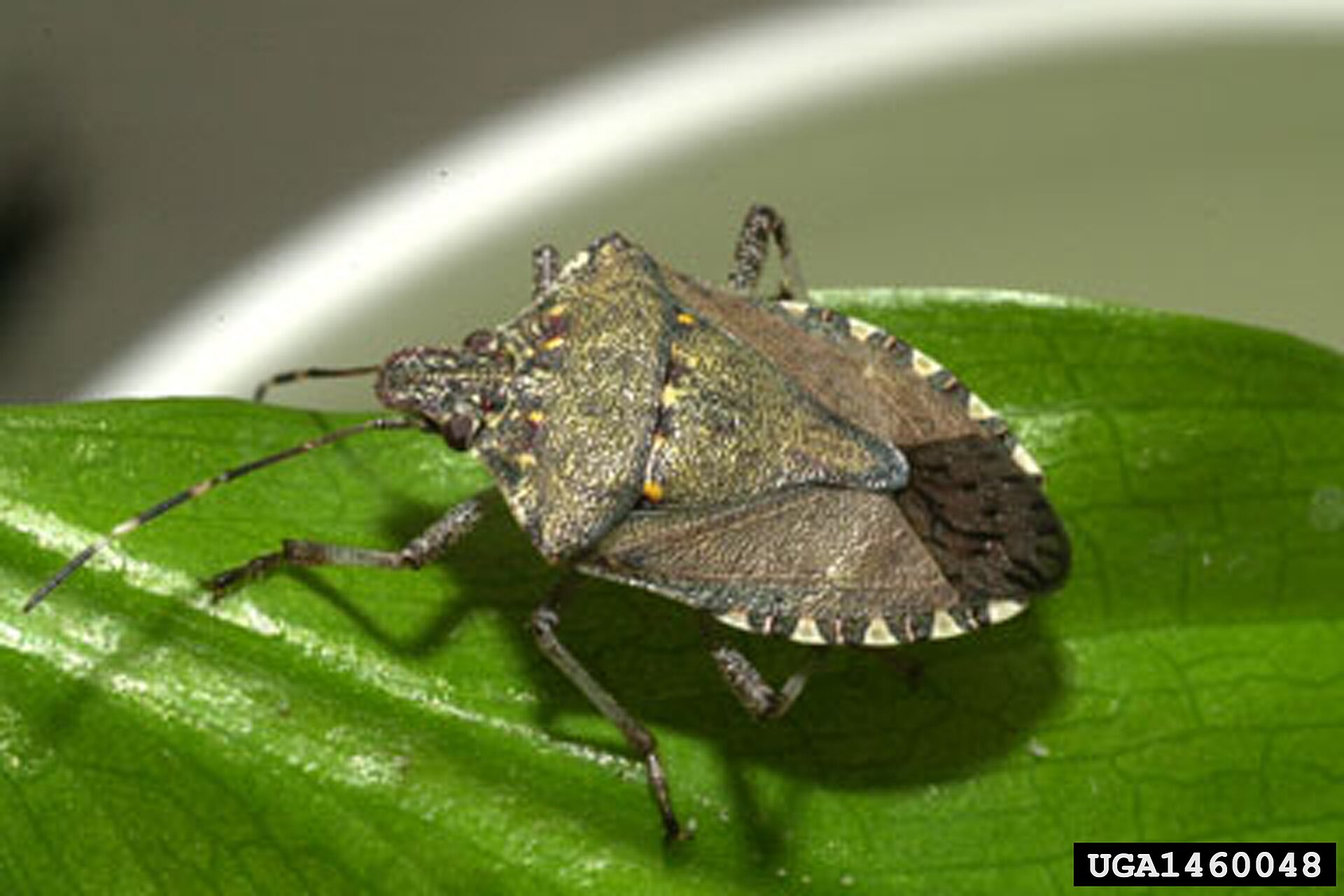
How to identify brown marmorated stink bug
An invasive Asian stink bug, mottled brown with distinctive white bands on its antennae, that has spread across much of the US since the 1990s. It feeds on a very wide range of vegetables and fruit and is known for invading homes in large numbers each fall.
Crops attacked by brown marmorated stink bug
Tomato, Pepper, Bush bean, Sweet corn, Apple, Peach.
Piercing-sucking feeding causes cloudy, discolored spots and corky, deformed areas under the skin of fruit; feeding on beans and corn causes shriveled or aborted seeds.
Life cycle
- Overwintering adult (Winter (indoors/structures)) — Congregates in homes and sheds; no plant damage.
- Adults emerge (Spring) — Move to host plants; begin feeding and mating.
- Nymph (5 instars) (Summer) — Feeds alongside adults; the main damaging period.
- New generation adults (Late summer–fall) — Feed heavily before seeking overwintering shelter.
Natural, organic brown marmorated stink bug control
- 1. Handpick and drop in soapy water · low effort
Slow-moving and easy to knock into a jar; do this in the cool of morning when they're sluggish.
When: Weekly through summer
- 2. Seal home entry points before fall · medium effort
Caulk gaps around windows, siding, and vents in late summer, before adults seek winter shelter indoors.
When: Late summer
- 3. Pheromone-baited traps · medium effort
Species-specific traps draw adults away from the garden and help monitor buildup.
When: Summer through fall
Fastest-fix products
- Pheromone trap for BMSB — Species-specific lure reduces pressure without broad-spectrum sprays. · Amazon, extension supply catalogs
Prevention
- Seal building gaps before fall to reduce indoor overwintering congregations.
- Remove and destroy fallen, damaged fruit that can shelter nymphs.