
Apple maggot identification & organic control
Rhagoletis pomonella
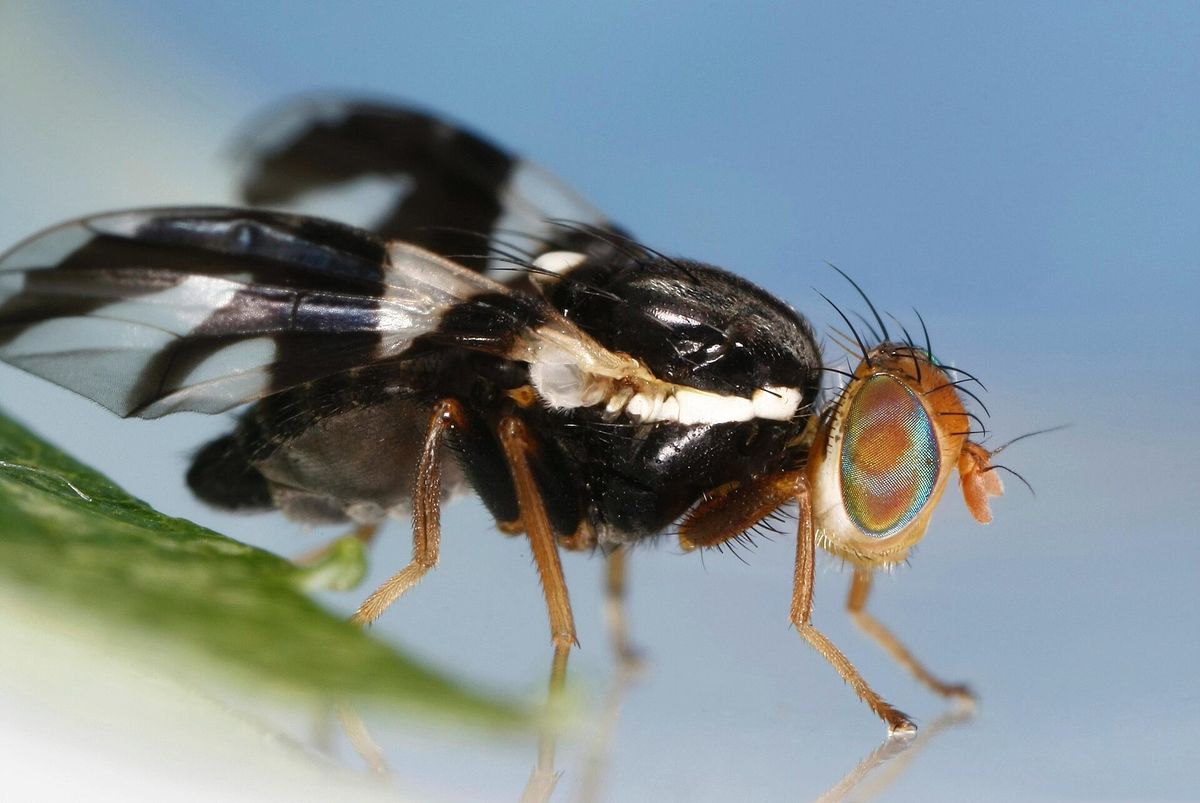
How to identify apple maggot
A small fly with dark banded wings that lays eggs just under the skin of ripening apples. Larvae tunnel in winding trails through the flesh, giving infested fruit a 'railroad track' pattern and premature drop.
Crops attacked by apple maggot
Apple.
Larvae tunnel randomly through the fruit's flesh, causing brown trails, dimpled skin, and often early fruit drop.
Life cycle
- Overwintering pupa (Winter (in soil)) — None.
- Adult fly emerges (Early-mid summer) — Lays eggs just under the skin of ripening fruit.
- Larva (3-4 weeks) — Tunnels through the flesh; the destructive stage.
- Mature larva drops to soil (Late summer–fall) — Pupates in soil for the following year.
Natural, organic apple maggot control
- 1. Red sticky sphere traps · low effort
Hang fake 'apple' traps coated in sticky material in the canopy; catches adult flies before they lay eggs.
When: Early summer onward
- 2. Pick up drops promptly · low effort
Fallen fruit often contains larvae ready to enter the soil; removing drops daily breaks the cycle.
When: Throughout fruiting
- 3. Bag individual fruit · medium effort
Physical barrier stops the fly from ever reaching the fruit skin.
When: After fruit set
Fastest-fix products
- Red sticky sphere traps — Highly effective, chemical-free monitoring and control tool. · Arbico Organics, Amazon
Prevention
- Clean up all dropped fruit through the season, especially near wild or abandoned apple trees nearby.
- Rake under trees in fall to disturb overwintering pupae.