
Clover mite identification & organic control
Bryobia praetiosa
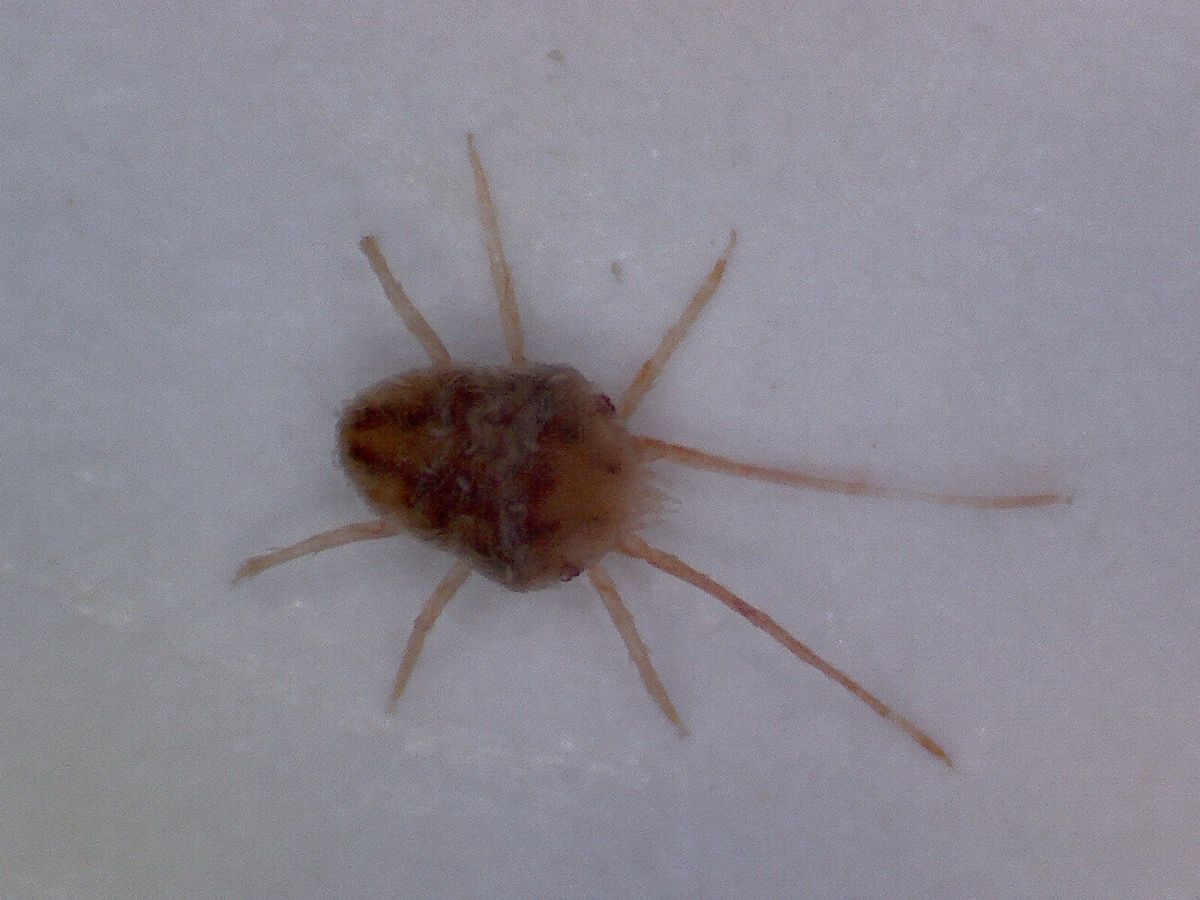
How to identify clover mite
A reddish-brown mite, smaller than a pinhead, that feeds on grass and clover and sometimes leaves a rusty stain when crushed indoors after invading homes near well-fertilized lawns.
Crops attacked by clover mite
.
Feeds on grass, clover, and some low-growing garden plants, causing light stippling; damage is rarely significant, and the main nuisance is indoor invasion in spring and fall.
Life cycle
- Egg (Laid in fall) — Overwinters in bark crevices and foundation cracks.
- Nymph (Spring) — Feeds on grass and clover.
- Adult (Spring–fall) — Two generations typical; migrates indoors seeking shelter in temperature swings.
Natural, organic clover mite control
- 1. Create a bare-soil or gravel barrier by the foundation · medium effort
A dry, plant-free strip 18-24 inches wide around the home discourages mites from migrating indoors.
When: Spring/fall
- 2. Reduce heavy lawn fertilization near the house · low effort
Lush, over-fertilized grass right against the foundation is the biggest driver of large populations.
When: Ongoing lawn care
Prevention
- Keep a mulch or gravel band between lawn/clover and the house foundation.
- Avoid crushing large numbers on indoor surfaces; vacuum instead to prevent staining.