
Leaffooted bug identification & organic control
Leptoglossus phyllopus
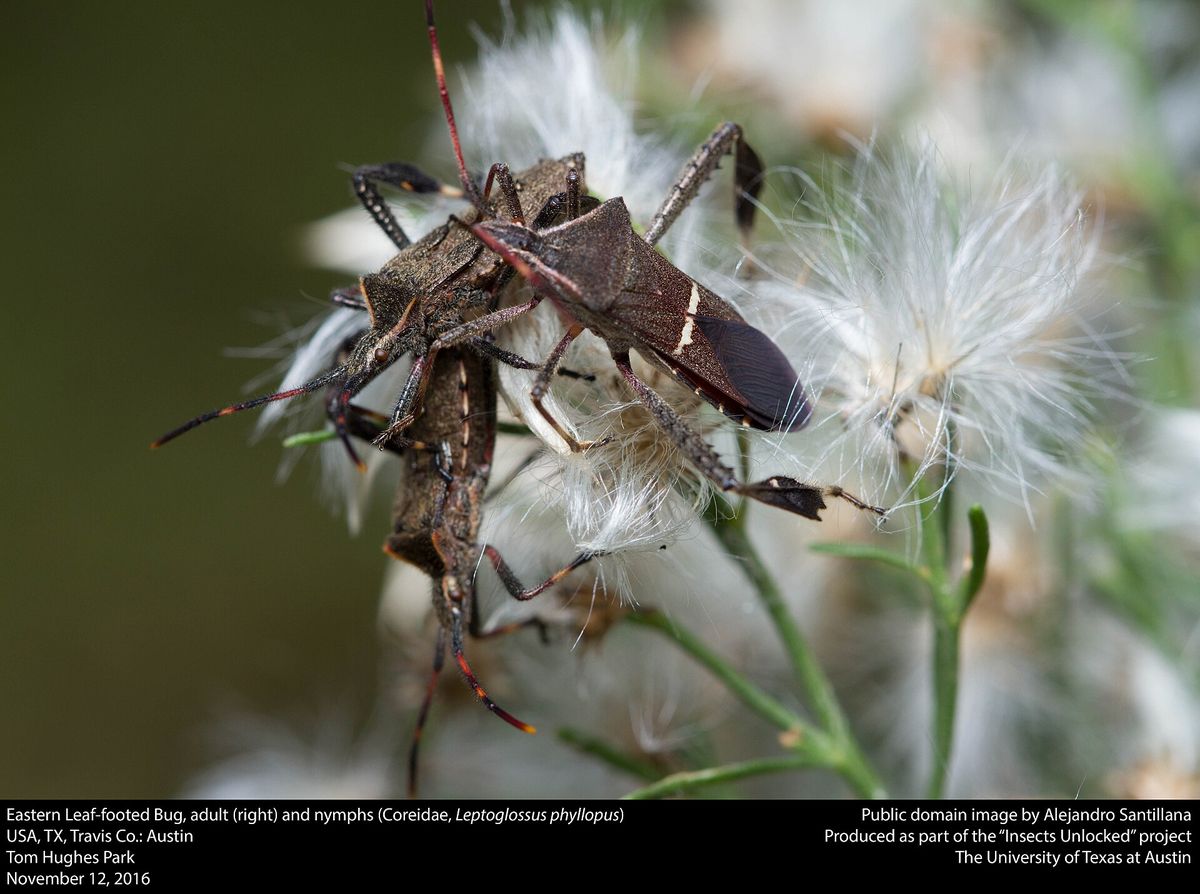
How to identify leaffooted bug
A large brown stink bug relative named for the flattened, leaf-shaped segments on its hind legs. It feeds on developing seeds and fruit and can carry yeasts that cause fruit to rot from the inside.
Crops attacked by leaffooted bug
Tomato, Pepper, Bush bean, Pumpkin, Peach.
Piercing-sucking feeding on developing seeds and fruit causes cloudy spots, dimpling, and internal rot, especially in tomatoes and pomegranate-family fruit.
Life cycle
- Overwintering adult (Winter (in debris)) — None.
- Adults emerge (Spring) — Feed and mate on early host plants.
- Nymph (Summer) — Feeds alongside adults on developing fruit.
- New generation adults (Late summer–fall) — Continue feeding before overwintering.
Natural, organic leaffooted bug control
- 1. Handpick in cool morning hours · low effort
Sluggish in cool temperatures, making early morning the easiest time to knock them into soapy water.
When: Daily during fruiting
- 2. Trap crop of sunflowers or sorghum · low effort
Leaffooted bugs strongly prefer these as an egg-laying and feeding site; scout and remove from the trap crop.
When: At planting
Fastest-fix products
- Insecticidal soap — Effective on nymphs; adults are harder to control with soap alone. · Garden centers, Amazon
Prevention
- Clear garden debris and weeds in fall to remove overwintering sites.
- Scout developing fruit closely once seen in the garden.