European corn borer identification & organic control
Ostrinia nubilalis
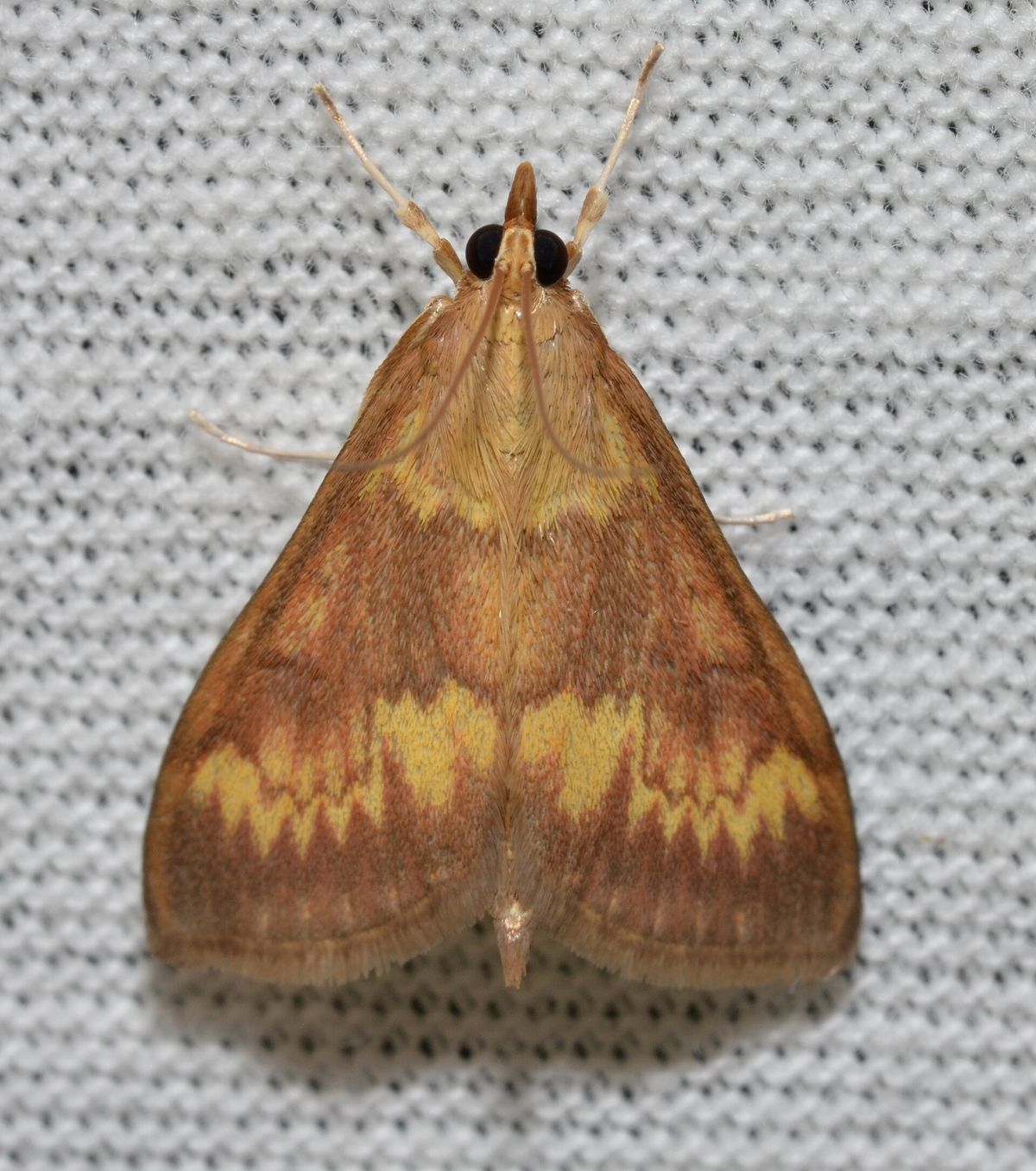
How to identify european corn borer
A cream-colored caterpillar with a brown head that tunnels into corn stalks, ears, and pepper fruit. Entry holes often show a small pile of sawdust-like frass just outside.
Crops attacked by european corn borer
Sweet corn, Pepper.
Larvae tunnel into stalks, weakening them so they snap in wind, and bore into ear tips and pepper pods, both directly damaging yield and opening the door to rot.
Life cycle
- Overwintering larva (Winter (in stalk debris)) — None.
- Adult moth (Spring) — Lays flat, overlapping egg masses on leaf undersides.
- Larva (3-4 weeks) — Tunnels into stalks and ears; the destructive stage.
- Second generation (Mid-late summer) — Attacks later plantings and pepper fruit.
Natural, organic european corn borer control
- 1. Destroy stalks after harvest · medium effort
Chop and remove or hot-compost corn and pepper stalks so overwintering larvae can't survive.
When: After harvest
- 2. Scout and treat at egg-mass stage · medium effort
Bt kurstaki works best before larvae bore in; apply once egg masses are spotted.
When: Early larval stage
- 3. Stagger plantings · low effort
Succession planting spreads out the vulnerable window so one flight can't wipe out the whole crop.
When: At planning
Fastest-fix products
- Monterey Bt — Effective before larvae tunnel inside where sprays can't reach. · Garden centers, Amazon
Prevention
- Remove all corn and pepper stalks at season's end; do not leave standing over winter.
- Rotate corn to a different area of the garden each year.