Potato leafhopper identification & organic control
Empoasca fabae
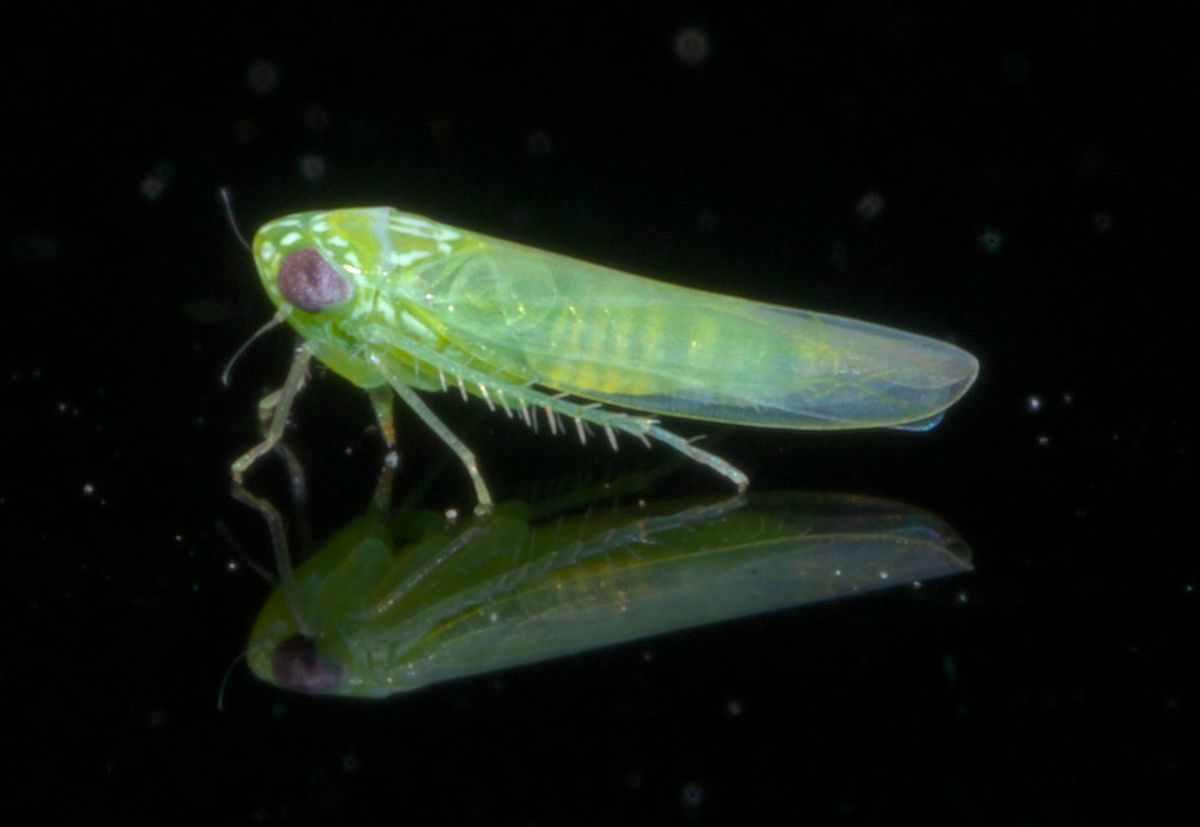
How to identify potato leafhopper
A small, wedge-shaped, bright-green insect that flies up in clouds when disturbed. It injects a toxin as it feeds, causing a triangular yellow-brown leaf-edge burn called 'hopperburn.'
Crops attacked by potato leafhopper
Potato, Bush bean, Strawberry.
Piercing-sucking feeding and toxic saliva cause leaf edges to yellow and curl upward, then brown and die back from the tip: distinctive hopperburn.
Life cycle
- Migration (Spring) — Adults ride storm fronts north from the Gulf Coast each year.
- Egg (Spring–summer) — Laid inside leaf veins; none visible.
- Nymph (2-3 weeks) — Feeds and causes hopperburn alongside adults.
- Adult (Multiple generations, summer) — Populations build through midsummer.
Natural, organic potato leafhopper control
- 1. Row cover young plants · medium effort
Excludes this migratory pest during the most vulnerable early growth stage.
When: At planting
- 2. Insecticidal soap · medium effort
Targets nymphs, which can't fly away; apply to leaf undersides.
When: At first hopperburn signs
- 3. Resistant varieties · low effort
Hairy-leaved potato and bean varieties resist leafhopper feeding better than smooth-leaved ones.
When: At planning/planting
Fastest-fix products
- Insecticidal soap (OMRI) — Effective against soft-bodied nymphs. · Garden centers, Amazon
Prevention
- Scout weekly for early yellowing at leaf tips before it spreads.
- Avoid planting susceptible beans and potatoes near known hopperburn-prone beds.