
Woolly apple aphid identification & organic control
Eriosoma lanigerum
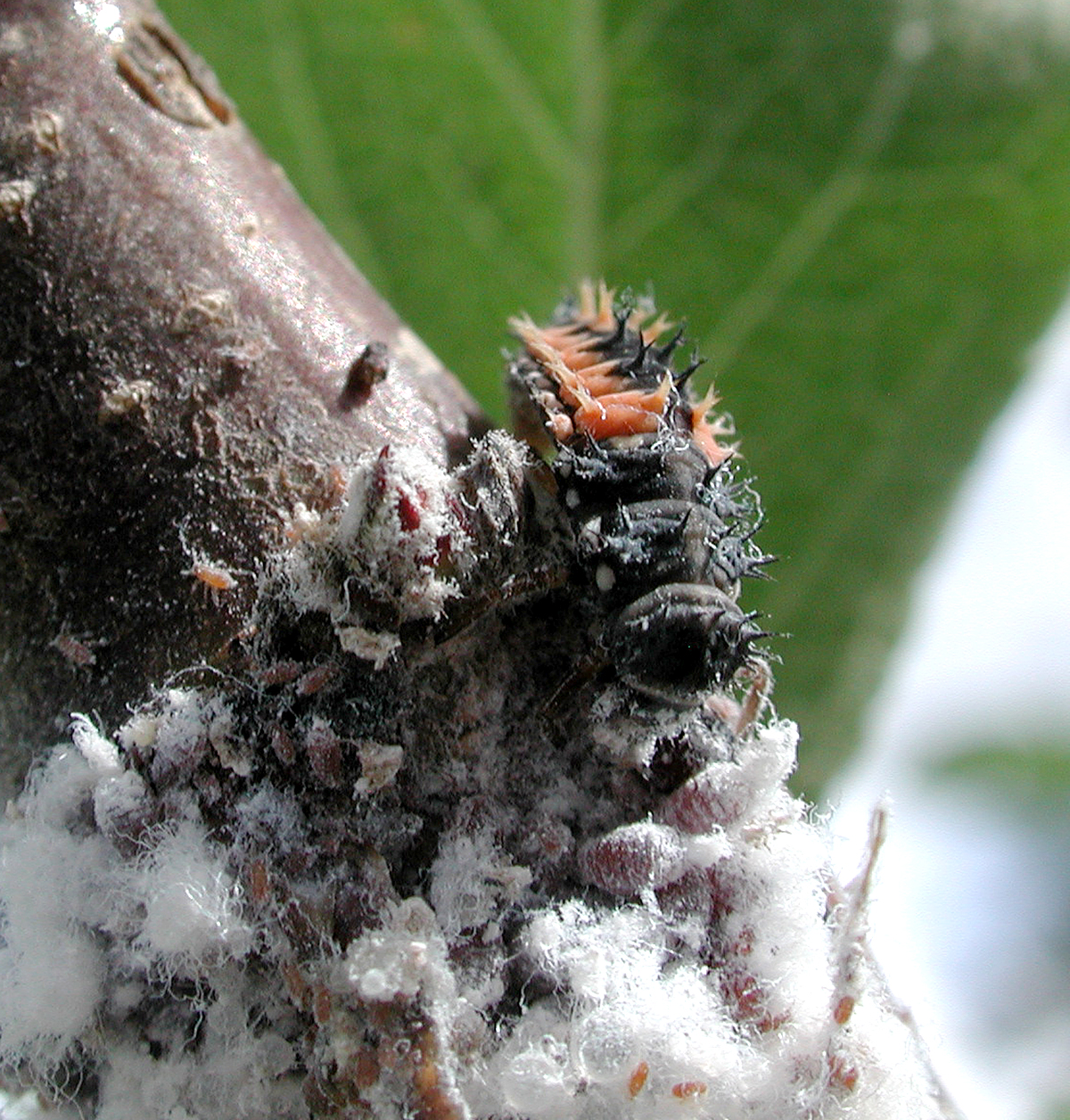
How to identify woolly apple aphid
A blue-gray aphid that covers itself in a white, cottony wax, forming fuzzy tufts on bark wounds, pruning cuts, and roots. Colonies on roots can stunt young trees more than the visible above-ground colonies suggest.
Crops attacked by woolly apple aphid
Apple.
Feeds on bark, wounds, and roots, causing knotty galls at feeding sites; heavy root colonies can stunt young trees and weaken their winter hardiness.
Life cycle
- Overwintering nymph (Winter (on roots/bark)) — Feeding continues slowly through mild winters.
- Colony builds (Spring) — Cottony masses appear on pruning wounds and bark cracks.
- Winged migrants (Summer) — Spread to new wounds and nearby trees.
- Root colonies persist (Year-round underground) — Ongoing root galling on susceptible rootstocks.
Natural, organic woolly apple aphid control
- 1. Prune to remove heavy colonies · medium effort
Cut out and destroy branches with heavy cottony masses, especially around old wounds.
When: Dormant season
- 2. Encourage aphid predators · low effort
Lady beetles, lacewings, and a specialist parasitic wasp (Aphelinus mali) target this aphid; avoid broad-spectrum sprays.
When: All season
- 3. Choose resistant rootstock for new trees · low effort
Some apple rootstocks resist woolly apple aphid root colonization far better than others.
When: At planting
Fastest-fix products
- Horticultural oil — Can smother above-ground colonies on bark when applied thoroughly. · Garden centers, Amazon
Prevention
- Avoid unnecessary pruning wounds during active aphid season; they're prime colonization sites.
- Select resistant rootstocks when planting new apple trees.