
Chigger identification & organic control
Trombiculidae (larval mites)
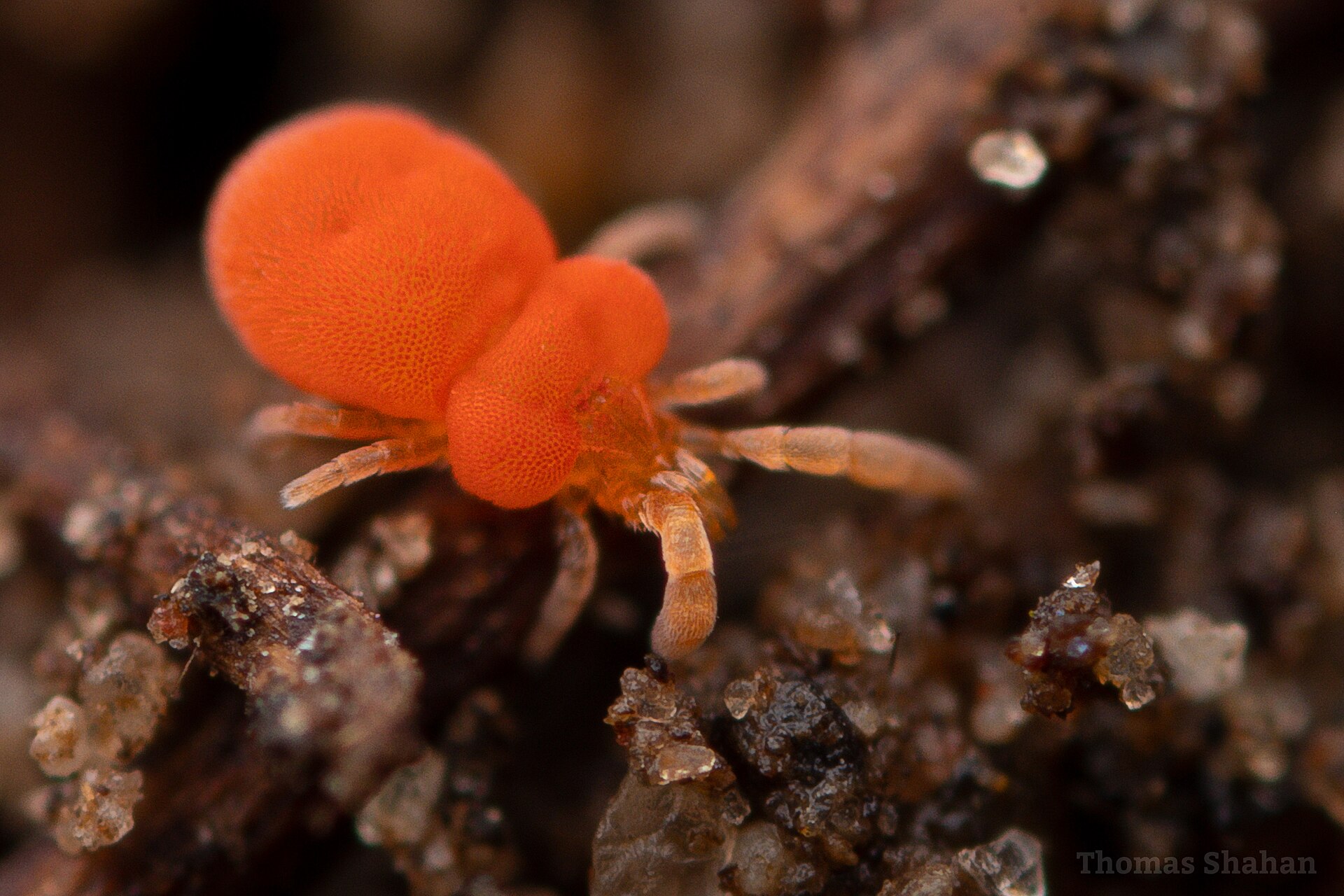
How to identify chigger
The larval stage of a harvest mite, nearly invisible to the naked eye, that climbs onto skin from tall grass and weeds and causes intensely itchy welts, a human comfort and safety issue rather than a plant pest.
Crops attacked by chigger
.
Does not feed on plants; larvae attach to human and animal skin (often at sock lines, waistbands, and skin folds) and feed on skin cells, causing severe itching that can last over a week.
Life cycle
- Egg (Warm season) — Laid in moist soil, leaf litter, and tall grass.
- Larva (the biting stage) (Summer, peaks in humid weather) — Attaches to skin of humans/animals passing through vegetation.
- Nymph & adult (free-living, non-biting) (Rest of the year) — Feeds on plant material and small invertebrates in soil, not people.
Natural, organic chigger control
- 1. Mow and clear tall grass and brush at garden edges · medium effort
Chiggers concentrate in shady, humid, overgrown vegetation; reducing that habitat around the garden lowers exposure.
When: Regularly through summer
- 2. Shower and change clothes right after gardening in overgrown areas · low effort
Washing off promptly removes larvae before they attach and feed, cutting bite risk substantially.
When: Immediately after exposure
- 3. Tuck pants into socks and use a permethrin-treated garden outfit · low effort
Physical and treated-clothing barriers are effective in known chigger-heavy areas.
When: When working in tall grass or brush
Fastest-fix products
- Permethrin-treated clothing — Highly effective at repelling chiggers and ticks; treat clothing, not skin, per label. · Outdoor retailers, Amazon
Prevention
- Keep grass mowed and brush cleared along garden borders.
- This is a human health/comfort issue, not a plant threat, seek medical advice if bites become infected or a severe reaction occurs.