
Iris borer identification & organic control
Macronoctua onusta
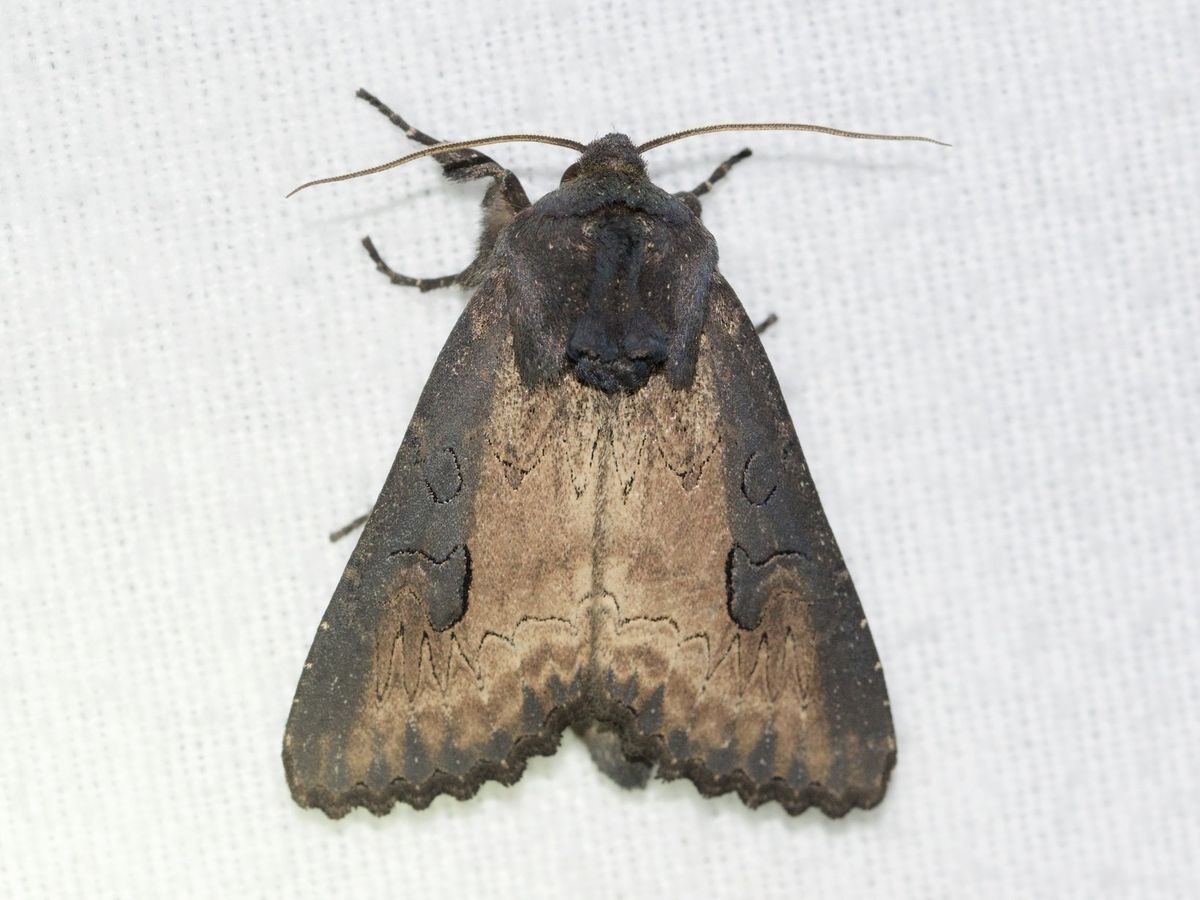
How to identify iris borer
Though iris is ornamental, this borer's caterpillar also readily attacks nearby garden plants sharing a bed edge; the pink-tinged caterpillar tunnels down leaves into rhizomes, inviting soft rot.
Crops attacked by iris borer
.
Larvae mine down through leaf fans into the rhizome, hollowing it out and creating entry points for bacterial soft rot that can kill the whole clump.
Life cycle
- Overwintering egg (Winter (on old foliage)) — Laid on dead leaves the previous fall.
- Larva mines leaves (Spring) — Vertical tunneling visible as watery streaks in leaves.
- Larva enters rhizome (Summer) — Hollows the rhizome; the most damaging stage.
- Pupa in soil (Late summer–fall) — None; adult moth emerges in fall to lay next year's eggs.
Natural, organic iris borer control
- 1. Cut and destroy old foliage each fall · low effort
Removing dead iris leaves in fall destroys overwintering eggs before they hatch.
When: Fall cleanup
- 2. Squeeze leaf tunnels to crush larvae · low effort
Pinch along visible watery streaks in spring leaves to kill the larva before it reaches the rhizome.
When: Spring
- 3. Dig and discard rotten rhizomes · medium effort
Once a rhizome is hollowed and rotting, remove and discard it to prevent spread.
When: Whenever found
Prevention
- Always clean up iris foliage completely each fall; this single step prevents most infestations.
- Divide and inspect iris clumps every few years.