
Mealybug identification & organic control
Pseudococcidae
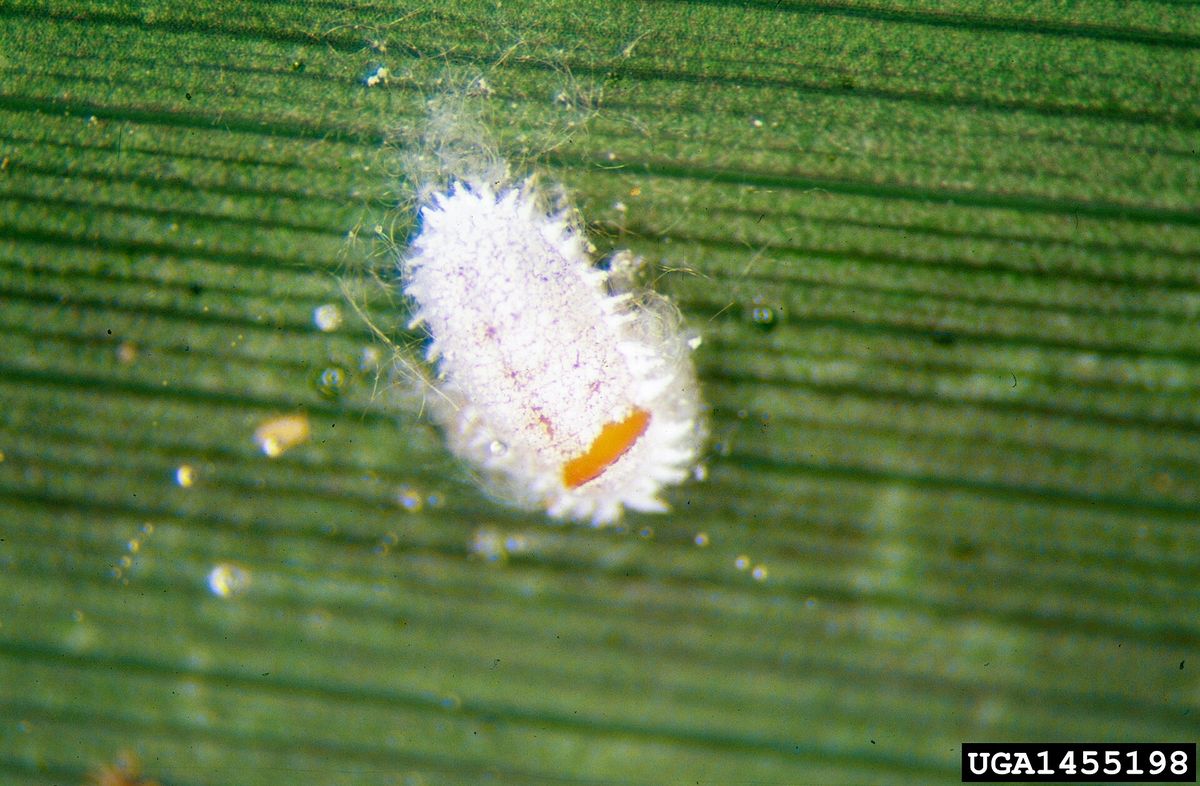
How to identify mealybug
Soft, oval insects covered in white waxy fluff that cluster in leaf axils, stem joints, and container-grown plant crowns. Common on overwintered potted herbs and greenhouse-started transplants.
Crops attacked by mealybug
Basil, Rosemary, Pepper, Tomato, Fig.
Piercing-sucking feeding weakens growth and produces honeydew that grows sooty mold; heavy infestations stunt and can kill container plants.
Life cycle
- Egg mass (Warm season, indoors year-round) — Laid in cottony masses in leaf joints.
- Crawler (Days after hatch) — Mobile stage; spreads to new growth and neighboring plants.
- Nymph (2-3 weeks) — Feeding intensifies; wax coating develops.
- Adult (Ongoing, especially indoors) — Reproduces continuously in warm conditions.
Natural, organic mealybug control
- 1. Alcohol swab · low effort
Dab visible mealybugs with a cotton swab dipped in rubbing alcohol; effective for light infestations on houseplants and potted herbs.
When: At first sighting
- 2. Strong water spray · low effort
A firm hose or sink-sprayer rinse dislodges many crawlers and adults.
When: Weekly
- 3. Insecticidal soap or neem · medium effort
Coats and smothers remaining insects; repeat every 5-7 days for 3 rounds.
When: For persistent infestations
Fastest-fix products
- Insecticidal soap (OMRI) — Effective contact control with low residual toxicity. · Garden centers, Amazon
- Neem oil concentrate — Disrupts the mealybug life cycle over repeat applications. · Garden centers, Amazon
Prevention
- Inspect new potted plants closely before bringing them near the garden or indoors.
- Isolate infested container plants until cleared.