
Imported fire ant identification & organic control
Solenopsis invicta
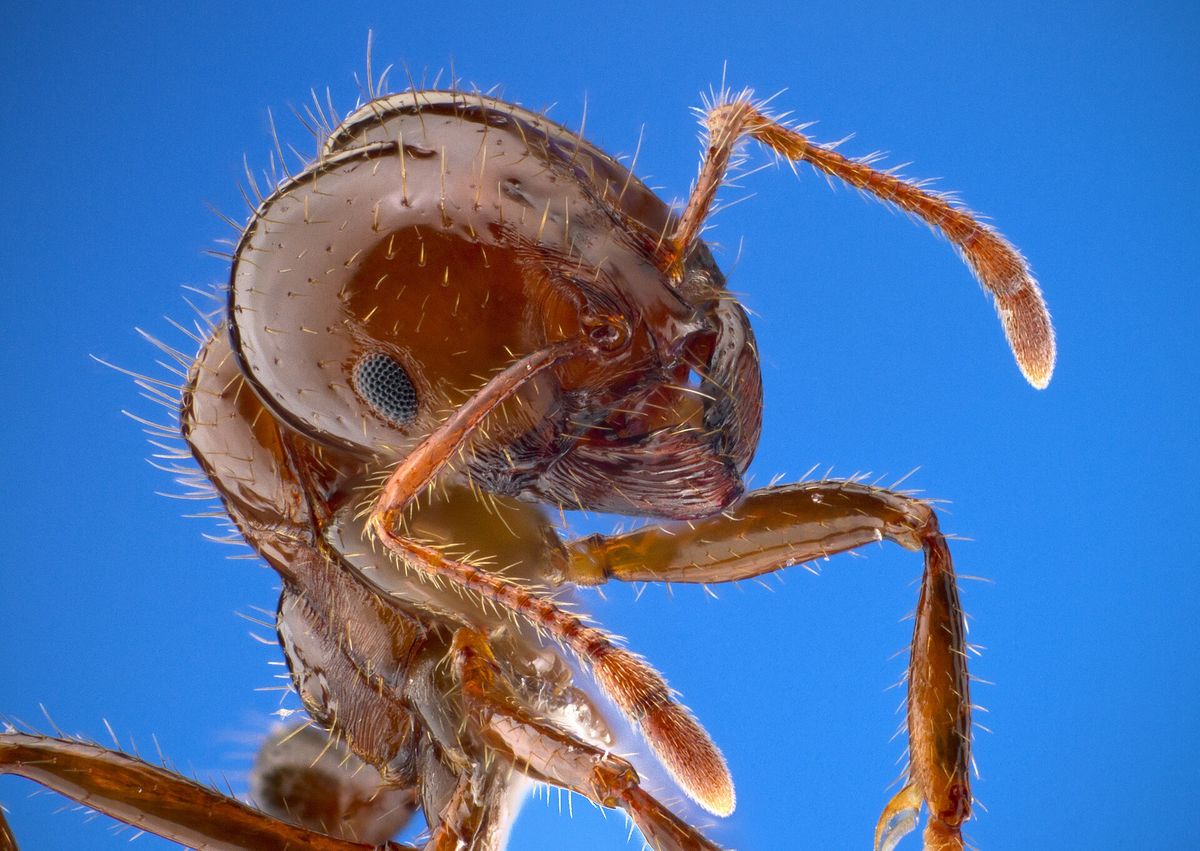
How to identify imported fire ant
An aggressive invasive ant common across the southern US, building dome-shaped mounds and delivering painful, burning stings in swarms when a mound is disturbed. Stings can cause a dangerous allergic reaction in sensitive people, pets, and small children, and mounds in beds or near play areas need careful handling.
Crops attacked by imported fire ant
Sweet corn, Bush bean, Strawberry.
Mostly preys on other insects and scavenges, but colonies will girdle seedling stems, chew into ripening strawberries and thin-skinned fruit touching soil, and protect aphid colonies for honeydew.
Life cycle
- Mound colony (Year-round, active spring–fall) — Central mound houses thousands of workers; stings are the primary hazard.
- Mating flights (Spring–summer, after rain) — New queens disperse to start additional mounds.
- Colony growth (Summer) — Peak foraging and sting risk near mounds.
- Reduced activity (Winter) — Colony retreats deeper in soil in cold weather.
Natural, organic imported fire ant control
- 1. Pour boiling water on small mounds · medium effort
For an isolated new mound away from roots, several gallons of boiling water poured directly on it can kill a young colony; effective on maybe 60% of mounds and needs repeating.
When: Early morning or evening, when ants are near the surface
- 2. Beneficial nematodes or diatomaceous earth around beds · medium effort
Reduces fire ant presence in garden soil without broad-spectrum pesticide use.
When: Ongoing in warm months
- 3. Keep mounds away from paths and play areas · low effort
Relocate garden activity away from active mounds rather than disturbing them; mark mounds clearly for kids and pets.
When: Immediately upon finding a mound
Fastest-fix products
- Diatomaceous earth (food-grade) — A lower-risk option for garden beds compared to broad-spectrum ant baits. · Garden centers, Amazon
Prevention
- Check beds for new mounds before hand-weeding or kneeling in soil.
- Sensitive individuals, small children, and pets should avoid areas with active mounds; multiple stings can trigger a severe allergic reaction requiring emergency care.
- Contact a licensed pest control service for large or persistent mound infestations near the home.