
Nine-banded armadillo identification & organic control
Dasypus novemcinctus
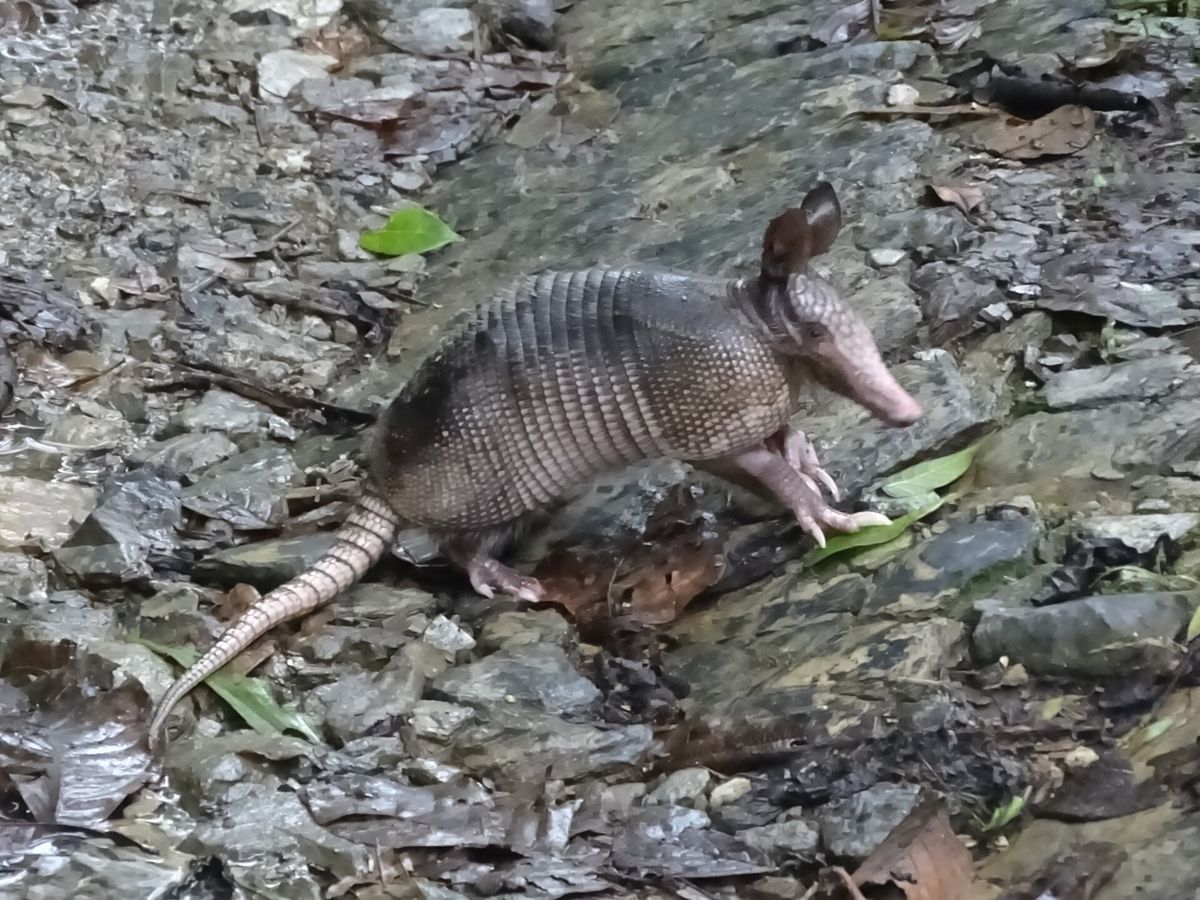
How to identify nine-banded armadillo
A nocturnal, armor-plated burrower that digs shallow, cone-shaped holes hunting grubs, earthworms, and insects. Its digging can uproot seedlings and undermine raised beds, but like the skunk, it's usually chasing a grub problem, not the plants themselves.
Crops attacked by nine-banded armadillo
Lawn/turf, Raised bed edges, Root vegetable seedlings.
Uses its snout and claws to dig 1-3 in conical holes hunting grubs and earthworms; can undermine shallow raised bed frames and uproot seedlings in the process.
Life cycle
- Year-round activity (dormant only in hard freezes) (All year in warm climates) — Continuous nighttime digging for grubs.
- Breeding & delayed implantation (Summer mating, spring birth) — Litters of identical quadruplets born each spring.
- Young foraging with mother (Spring–summer) — More individuals digging through the same territory.
Natural, organic nine-banded armadillo control
- 1. Treat the grubs · medium effort
Apply beneficial nematodes or milky spore to grub-heavy turf; without the food source, armadillos move on.
When: Late summer–fall
- 2. Bury an L-footer fence around beds · high effort
A fence with an outward-angled buried skirt (armadillos are diggers, not climbers) around vulnerable beds stops rooting.
When: Before digging starts
- 3. Live trapping where legal · high effort
Armadillos respond well to box traps baited with overripe fruit or set along their dig trails; check state regulations on relocation versus required humane euthanasia, since in many states relocating wildlife is restricted.
When: Persistent digging
Fastest-fix products
- Beneficial nematodes (Heterorhabditis bacteriophora) — Removes the grub food source driving the digging. · Arbico Organics, Amazon
- Buried L-footer wire fencing — Physically blocks a persistent digger from raised beds. · Farm/hardware stores
Prevention
- Keep turf grub populations low; that's the root cause of most armadillo digging.
- Check your state's wildlife regulations before trapping: rules on relocation vary widely.
- Fence high-value beds with a buried skirt rather than relying on scent repellents, which have weak evidence.