
Imported cabbage worm identification & organic control
Pieris rapae
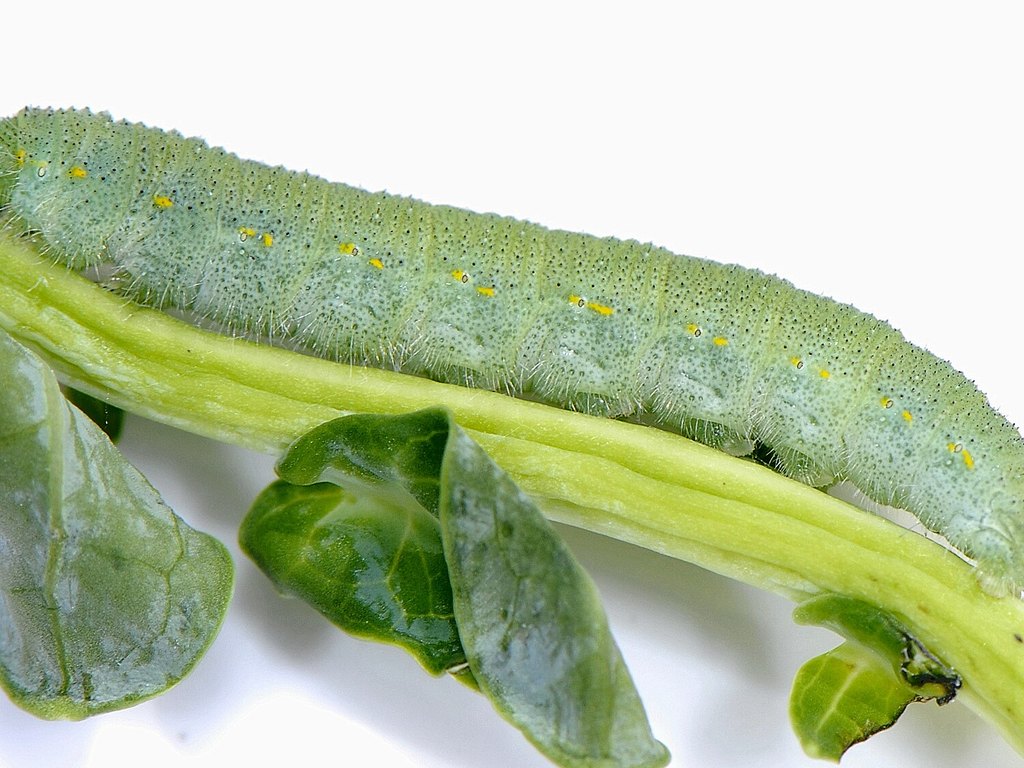
How to identify imported cabbage worm
The velvety-green caterpillar of the small white butterfly you see fluttering over the garden. Blends with kale and cabbage leaves so well you often only see the damage.
Crops attacked by imported cabbage worm
Kale, Cabbage, Broccoli, Brussels sprout, Collard, Cauliflower, Kohlrabi.
Chews ragged holes through leaves, then bores into cabbage and broccoli heads, leaving green droppings that contaminate the harvest.
Life cycle
- Adult butterfly (Spring through fall) — White butterflies with 1-2 black wing spots lay single yellow eggs on leaf undersides.
- Egg (3-7 days) — None. Pinhead-sized yellow bullets on the leaf.
- Caterpillar (2-3 weeks) (All growing season) — The destructive stage. Multiple overlapping generations.
- Chrysalis (1-2 weeks) — Overwinters as pupa on nearby structures.
Natural, organic imported cabbage worm control
- 1. Floating row cover from transplant · medium effort
Cover the bed with lightweight row cover the day you plant. Seal edges with soil. Prevents the butterfly from ever laying eggs.
When: Transplant → harvest
- 2. Handpick + squish eggs · low effort
Check leaf undersides twice a week. Crush yellow eggs with your thumb, drop caterpillars in soapy water.
When: Weekly during flight periods
- 3. Bacillus thuringiensis (Bt kurstaki) · low effort
Spray leaves every 7-10 days. Caterpillar eats it, stops feeding in hours, dies in 1-3 days. Bee-safe.
When: When you see chew holes
- 4. Interplant thyme, dill, and nasturtium · low effort
Their scents confuse the butterfly's egg-laying. Nasturtium acts as a trap crop for cabbage aphids too.
When: At transplant
Fastest-fix products
- Agribon AG-19 row cover — Lightweight enough to lay directly on transplants; blocks 85% of the butterfly's egg-laying. · Johnny's Selected Seeds, Amazon
- Monterey Bt (Bacillus thuringiensis) — The gold standard for cabbage-family caterpillars. OMRI-listed, safe for the whole garden ecosystem. · Garden centers, Amazon
Prevention
- Row cover from day one is 90% of the battle.
- Rotate brassicas to a different bed each year.
- Clear old brassica stalks in fall to remove overwintering chrysalises.