
Blister beetle identification & organic control
Epicauta spp.
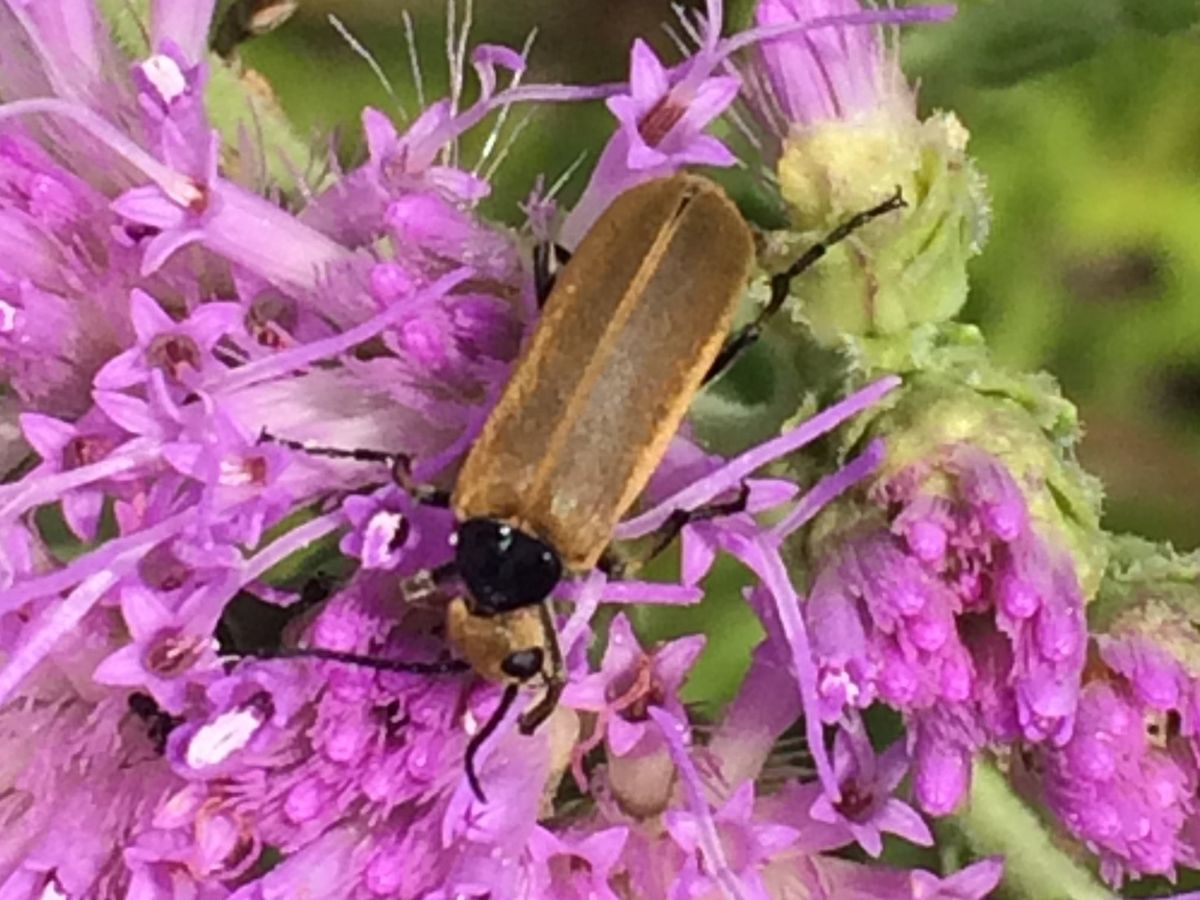
How to identify blister beetle
Elongated, soft-bodied beetles, often black, gray, or striped, that feed in swarms on foliage and flowers. They contain cantharidin, a blistering compound that irritates human skin on contact and is highly toxic to horses if beetles are baled into hay.
Crops attacked by blister beetle
Tomato, Potato, Bush bean, Beet, Swiss Chard.
Adults swarm and rapidly defoliate foliage and flowers in a matter of days; larvae live underground and actually help gardeners by eating grasshopper eggs.
Life cycle
- Egg (Summer) — Laid in soil near grasshopper egg pods.
- Larva (Summer–fall) — Beneficial stage; feeds on grasshopper eggs underground.
- Overwintering pupa/larva (Winter) — None.
- Adult beetle (Mid-late summer) — The destructive, swarming stage above ground.
Natural, organic blister beetle control
- 1. Wear gloves, never crush by hand · low effort
Cantharidin causes chemical blistering on skin; knock beetles into soapy water with a stick or gloved hand instead of bare fingers.
When: Whenever handling
- 2. Row cover during swarm periods · medium effort
Beetles move in dense, mobile swarms; covering beds for a week or two can outlast an outbreak.
When: At first sighting
- 3. Hand-remove and relocate swarms · medium effort
Sweep beetles into a bucket with a broom or net rather than spraying broad-spectrum products that also kill bees on nearby flowers.
When: As soon as spotted
Fastest-fix products
- Long-handled broom or net — Lets you clear a swarm without skin contact. · Any hardware store
Prevention
- Never feed hay containing crushed blister beetles to horses; cantharidin is lethal to them even in small amounts.
- Keep skin covered when working through a swarm; wash hands after any contact.
- Encourage ground-nesting predators; larvae naturally suppress grasshopper populations.