Feral hog identification & organic control
Sus scrofa
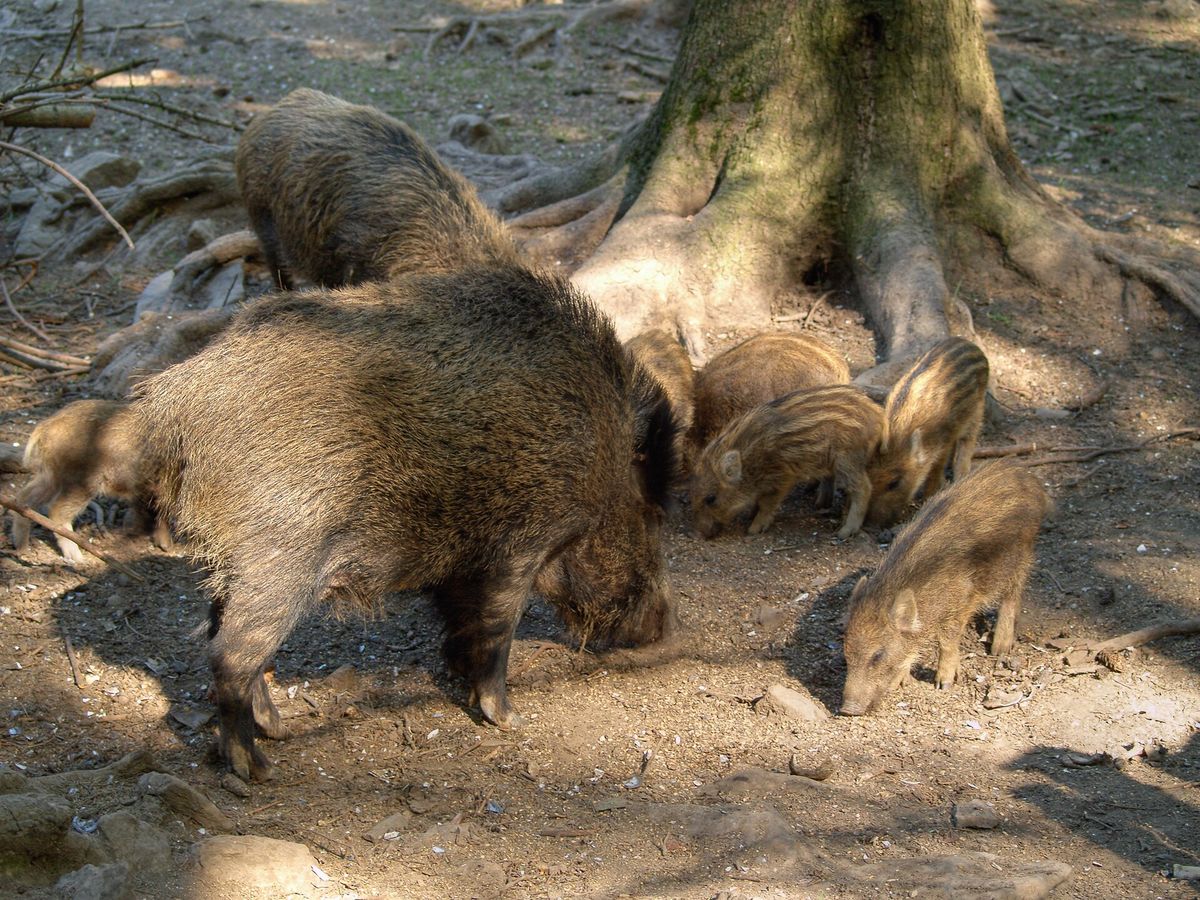
How to identify feral hog
A destructive, non-native, and highly prolific invasive species that roots through soil hunting roots, grubs, and bulbs, tearing up huge areas of garden and pasture in a single night. Unlike most wildlife on this list, feral hogs are an invasive species that most states actively encourage removing.
Crops attacked by feral hog
Root vegetables, Sweet corn, Melon, Lawn/pasture, Bulbs.
Roots up soil with its snout in a wide swath hunting grubs, worms, and roots, destroying root crops and turf, and will eat ripe melons, corn, and nearly anything else in its path.
Life cycle
- Year-round breeding (All year, 2 litters/year possible) — Extremely fast population growth; among the most prolific large mammals in North America.
- Sounder (group) foraging (Nightly, year-round) — Groups of 6-20+ root through large areas overnight.
- Piglets foraging with sounder (Spring–fall) — Growing sounders increase total rooting damage.
Natural, organic feral hog control
- 1. Heavy-duty exclusion fencing · high effort
Hogs are strong and persistent; a woven wire or electric fence with a bottom strand close to the ground is needed to keep them from rooting under.
When: Before rooting starts
- 2. Coordinate with local/state removal programs · high effort
Because feral hogs are invasive and destructive at a landscape scale, many states run trapping and removal programs; report sightings and consider corral trapping with agency guidance rather than acting alone.
When: First signs of activity
- 3. Remove easy food sources · medium effort
Clean up fallen fruit and nuts, and secure any grain or feed storage, which reduces how often a sounder revisits.
When: Ongoing
Fastest-fix products
- Heavy woven wire or electric hog fencing — Standard garden fencing won't stop a determined hog; low, sturdy wire is required. · Farm/ranch suppliers
- Corral-style live traps — The standard tool for capturing an entire sounder at once; best used with agency or professional guidance. · Wildlife control services, state ag extension
Prevention
- Report feral hog sightings to your state agriculture or wildlife agency; most states track and manage this invasive species actively.
- Fence gardens and orchards with sturdy, ground-tight wire in any area with known hog activity.
- Never approach a sounder, especially one with piglets; hogs can be aggressive if cornered.