
Scale insects identification & organic control
Coccoidea (armored & soft scale)
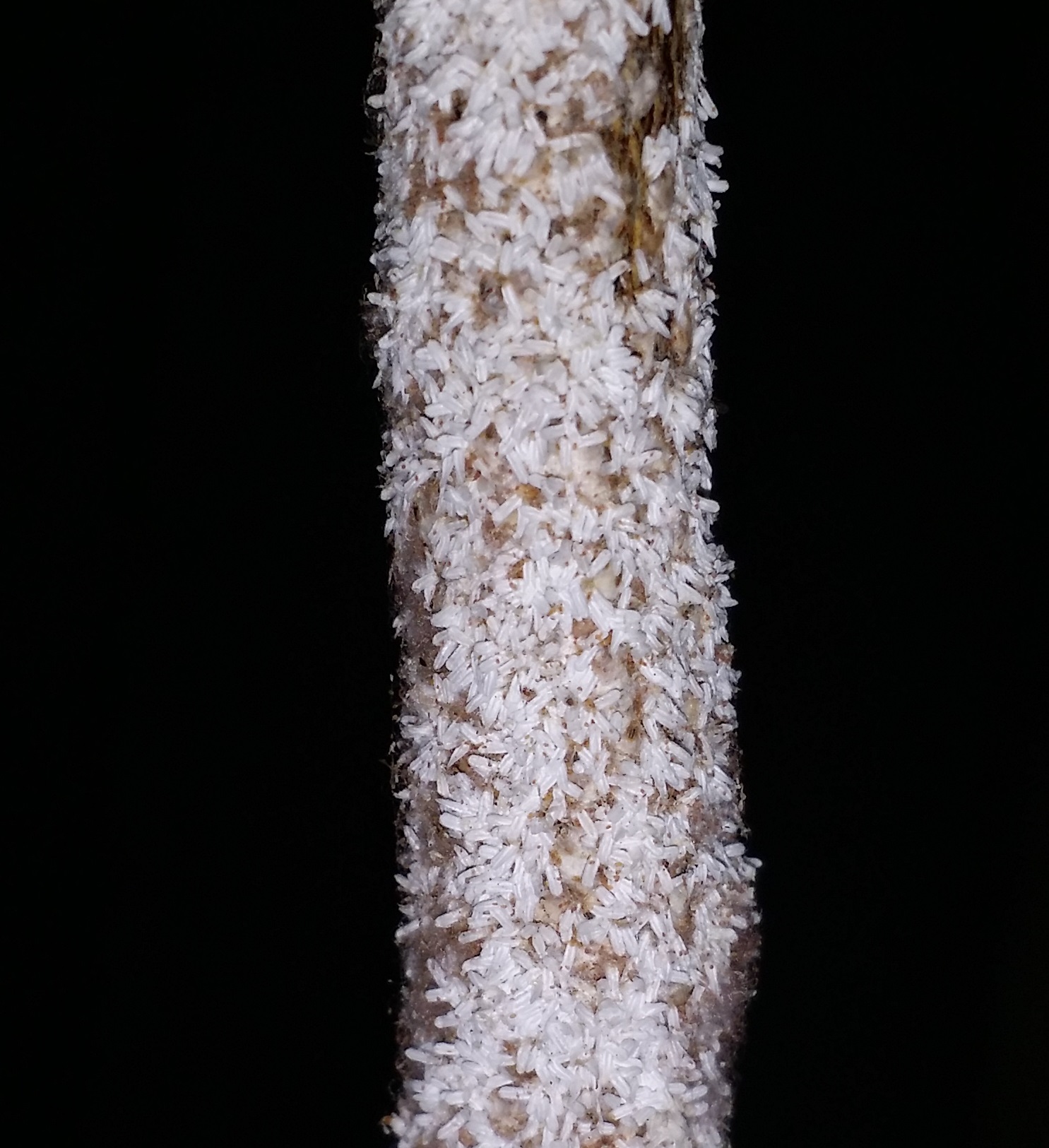
How to identify scale insects
Tiny, immobile insects that look like small bumps or shells stuck to stems and leaf undersides rather than typical bugs. Soft scales excrete honeydew that grows sooty mold; armored scales feed under a hard waxy shield.
Crops attacked by scale insects
Apple, Pear, Peach, Grape, Fig, Blueberry.
Piercing-sucking feeding drains sap from stems and leaves, causing yellowing, branch dieback, and reduced fruiting; heavy soft-scale infestations coat leaves and fruit in sticky honeydew and black sooty mold.
Life cycle
- Overwintering nymph or egg (Winter) — Sheltered under the scale's protective covering.
- Crawler (mobile nymph) (Spring) — The only mobile, treatable stage; spreads to new growth.
- Settled nymph (Summer) — Forms protective covering; feeding intensifies.
- Adult (Summer–fall) — Reproduces; some species have 2-3 generations per year.
Natural, organic scale insects control
- 1. Prune out heavily infested wood · medium effort
Cut and destroy branches thick with scale; the fastest way to reduce a bad infestation.
When: Dormant season
- 2. Dormant horticultural oil · medium effort
Spray in late winter before buds break to smother overwintering scale.
When: Late winter
- 3. Time sprays to the crawler stage · medium effort
Insecticidal soap or oil only works well on the mobile crawler stage; track with sticky tape on a branch to time it.
When: Spring
Fastest-fix products
- Dormant horticultural oil — Smothers overwintering scale before it becomes mobile. · Garden centers, Amazon
- Insecticidal soap — Effective on the vulnerable crawler stage. · Garden centers, Amazon
Prevention
- Avoid over-fertilizing with nitrogen, which favors soft scale buildup.
- Encourage lady beetles and parasitic wasps by avoiding broad-spectrum sprays.