
Blossom end rot identification & organic treatment
N/A — abiotic (calcium transport disorder)
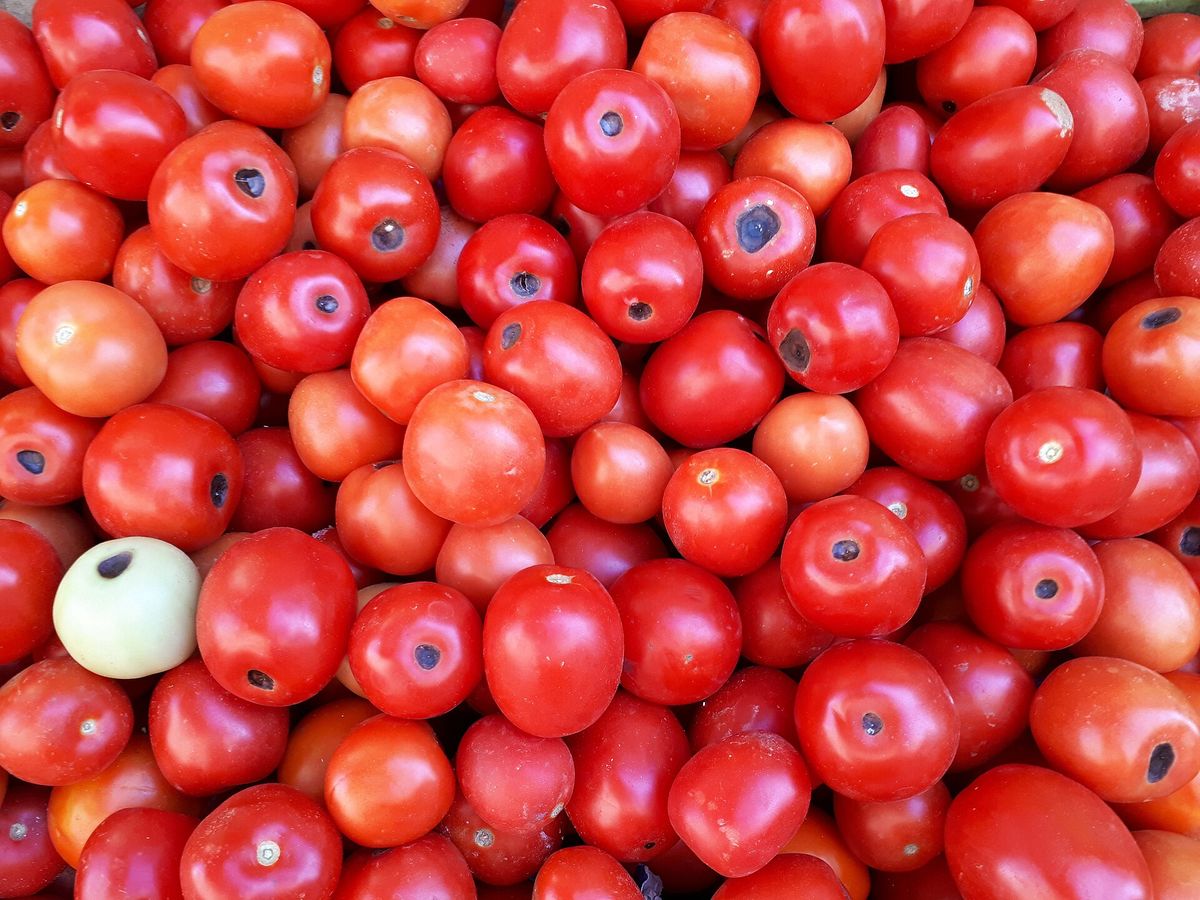
How to identify blossom end rot
A localized calcium deficiency at the fruit's blossom end, usually caused by inconsistent watering rather than a lack of calcium in the soil. Uneven moisture disrupts the plant's ability to move calcium into fast-growing fruit tissue.
Symptoms
- Sunken, water-soaked spot at the blossom end (bottom) of the fruit
- Spot darkens to brown or black and can turn leathery
- Secondary mold/rot organisms often colonize the dead tissue afterward
- Rest of the fruit typically develops normally
Host crops
Tomato, Pepper, Zucchini, Winter squash, Watermelon.
How it spreads
Not contagious; caused by inconsistent soil moisture and calcium uptake, not a pathogen.
Favorable conditions
Fluctuating soil moisture (dry-wet cycles), rapid early fruit growth, excess nitrogen, and root damage from cultivation all interfere with calcium delivery to fruit.
Progression
- Uneven watering stress (During fruit sizing) — Moisture swings interrupt calcium transport to the fruit.
- Blossom-end lesion (Days later) — Water-soaked spot appears and darkens.
- Secondary rot (If left on the plant) — Fungi/bacteria colonize the dead tissue.
Organic treatment for blossom end rot
- 1. Even out watering · low effort
Water deeply and consistently (about 1-2 in per week), using mulch to buffer soil moisture swings; this fixes most cases without any calcium product.
When: Ongoing through fruit set/sizing
- 2. Remove affected fruit · low effort
Pick off fruit with blossom end rot; it won't heal, and removing it lets the plant put energy into new fruit.
When: As seen
- 3. Foliar calcium spray (supportive, not a fix) · low effort
A calcium chloride foliar spray can help on fast-growing fruit, but it doesn't correct the underlying watering inconsistency.
When: Optional, alongside watering fixes
Prevention
- Mulch to buffer soil moisture and avoid dry-wet swings.
- Avoid heavy nitrogen fertilization early in fruit development.
- Test soil pH; very acidic soils can limit calcium availability.
- Avoid deep cultivation near the root zone once plants are fruiting.
Easy to confuse with
Anthracnose (fungal, appears anywhere on fruit, with pink spore masses), Sunscald (on the sun-exposed side, not the blossom end).