Fire blight identification & organic treatment
Erwinia amylovora
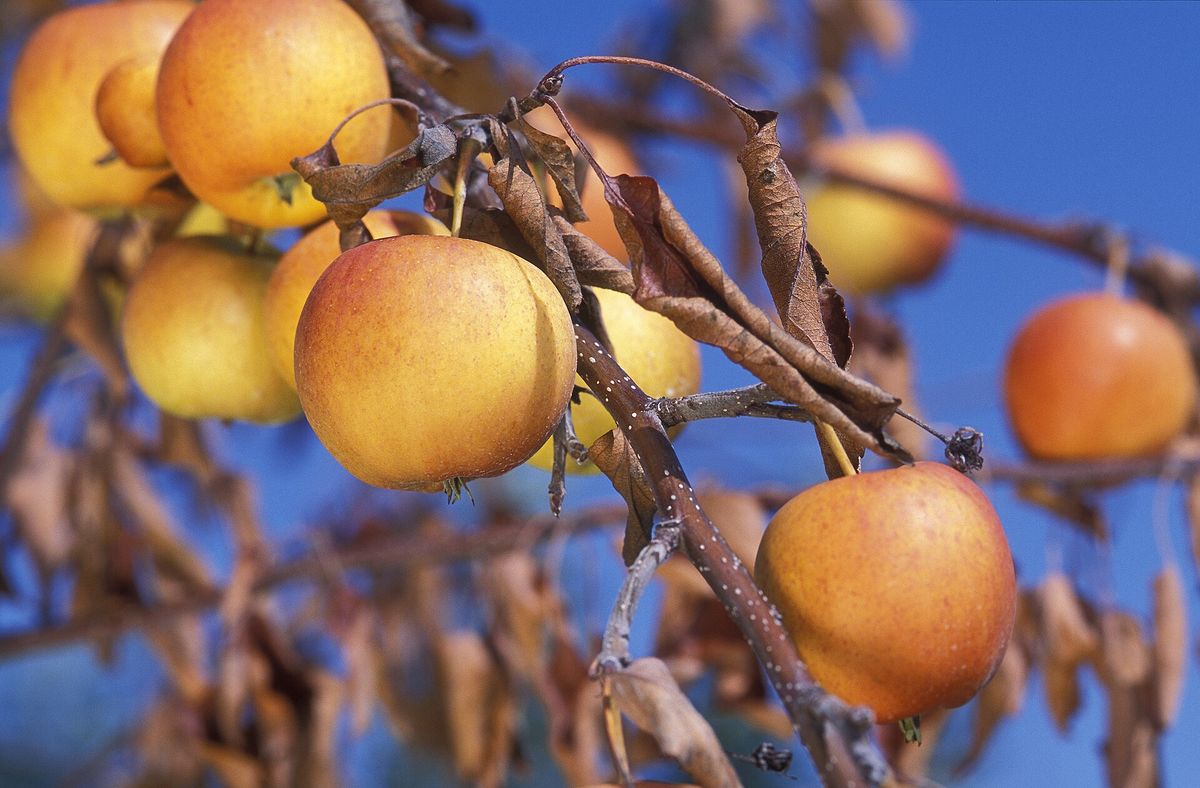
How to identify fire blight
A fast-moving bacterium of apples, pears, and their relatives that scorches blossoms, shoots, and branches so they look burned, giving the disease its name.
Symptoms
- Blossoms wilt, blacken, and die shortly after bloom
- Shoot tips wilt into a distinctive 'shepherd's crook' curl and turn black-brown
- Cankers on branches ooze amber-colored bacterial slime in wet spring weather
- Affected twigs and branches look scorched, as if burned by fire
Host crops
Apple, Pear.
How it spreads
Spread by pollinating insects, rain splash, and wind during bloom; also moves on pruning tools between cuts.
Favorable conditions
Warm (75-85°F), humid or rainy weather during bloom is highest risk; a single warm rainy bloom period can trigger an outbreak.
Progression
- Blossom infection (Bloom, warm/wet weather) — Flowers wilt and blacken; bacteria enter through the blossom.
- Shoot blight (Following weeks) — New shoots wilt into a shepherd's-crook and blacken.
- Canker formation (Later in season or following spring) — Cankers girdle branches and ooze in wet weather, seeding new infections.
Organic treatment for fire blight
- 1. Prune out infected wood well below the canker · high effort
Cut at least 8-12 in below visible symptoms into healthy wood, disinfecting shears with 10% bleach or alcohol between every cut.
When: During dry weather, ideally dormant season; emergency cuts any time blight is spotted
- 2. Copper spray at bloom in high-risk years · medium effort
Apply an OMRI-listed copper product at early bloom if warm wet weather is forecast during flowering; copper is protective, not curative.
When: Bloom period, high-risk weather
Prevention
- Plant fire-blight-resistant apple/pear cultivars and rootstocks.
- Avoid heavy nitrogen fertilization, which produces lush, susceptible shoot growth.
- Disinfect pruning tools between cuts and between trees.
- Remove and destroy prunings; do not compost.
Easy to confuse with
Frost damage to blossoms (no ooze, no shepherd's-crook shoots), Fungal canker diseases (slower-moving, no amber ooze).