Iron deficiency identification & organic treatment
N/A — abiotic (nutrient deficiency)
How to identify iron deficiency
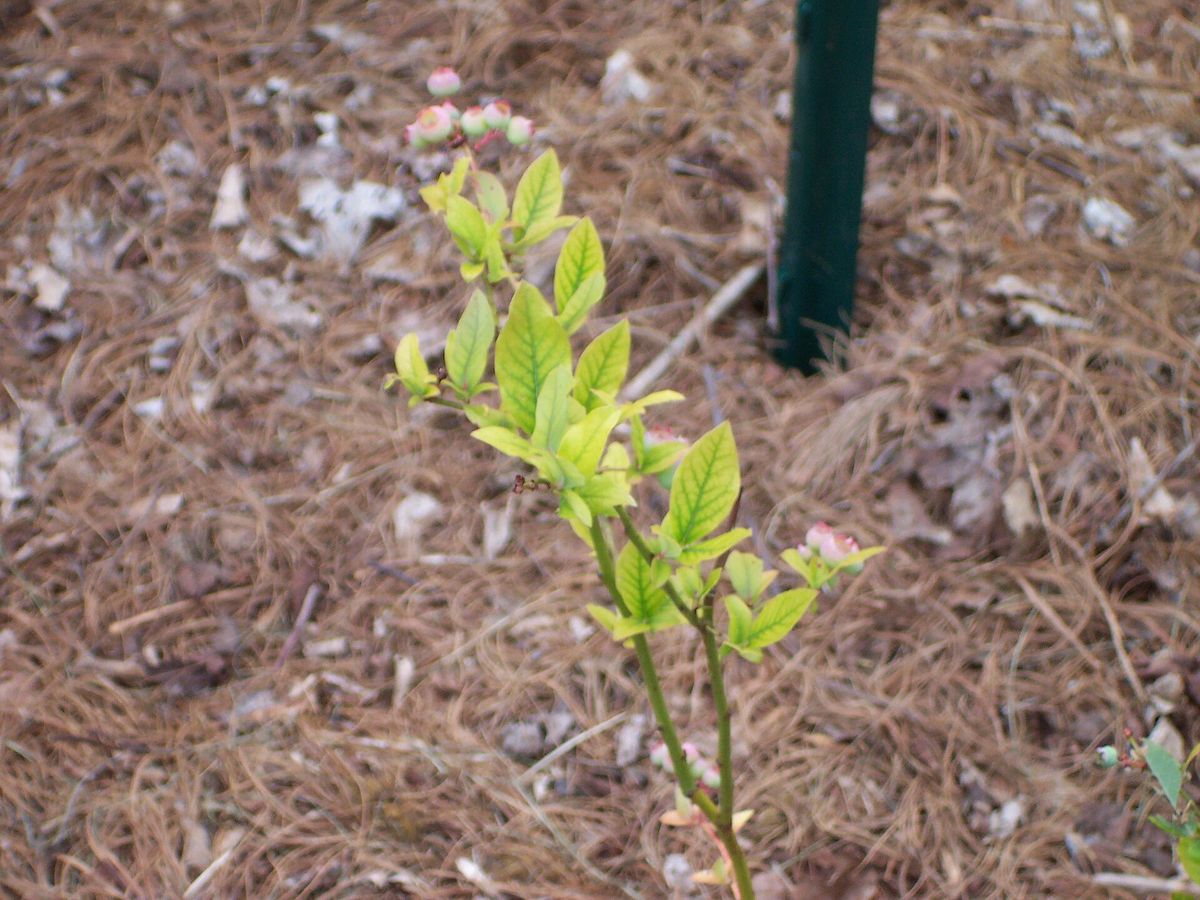
Iron is nearly immobile in the plant, so deficiency shows up first and most severely on the youngest leaves, turning them pale yellow to white while veins stay sharply green. Usually a soil pH problem, not a true lack of iron.
Symptoms
- Pale yellow-to-white color on the youngest, newest leaves while veins remain distinctly green
- In severe cases, new leaves can turn nearly white and growth stalls
- Older leaves often remain normal green
Host crops
Blueberry, Raspberry, Strawberry, Tomato.
How it spreads
Not contagious; usually a soil pH availability issue rather than truly low soil iron, not a pathogen.
Favorable conditions
High soil pH (alkaline soil above about 7.5) locks up iron even when it's present in adequate amounts; overwatering/compaction can worsen it by limiting root uptake.
Progression
- pH-driven lockup (In alkaline soil) — Iron becomes chemically unavailable to roots even though present in the soil.
- New-growth chlorosis (As new leaves emerge) — Youngest leaves show pale interveinal yellowing.
- Growth stall (If uncorrected) — New leaves may whiten and growth slows.
Organic treatment for iron deficiency
- 1. Lower soil pH toward the crop's preferred range · medium effort
Work in elemental sulfur or acidic organic matter (pine needles, peat) per soil test recommendation, especially critical for blueberries which need pH 4.5-5.5.
When: Based on soil test, ideally before planting
- 2. Apply chelated iron as a foliar spray for a faster fix · low effort
An OMRI-listed iron chelate (e.g., iron EDDHA) foliar spray greens up new growth quickly while the underlying soil pH is corrected.
When: At first sign, as a supportive measure
Prevention
- Test soil pH before planting acid-loving crops like blueberries.
- Avoid over-liming soil that's already near neutral or alkaline.
- Improve drainage, since waterlogged roots take up iron poorly even at correct pH.
Easy to confuse with
Manganese deficiency (very similar interveinal chlorosis pattern, distinguish with a tissue/soil test), Viral mosaic (mottled, not clean interveinal pattern, and not confined to youngest leaves).