
Potato scab identification & organic treatment
Streptomyces scabies
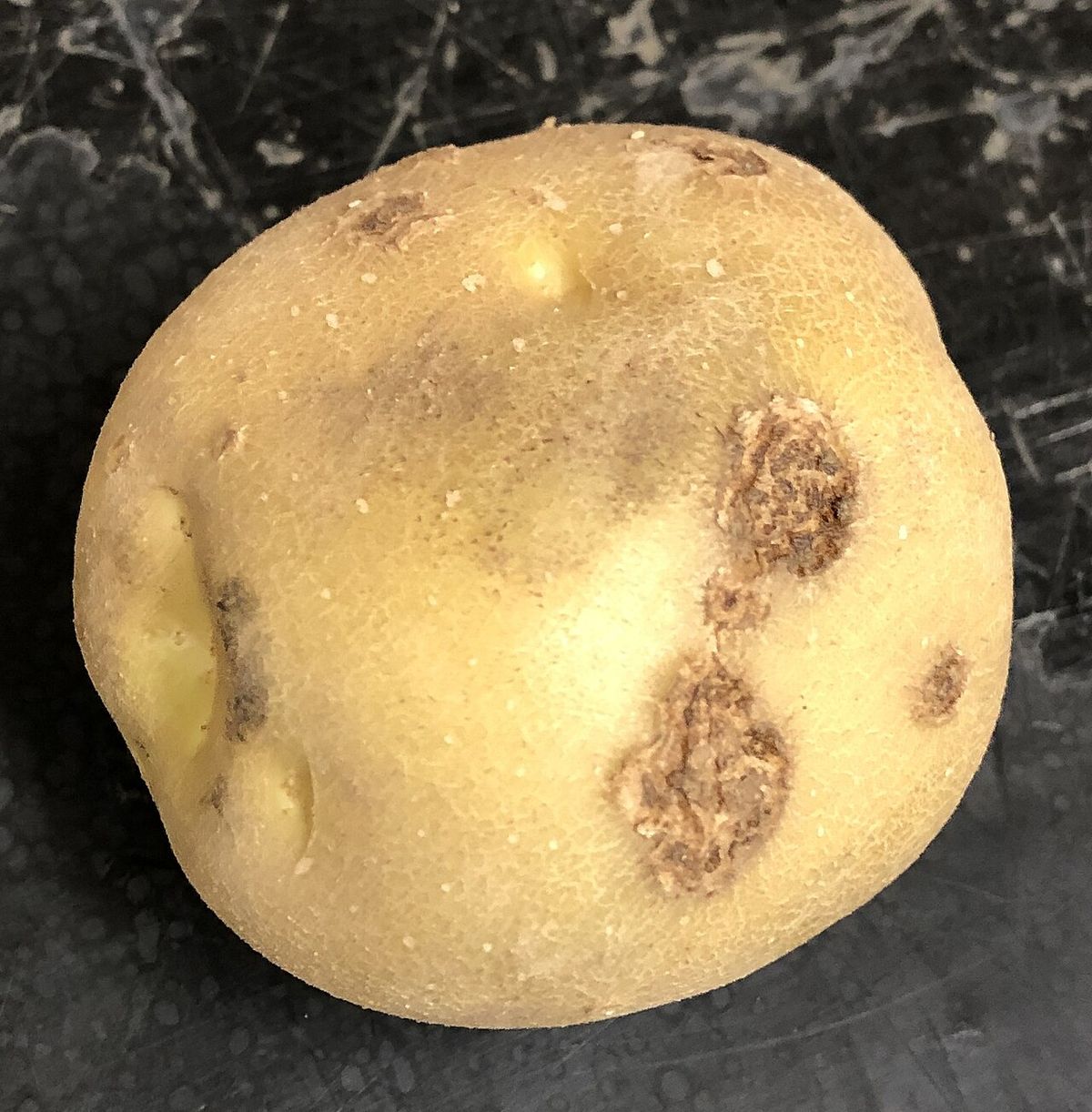
How to identify potato scab
A soil actinomycete (bacteria-like organism, long managed alongside fungal diseases) that roughens potato tuber skin with corky, scabby lesions. Cosmetic mostly — tubers are still edible once peeled.
Symptoms
- Rough, corky, brown lesions on the tuber skin, either raised, flat, or sunken
- Lesions can be scattered or cover most of the tuber surface in bad cases
- Foliage above ground is usually unaffected
- Flesh beneath the scab is normal once peeled
Host crops
Potato.
How it spreads
Persists in soil for years; spread on seed potatoes, in irrigation water, and on tools and equipment.
Favorable conditions
Dry soil during tuber formation and alkaline-to-neutral soil pH (above 5.5) strongly favor scab; consistent soil moisture during tuber set is the best defense.
Progression
- Tuber initiation (Early tuber set) — Most vulnerable window; dry soil now drives scab severity.
- Lesion development (Through bulking) — Corky lesions expand on the skin as tubers size up.
Organic treatment for potato scab
- 1. Keep soil consistently moist during tuber set · medium effort
Irrigate to maintain even moisture for about the first 4-6 weeks after tubers begin forming.
When: Tuber initiation window
- 2. Lower soil pH · medium effort
Use acidifying amendments like elemental sulfur or peat the season before planting to bring pH toward 5.0-5.2.
When: Bed prep, prior season
- 3. Peel affected tubers · low effort
Scabby tubers are safe to eat once peeled; the corky layer is superficial.
When: At use
Prevention
- Plant certified disease-free seed potatoes.
- Rotate potatoes away from a scab-prone bed for 3-4 years.
- Avoid excess lime/wood ash on potato ground.
- Choose scab-tolerant varieties (e.g., 'Russet Burbank', 'Norland').
Easy to confuse with
Powdery scab (Spongospora, similar look but different soil pathogen), Mechanical/soil abrasion marks.