
Root-knot nematode identification & organic treatment
Meloidogyne spp.
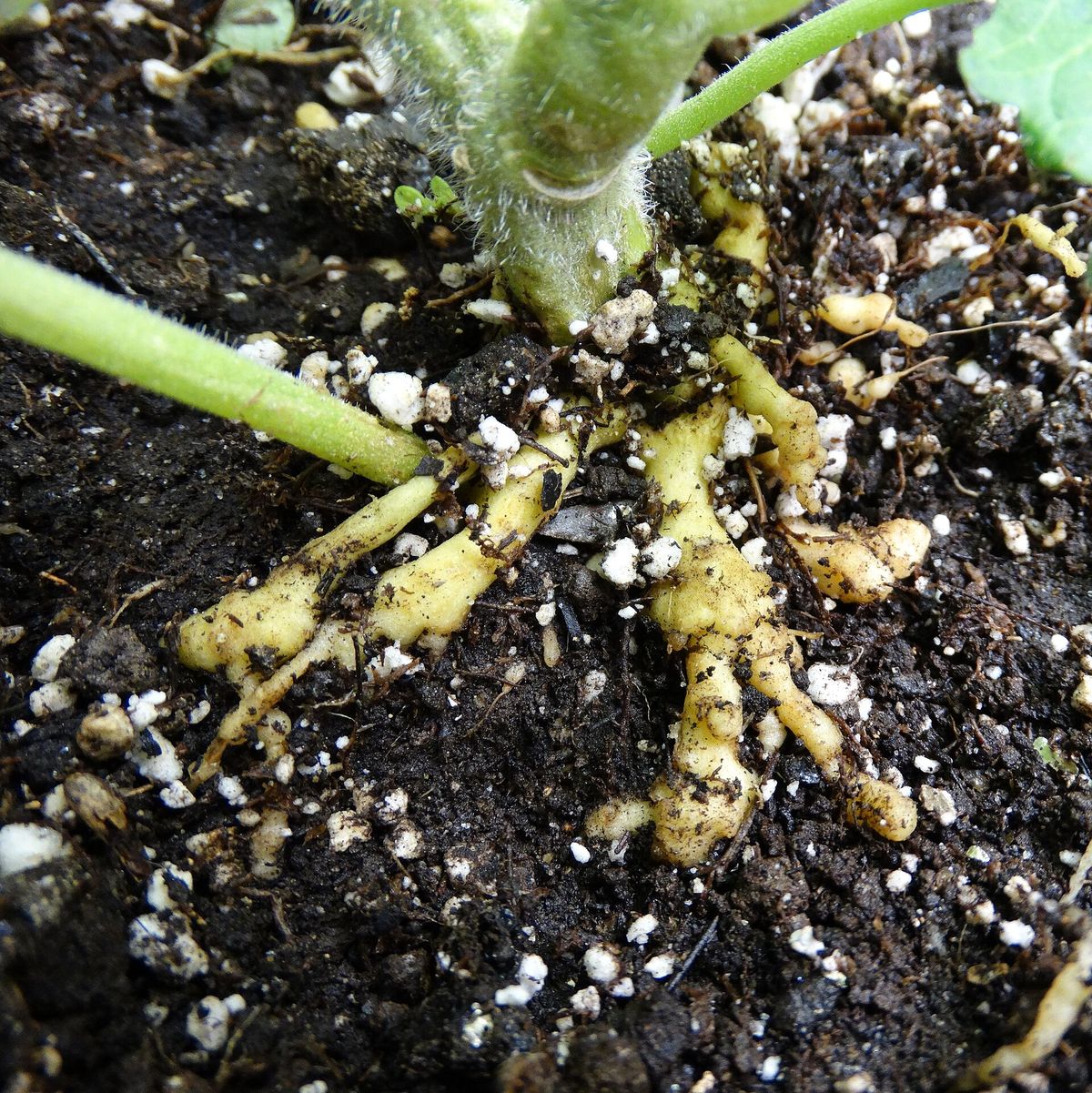
How to identify root-knot nematode
A microscopic soilborne roundworm that burrows into roots and triggers swollen galls as the plant's cells are hijacked to feed the nematode. Above-ground symptoms mimic drought or nutrient stress, which makes it easy to misdiagnose without pulling a plant.
Symptoms
- Wilting during heat of the day despite adequate soil moisture
- Stunted, yellowed, generally unthrifty growth
- Pulling a plant reveals small-to-large knot-like galls swelling the roots (not to be confused with beneficial nitrogen-fixing nodules on legume roots, which are smaller and detach easily)
- Carrots and other root crops show forked, stubby, or knotty roots
Host crops
Tomato, Carrot, Cucumber, Pepper, Bush bean, Lettuce.
How it spreads
Lives in soil and moves short distances on its own; spreads longer distances on contaminated soil clinging to tools, boots, tillers, transplants, and irrigation runoff.
Favorable conditions
Warm soil (70-85°F) and sandy or light-textured soils favor buildup; populations increase over successive seasons of susceptible crops in the same bed.
Progression
- Root invasion (Warm soil, young roots) — Juvenile nematodes enter root tips.
- Gall formation (Weeks after invasion) — Root galls swell as the nematode feeds and reproduces.
- Above-ground decline (As galling increases) — Wilting, stunting, and yield loss become visible.
Organic treatment for root-knot nematode
- 1. Solarize the bed · high effort
Cover moist soil with clear plastic for 4-6 weeks during the hottest part of summer to heat the top soil layer enough to kill nematodes and eggs.
When: Peak summer, between crops
- 2. Plant a trap or biofumigant cover crop · medium effort
Grow French marigold (Tagetes patula) or mustard/brassica biofumigant cover crops for a full season, then till in before nematode populations complete a full life cycle.
When: Off-season rotation
- 3. Add organic matter · low effort
Work in compost and well-rotted manure, which supports nematode-trapping fungi and predatory soil organisms that reduce populations over time.
When: Ongoing, each season
Prevention
- Rotate to non-host or resistant crops (corn, most brassicas, small grains) for 2-3 years in infested beds.
- Choose nematode-resistant varieties, marked with an 'N' on seed packets/tags.
- Clean soil off tools, boots, and equipment before moving between beds.
- Avoid moving soil or transplants from a known infested area.
Easy to confuse with
Rhizobium nodules on legume roots (smaller, round, easily rubbed off, and beneficial), Drought stress without root galling, Fusarium/verticillium wilt (vascular browning, no root galls).