
White mold (Sclerotinia) identification & organic treatment
Sclerotinia sclerotiorum
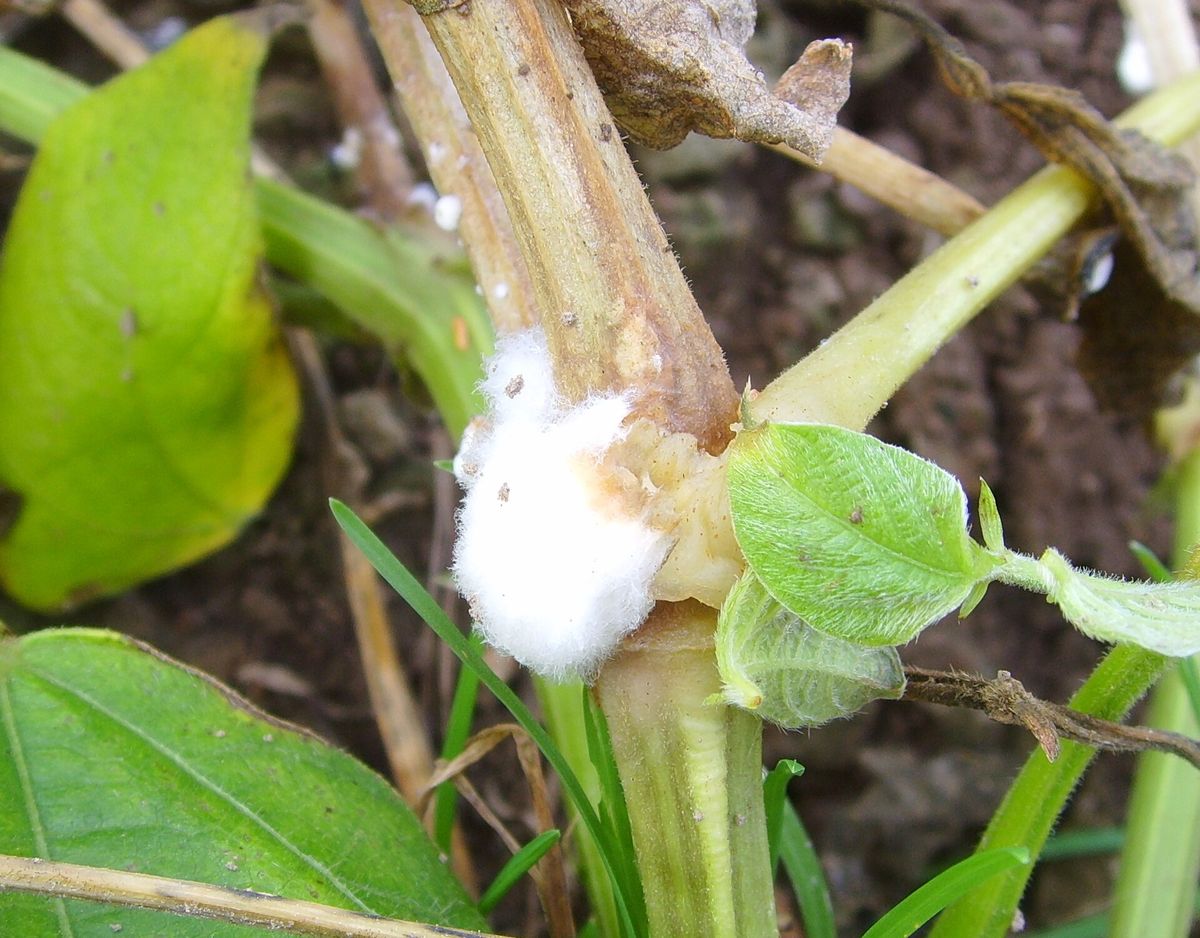
How to identify white mold (sclerotinia)
A fungus that infects through dying blossoms, then colonizes stems and pods with a fluffy white cotton-like growth studded with hard black sclerotia the size of mouse droppings.
Symptoms
- Water-soaked lesions starting at a leaf axil, blossom, or where two leaves touch
- Dense white, cottony fungal growth over the lesion
- Hard black sclerotia (like mouse droppings) embedded in or on the white mold
- Stems girdle and the plant above the lesion wilts and dies
Host crops
Bush bean, Zucchini, Winter squash, Cabbage, Lettuce, Pea.
How it spreads
Sclerotia survive years in soil, germinate into small mushroom-like structures that release airborne spores, which infect via dying blossom tissue or wounds.
Favorable conditions
Cool, humid conditions (60-75°F) with dense canopy that traps moisture; common after a bloom-heavy period followed by rain.
Progression
- Sclerotia germinate (Cool, moist soil) — Tiny mushroom-like apothecia release spores.
- Blossom infection (Spores land on senescing flowers) — No visible damage yet.
- Stem/pod colonization (Days later) — White cottony growth and sclerotia appear; stems girdle.
- Collapse (Within 1-2 weeks) — Plant tissue above the lesion wilts and dies.
Organic treatment for white mold (sclerotinia)
- 1. Remove infected tissue immediately · low effort
Cut out and discard (not compost) any stem or leaf showing white cottony growth, well below the lesion.
When: At first sign
- 2. Thin for airflow · low effort
Widen spacing and prune dense canopy so foliage dries between waterings.
When: Mid-season
- 3. Remove spent blossoms · low effort
Deadhead old flowers/petals that have fallen onto leaves, since they're the usual infection point.
When: Weekly during bloom
Prevention
- Rotate away from susceptible crops for 3-4 years; avoid following one susceptible crop with another.
- Avoid overhead irrigation, especially during bloom.
- Improve drainage and avoid low, wet spots for susceptible crops.
- Till under crop debris promptly to reduce sclerotia buildup at the surface.
Easy to confuse with
Botrytis gray mold (gray-brown fuzz, no hard black sclerotia), Southern blight (tan sclerotia, hot weather vs. cool).