
How to grow american persimmon
Family Ebenaceae. Hardy to USDA hardiness zone 4a+ (U.S. Department of Agriculture). Full sun. Ready in 5-7 years to bearing (perennial tree).
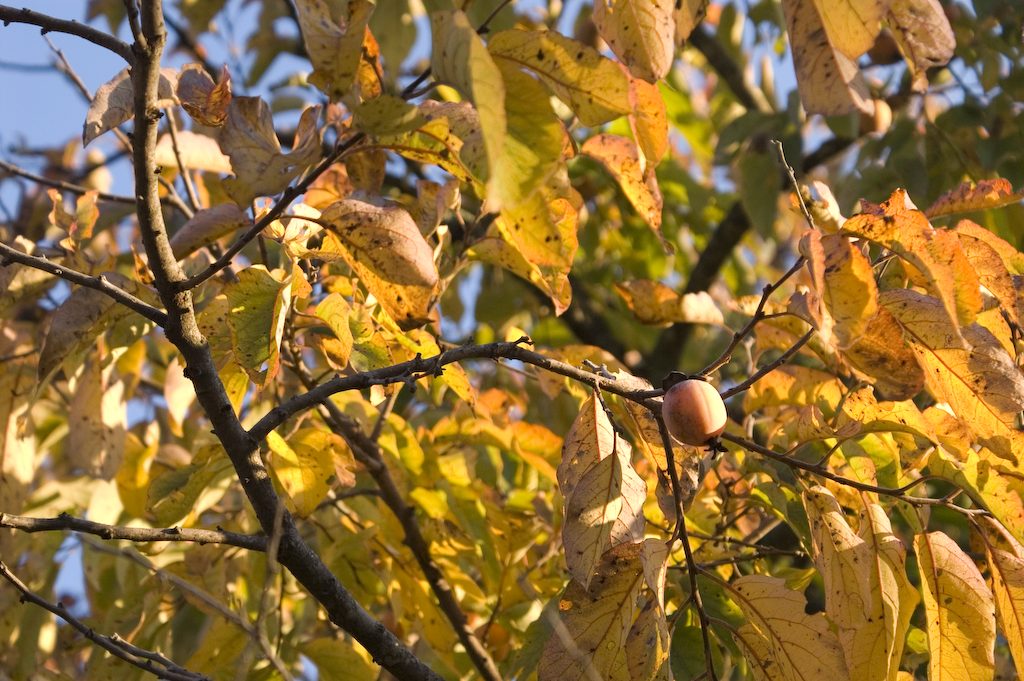
Sun
Full sun
Spacing
20-35 ft
Days to harvest
5-7 years to bearing (perennial tree)
Hardiness
Zone 4a+
What growers actually recorded
Loading zone 7b results…
When to plant american persimmon
- Transplant out: ~2 weeks after last frost.
Companion plants for american persimmon
Plant with: Pawpaw, Elderberry.
Common pests & problems
Persimmon borer, rarely serious; deer browse young trees hard.
Grower's tip
Fruit is astringent until fully soft-ripe; wait until it looks nearly rotten and falls into your hand, not before.
When to plant american persimmon in your zone
Free month-by-month sowing and transplanting lists, built from frost dates for your USDA (United States Department of Agriculture) hardiness zone.
Soil & water for american persimmon
Soil & pH
6.0-7.0: near neutral
Loose, well-drained loam with 3-5% organic matter.
Compost 2 in worked into the top 6 in of soil each spring.
Watering
1 in / week
Deep drip at the base twice a week beats a daily shallow sprinkle.
Consistent moisture prevents most crop problems.
Knowing when to harvest
- Fruit turns deep orange and very soft, almost jelly-like; astringent varieties are inedible until fully soft.
- A light frost is not required but often coincides with ripening in many regions.
- Fruit that drops on its own is usually ripe; picking too early results in intense astringency.
Storing & keeping
Fully soft fruit keeps only a few days at room temperature or about a week refrigerated. Pulp freezes well for a year and is commonly used that way for baking.
What to expect
Per plant: 50-100 lb from a mature tree, bearing by year 6-10 for seedlings, sooner for grafted trees
Troubleshooting american persimmon
Fruit is mouth-puckering even though it looks ripe
Likely cause: Most American persimmon cultivars are astringent until fully soft; firm orange fruit is not yet ready
What to do: Wait until the fruit is very soft, almost to the point of looking overripe, before eating.
Tree bears no fruit despite maturity
Likely cause: American persimmon is often dioecious; this may be a male tree, or a female with no male nearby, though some cultivars are self-fertile or parthenocarpic
What to do: Confirm the cultivar's pollination needs before planting; some grafted cultivars fruit reliably alone.
Varieties worth growing
Meader
Self-fertile and can set seedless fruit without a pollinizer.
Prok
Large fruit, reliable, widely recommended grafted selection.
Growing american persimmon in containers
Not practical; American persimmon develops a long taproot and grows into a substantial tree unsuited to pots.
Nutrition
A meaningful source of vitamins, minerals, and fiber when eaten fresh.
Common questions
Do I need a male tree?
Depends on the cultivar. Some, like Meader, set fruit without pollination; others need a male nearby. Check before planting.
Why did my persimmon taste awful?
It was eaten before it was fully soft. American persimmon astringency does not fade until the fruit is nearly overripe in texture.
Where these numbers come from
- USDA Plant Hardiness Zone Map (2023 revision). Zone assignment and the 30-year normals behind every cold-hardiness figure.
- NOAA NCEI 1991-2020 Climate Normals. Frost dates, growing-season length, and the probability bands on both.
- Cornell, UMN, and UC Davis Cooperative Extension crop guides. Spacing, days to maturity, soil pH targets, and per-plant yield ranges.
- USDA FSIS / FDA Produce Safety guidance. Wash, cure, and cold-storage handling numbers.
Ranges are regional guidance, not a promise for your yard. Your own logged results always override the published range.