
How to grow banana
Family Musaceae. Hardy to USDA hardiness zone 9a+ (U.S. Department of Agriculture). Full sun. Ready in 12-18 months to fruit (perennial clump).
Sun
Full sun
Spacing
8-10 ft
Days to harvest
12-18 months to fruit (perennial clump)
Hardiness
Zone 9a+
What growers actually recorded
Loading zone 7b results…
When to plant banana
- Transplant out: ~4 weeks after last frost.
Companion plants for banana
Plant with: Sweet Potato, Comfrey.
Common pests & problems
Nematodes, banana weevil; wind shreds the leaves.
Grower's tip
Each stalk fruits once and dies. Cut it down after harvest and keep one or two suckers so the clump keeps producing.
When to plant banana in your zone
Free month-by-month sowing and transplanting lists, built from frost dates for your USDA (United States Department of Agriculture) hardiness zone.
Soil & water for banana
Soil & pH
6.0-7.0: near neutral
Loose, well-drained loam with 3-5% organic matter.
Compost 2 in worked into the top 6 in of soil each spring.
Watering
1 in / week
Deep drip at the base twice a week beats a daily shallow sprinkle.
Consistent moisture prevents most crop problems.
Knowing when to harvest
- Fingers plump up and round out, losing their sharp angular edges.
- Harvest the whole hand or bunch while still green; bananas ripen off the plant, not on it.
- The mother plant dies back after fruiting; a sucker from the base takes over for the next cycle.
Storing & keeping
Ripen at room temperature out of the fridge; cold damages unripe bananas. Once ripe, refrigerating the peel (it darkens, flesh stays fine) can extend usable life by several days. Freezes well peeled for baking.
What to expect
Per plant: 30-100 lb per bunch from a mature stalk, fruiting 10-18 months after planting a sucker
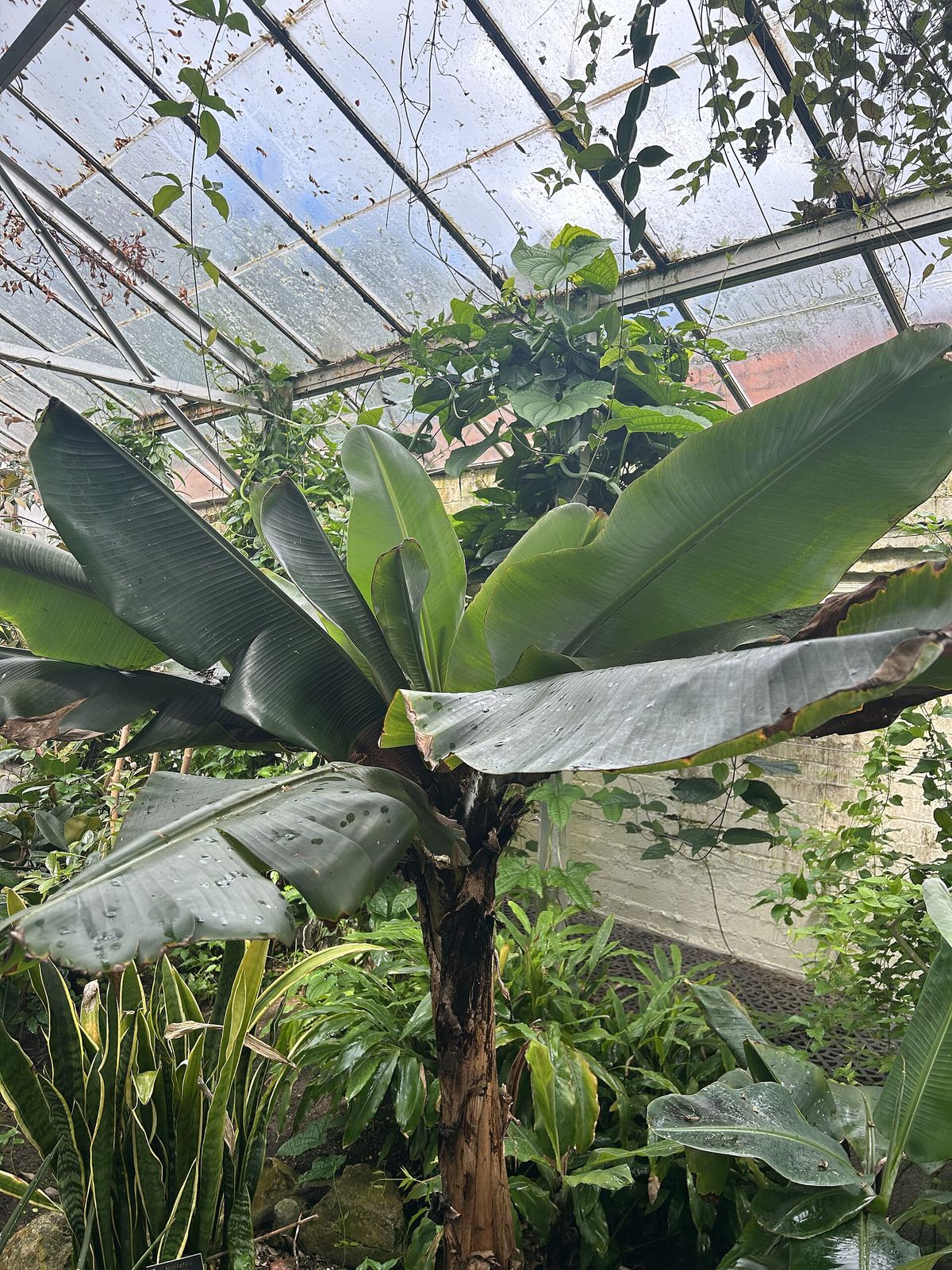
Banana is a giant herbaceous plant, not a tree; each individual stalk fruits once and is then cut down for the next sucker.
Troubleshooting banana
Plant grows large but never flowers
Likely cause: Insufficient heat and time; bananas need a long, warm, frost-free season to reach flowering size
What to do: Grow in the warmest possible microclimate, or in a container that can be given extra protection through winter.
Leaves shred badly in wind
Likely cause: Normal for the large, soft leaf structure, generally cosmetic
What to do: Site in a wind-sheltered spot if leaf appearance matters; fruiting is rarely affected.
Varieties worth growing
Dwarf Cavendish
Compact size suited to containers, reliable fruiting in warm climates.
Ice Cream (Blue Java)
More cold-tolerant than most, distinct creamy texture.
Growing banana in containers
Viable, especially dwarf types, in a 20-30 gallon pot; this is the practical route to growing banana outside zones 9-11 since it can be sheltered over winter.
Nutrition
A meaningful source of vitamins, minerals, and fiber when eaten fresh.
Common questions
Is banana a tree?
No, it is the world's largest herbaceous plant; the 'trunk' is made of tightly wrapped leaf bases, not wood.
Does the same stalk fruit again next year?
No, each stalk fruits once and is then removed; a sucker from the base becomes the next fruiting stalk.
Where these numbers come from
- USDA Plant Hardiness Zone Map (2023 revision). Zone assignment and the 30-year normals behind every cold-hardiness figure.
- NOAA NCEI 1991-2020 Climate Normals. Frost dates, growing-season length, and the probability bands on both.
- Cornell, UMN, and UC Davis Cooperative Extension crop guides. Spacing, days to maturity, soil pH targets, and per-plant yield ranges.
- USDA FSIS / FDA Produce Safety guidance. Wash, cure, and cold-storage handling numbers.
Ranges are regional guidance, not a promise for your yard. Your own logged results always override the published range.