
How to grow bush bean
Family Fabaceae. Hardy to USDA hardiness zone 3a+ (U.S. Department of Agriculture). Full sun. Ready in 50-65 days.
Sun
Full sun
Spacing
4-6 in
Days to harvest
50-65 days
Hardiness
Zone 3a+
What growers actually recorded
Loading zone 7b results…
When to plant bush bean
- Direct sow: ~1 weeks after last frost.
Companion plants for bush bean
Plant with: Corn, Cucumber, Carrot, Squash.
Avoid near: Onion, Garlic.
Common pests & problems
Mexican bean beetle. Handpick early.
Feeding & fertilizer
N-P-K ratio: LOW N: beans fix their own nitrogen
Organic options: Compost at planting is enough · Rock phosphate for pods · Wood ash for potassium if soil is deficient
When to feed: Do not add nitrogen fertilizer. You'll get leaves, no pods. One compost dose at planting.
Watch for: Inoculate seeds with rhizobia the first time you grow legumes in a bed.
N = nitrogen (leaves), P = phosphorus (roots and flowers), K = potassium (fruit and disease resistance). How to read a fertilizer label →
Grower's tip
Don't fertilize with nitrogen. Beans fix their own. Pick pods every 2-3 days.
When to plant bush bean in your zone
Free month-by-month sowing and transplanting lists, built from frost dates for your USDA (United States Department of Agriculture) hardiness zone.
Soil & water for bush bean
Soil & pH
6.0-7.0
Loose, well-drained. Beans dislike heavy clay; loosen with compost or grow in a raised bed.
Skip nitrogen fertilizer entirely. Inoculate seed with rhizobia inoculant the first time you grow legumes in a bed: pod set doubles.
Watering
1 in / week; 1.5 in during flowering & pod fill
Morning soak at the base. Wet foliage spreads bean rust and bacterial blight.
Pick a plant at the bottom of the row and dig a small hole 4 inches down. If it is dry enough to dust, water. If it's still dark and cool, hold. Legumes are more drought-tolerant than most people think; overwatering is the bigger mistake.
Knowing when to harvest
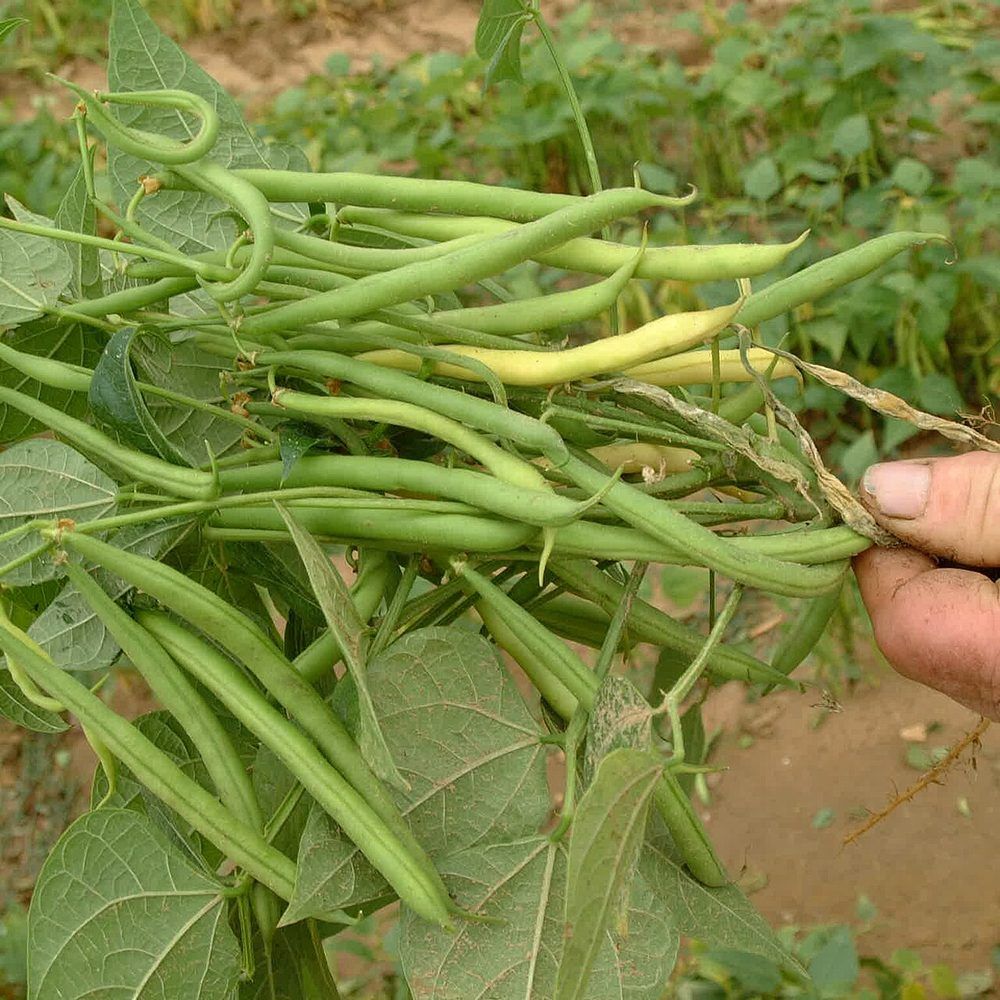
- Snap beans: pod snaps cleanly when bent; seed bump barely visible.
- Shell beans: pods bulging with fully-formed seeds; pods still green.
- Dry beans: pods rattle; harvest when 90% are brown.
Storing & keeping
Fresh pods: 5-7 days in crisper. Freeze blanched. Dry beans: cool, dry pantry: 2+ years.
What to expect
Per plant: 0.5-1 lb bush; 1-2 lb pole
Per sq ft: ~1 lb bush; 2 lb pole trellised
Troubleshooting bush bean
Empty pods
Likely cause: Heat above 90°F during flowering
What to do: Wait; the plant self-corrects when cooler nights return.
Rust (orange leaf pustules)
Likely cause: Wet foliage in warm humid weather
What to do: Water at the base; rotate to a new bed next year.
Varieties worth growing
Provider (bush snap)
Reliable germination in cool soil; disease-resistant.
Kentucky Wonder (pole)
Classic flavor, long harvest window.
Cherokee Trail of Tears (dry)
Heirloom black bean, drought-tolerant, historic.
Growing bush bean in containers
8-12 in deep pot for bush; add a 6 ft trellis for pole varieties in a 12 in pot.
Nutrition
Complete plant protein (with grains), folate, iron, molybdenum.
Common questions
Do I need to inoculate seed?
First planting in a bed: yes. Rhizobia inoculant improves pod set by 20-40%. After that, it persists.
Where these numbers come from
- USDA Plant Hardiness Zone Map (2023 revision). Zone assignment and the 30-year normals behind every cold-hardiness figure.
- NOAA NCEI 1991-2020 Climate Normals. Frost dates, growing-season length, and the probability bands on both.
- Cornell, UMN, and UC Davis Cooperative Extension crop guides. Spacing, days to maturity, soil pH targets, and per-plant yield ranges.
- USDA FSIS / FDA Produce Safety guidance. Wash, cure, and cold-storage handling numbers.
Ranges are regional guidance, not a promise for your yard. Your own logged results always override the published range.