
How to grow bitter melon
Family Cucurbitaceae. Hardy to USDA hardiness zone 6a+ (U.S. Department of Agriculture). Full sun, 8+ hrs. Ready in 60-90 days.
Sun
Full sun, 8+ hrs
Spacing
12-18 in on a trellis
Days to harvest
60-90 days
Hardiness
Zone 6a+
What growers actually recorded
Loading zone 7b results…
When to plant bitter melon
- Start indoors: ~4 weeks before last frost.
- Transplant out: ~2 weeks after last frost.
- Direct sow: ~2 weeks after last frost.
Companion plants for bitter melon
Plant with: Corn, Bean.
Avoid near: Potato.
Common pests & problems
Cucumber beetle, fruit fly, powdery mildew.
Feeding & fertilizer
N-P-K ratio: Balanced 5-5-5, ease off N at flowering
Organic options: Compost + aged manure in the hill · Fish emulsion until first blossom · Kelp meal + wood ash at flowering
When to feed: Big feed at transplant, side-dress once vines run, potassium boost at flowering.
Watch for: Female flowers dropping = pollination issue, not fertilizer.
N = nitrogen (leaves), P = phosphorus (roots and flowers), K = potassium (fruit and disease resistance). How to read a fertilizer label →
Grower's tip
Pick fruit while still green and firm; left to yellow and split, it turns bitter to the point of inedible.
When to plant bitter melon in your zone
Free month-by-month sowing and transplanting lists, built from frost dates for your USDA (United States Department of Agriculture) hardiness zone.
Soil & water for bitter melon
Soil & pH
6.0-6.8
Warm, well-drained soil enriched with compost. Cool wet soil = damping-off in seedlings.
Build a low mound (hill) 12-18 in wide, mix in a shovel of compost per hill. Wait until soil hits 65°F to plant.
Watering
1.5-2 in / week
Deep soak at the base on a trellis; the vine sprawls and climbs readily.
Bitter melon wilts fast in heat but recovers by evening if soil moisture is adequate; consistent recovery means watering is on track.
Knowing when to harvest
- Pick while still green and firm, before any yellow blush appears: this is the edible, immature stage.
- Ridges are still pronounced and the fruit gives slightly under thumb pressure.
- Once the fruit turns orange and starts splitting, the red seed pulp inside is exposed and the flesh is no longer used as a vegetable.
Storing & keeping
Refrigerate unwashed in a perforated bag at 50-55°F for 5-7 days. Does not freeze well raw; blanch and freeze sliced for stir-fry use.
What to expect
Per plant: 15-25 fruit per vine over the season on a trellis
Troubleshooting bitter melon
Fruit turns orange and bursts on the vine
Likely cause: Left to fully ripen instead of harvesting immature
What to do: Pick at the green stage; the ripe red pulp around the seeds is a folk purgative and not meant to be eaten as flesh.
Extremely bitter fruit even young
Likely cause: Heat and water stress concentrate bitterness compounds
What to do: Water consistently and pick smaller, younger fruit for a milder flavor.
Poor fruit set
Likely cause: Vine is mostly producing male flowers early in the season
What to do: Be patient; female flowers (with a small bulge behind the petals) increase as the vine matures. Hand-pollinate if bees are scarce.
Varieties worth growing
Indian Long (slender, spiny ridges)
Sharper bitterness, favored for curries.
Chinese/Taiwanese (pale, bumpy, blocky)
Milder flavor, easier introduction for new growers.
Hyacinth Bean Gourd type from Thailand
Compact fruit suited to smaller trellises.
Growing bitter melon in containers
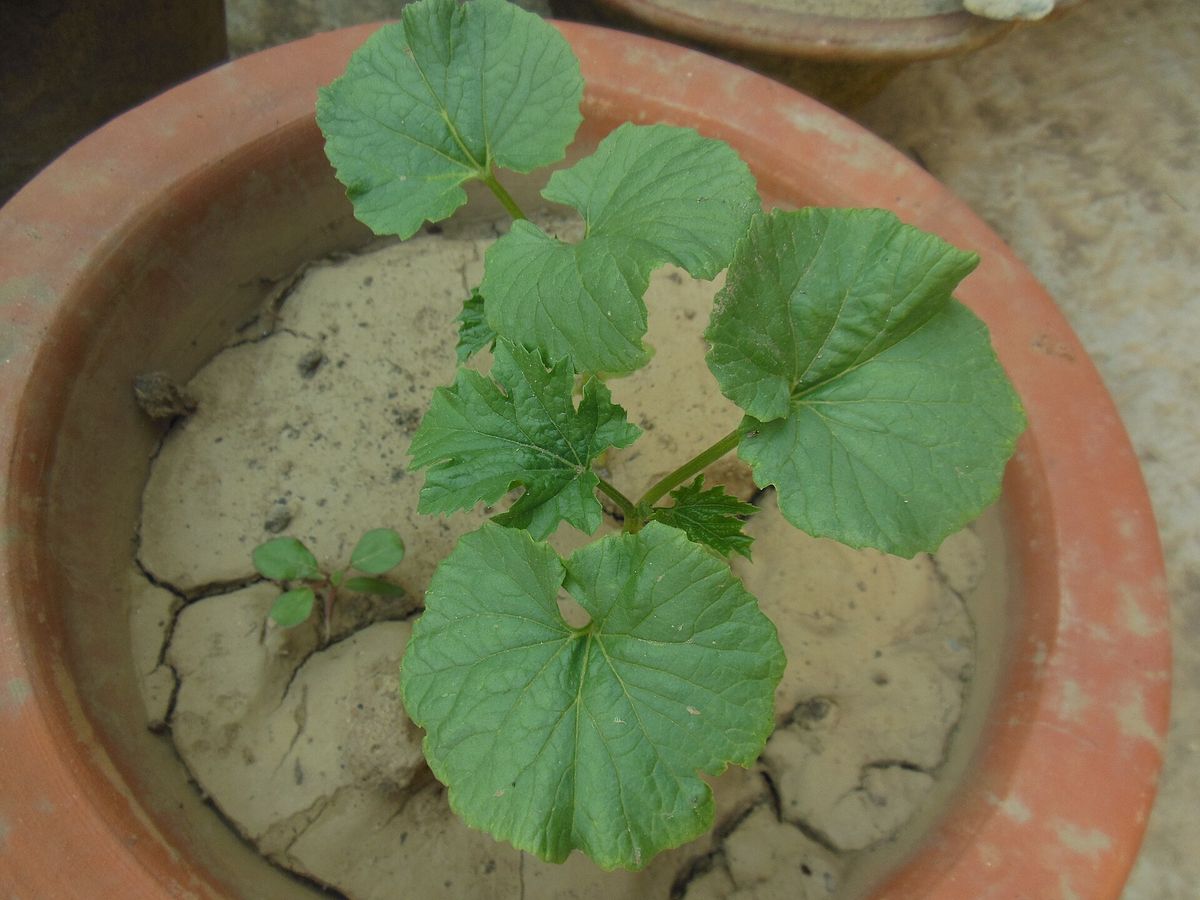
A 10-gallon pot with a sturdy trellis works; the vine needs vertical support regardless of container size.
Nutrition
Beta-carotene (winter squash), silica, vitamin K, hydration mineral profile.
Common questions
Is bitter melon supposed to taste this bitter?
Yes, that bitterness is the point and the compound (momordicin) is what the plant is grown for; salting and rinsing slices reduces it before cooking.
Can I eat the fruit once it turns orange?
The flesh gets tough and unpalatable and the red seed coating is traditionally used only as a purgative in small amounts, not as food; harvest green instead.
Where these numbers come from
- USDA Plant Hardiness Zone Map (2023 revision). Zone assignment and the 30-year normals behind every cold-hardiness figure.
- NOAA NCEI 1991-2020 Climate Normals. Frost dates, growing-season length, and the probability bands on both.
- Cornell, UMN, and UC Davis Cooperative Extension crop guides. Spacing, days to maturity, soil pH targets, and per-plant yield ranges.
- USDA FSIS / FDA Produce Safety guidance. Wash, cure, and cold-storage handling numbers.
Ranges are regional guidance, not a promise for your yard. Your own logged results always override the published range.