
How to grow black currant
Family Grossulariaceae. Hardy to USDA hardiness zone 3a+ (U.S. Department of Agriculture). Full sun to part shade. Ready in 2-3 years to bearing (perennial shrub).
Sun
Full sun to part shade
Spacing
4-5 ft
Days to harvest
2-3 years to bearing (perennial shrub)
Hardiness
Zone 3a+
What growers actually recorded
Loading zone 7b results…
When to plant black currant
- Transplant out: ~2 weeks after last frost.
Companion plants for black currant
Plant with: Gooseberry, Elderberry.
Avoid near: White pine (both host white pine blister rust; check local restrictions before planting).
Common pests & problems
Currant borer, aphid, white pine blister rust where restricted.
Grower's tip
Check state rules before planting: currants can be restricted near white pine stands due to blister rust; resistant cultivars exist where it's allowed.
When to plant black currant in your zone
Free month-by-month sowing and transplanting lists, built from frost dates for your USDA (United States Department of Agriculture) hardiness zone.
Soil & water for black currant
Soil & pH
6.0-6.5
Rich, moisture-retentive loam, more tolerant of heavier soil than most berries.
Work in ample compost; black currant is a heavy feeder relative to other bush fruit.
Watering
1 in / week
Deep drip at the base twice a week beats a daily shallow sprinkle.
Consistent moisture prevents most crop problems.
Knowing when to harvest
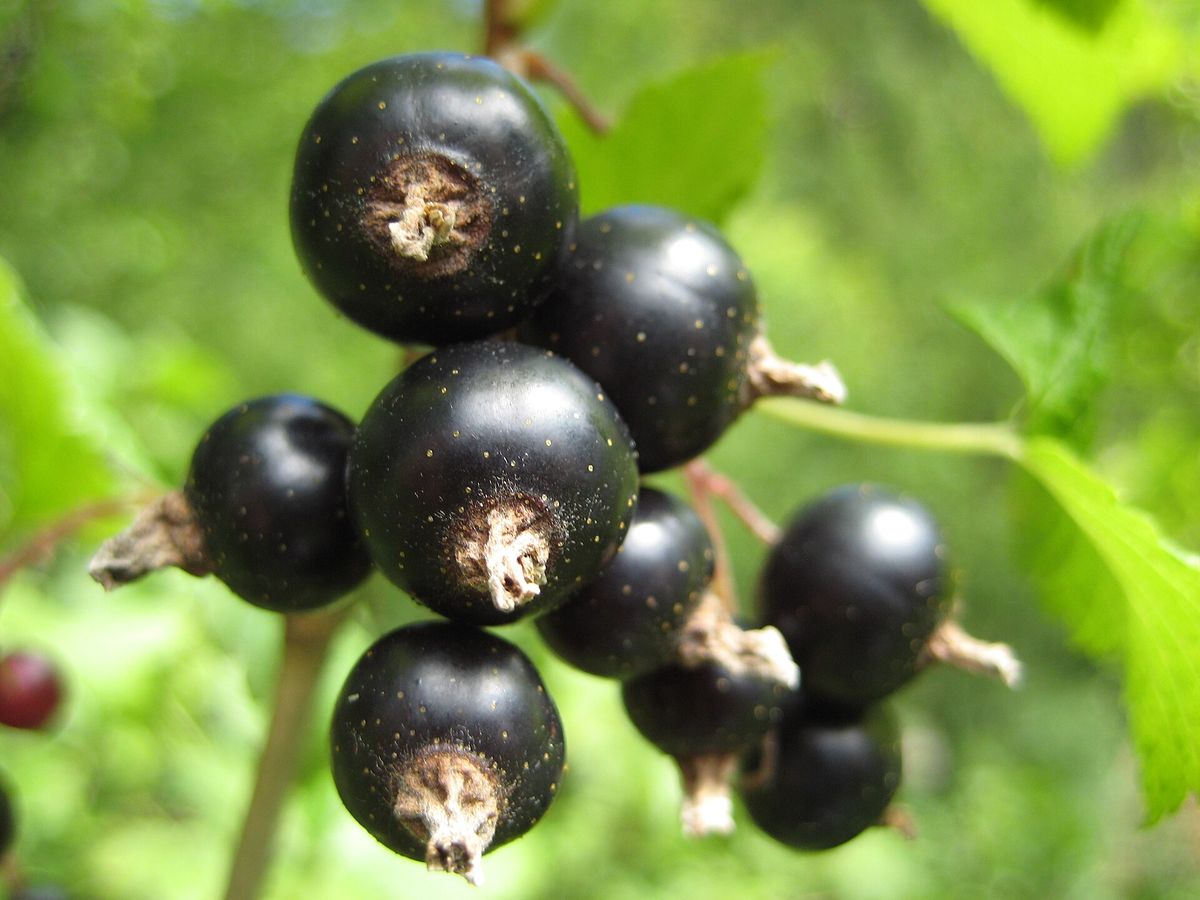
- Whole clusters (strigs) turn uniformly black and detach easily.
- Fruit is very tart eaten raw; most growers harvest for processing rather than fresh eating.
- Harvest the whole strig rather than individual berries to save time and reduce bruising.
Storing & keeping
Fridge 32-35°F for about a week. Freezes extremely well for a year or more, and is most often made into jam, cassis, or juice.
What to expect
Per plant: 8-12 lb from a mature bush, bearing by year 2-3
Troubleshooting black currant
Federal or state restrictions on planting
Likely cause: Black currant hosts white pine blister rust and is regulated or banned in some regions near white pine stands
What to do: Check local and state regulations before planting; rust-immune cultivars are legal in more areas.
Reversion virus symptoms: distorted leaves, poor fruit set
Likely cause: Spread by gall mites
What to do: Remove and destroy infected bushes; source certified virus-free stock.
Varieties worth growing
Ben Sarek
Compact, heavy-yielding, widely available rust-resistant type.
Titania
Vigorous, disease-resistant, reliable in home plantings.
Growing black currant in containers
Viable in a 10-15 gallon pot for several years; this bush tolerates part shade and some root restriction reasonably well.
Nutrition
A meaningful source of vitamins, minerals, and fiber when eaten fresh.
Common questions
Why is black currant illegal in some US states?
It historically served as an alternate host for white pine blister rust, which devastated timber stands; some states still restrict planting or require rust-resistant cultivars.
Is black currant self-fertile?
Yes, a single bush produces fruit.
Where these numbers come from
- USDA Plant Hardiness Zone Map (2023 revision). Zone assignment and the 30-year normals behind every cold-hardiness figure.
- NOAA NCEI 1991-2020 Climate Normals. Frost dates, growing-season length, and the probability bands on both.
- Cornell, UMN, and UC Davis Cooperative Extension crop guides. Spacing, days to maturity, soil pH targets, and per-plant yield ranges.
- USDA FSIS / FDA Produce Safety guidance. Wash, cure, and cold-storage handling numbers.
Ranges are regional guidance, not a promise for your yard. Your own logged results always override the published range.