
How to grow blackberry
Family Rosaceae. Hardy to USDA hardiness zone 5a+ (U.S. Department of Agriculture). Full sun. Ready in Yr 2 fruiting (perennial cane).
Sun
Full sun
Spacing
3-4 ft in rows 8 ft apart
Days to harvest
Yr 2 fruiting (perennial cane)
Hardiness
Zone 5a+
What growers actually recorded
Loading zone 7b results…
When to plant blackberry
- Transplant out: ~-6 weeks after last frost.
Companion plants for blackberry
Plant with: Bean, Garlic.
Avoid near: Raspberry, Nightshades.
Common pests & problems
Spotted-wing drosophila, cane borers.
Feeding & fertilizer
N-P-K ratio: Balanced 5-5-5, avoid fresh manure
Organic options: Compost mulch every spring · Blood meal + bone meal before flowering · Kelp meal after harvest
When to feed: Once in spring, once after fruiting. Renovate strawberry beds every 3 yrs.
Watch for: Runner overload but few berries = too much N.
N = nitrogen (leaves), P = phosphorus (roots and flowers), K = potassium (fruit and disease resistance). How to read a fertilizer label →
Grower's tip
Choose thornless cultivars (Triple Crown, Chester). Tip-prune primocanes at 4 ft to force branching.
When to plant blackberry in your zone
Free month-by-month sowing and transplanting lists, built from frost dates for your USDA (United States Department of Agriculture) hardiness zone.
Soil & water for blackberry
Soil & pH
5.8-6.5 (berries lower; apples/pears 6.0-7.0)
Deep loam with sharp drainage. Berries dislike heavy clay and wet feet.
Compost mulch each spring. For strawberries, renovate the bed every 3 years to keep yields up.
Watering
1-1.5 in / week; 2 in during fruit swell
Drip. Overhead watering causes berry rot and apple scab.
Small, seedy fruit = drought during ripening. Steady water two weeks before harvest fixes it.
Knowing when to harvest
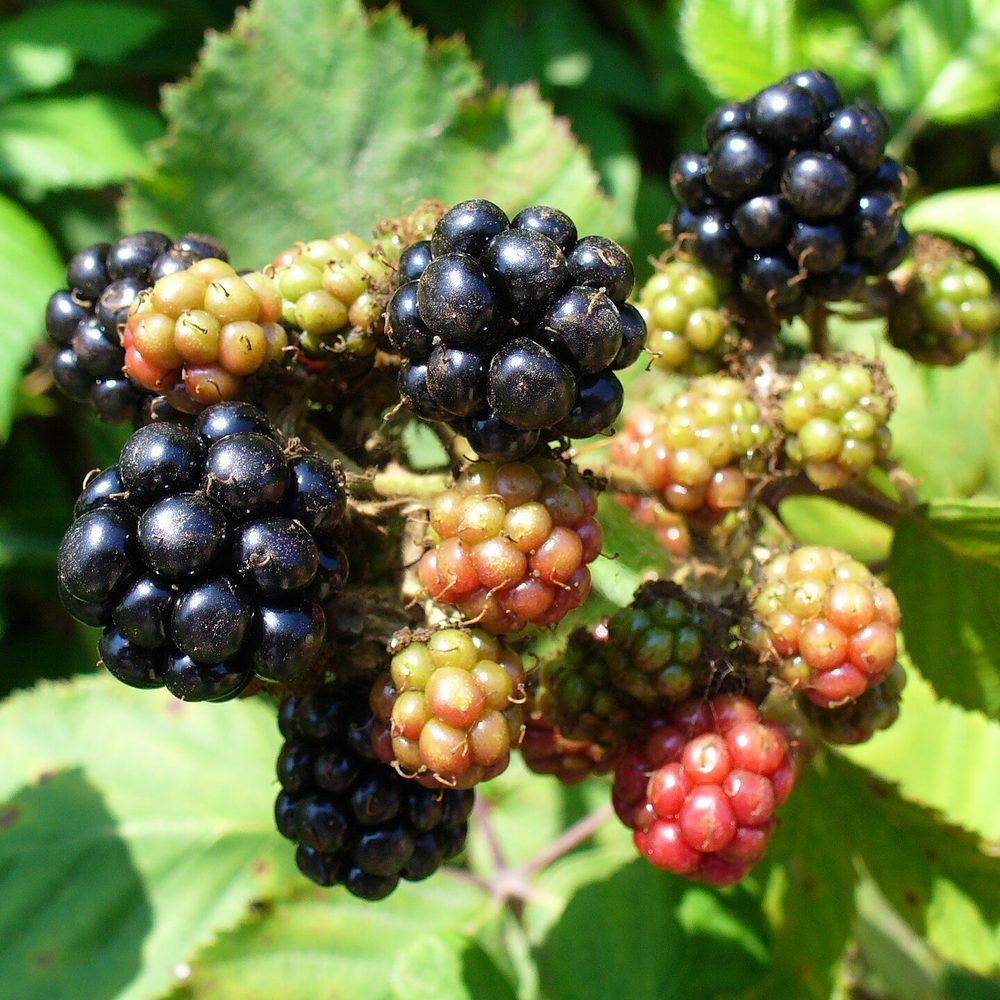
- Fully black + dull (not shiny): glossy black is still tart.
- Berry releases with a gentle tug; if it resists, wait a day.
- Pick every 2 days at peak.
Storing & keeping
Single layer, fridge: 3-5 days. Freeze whole for a year.
What to expect
Per plant: 5-15 lb mature plant; trellised in rows
Troubleshooting blackberry
White-drupelet disorder (white spots on ripe berries)
Likely cause: Sunscald on ripening fruit
What to do: Shade cloth during afternoon heat waves.
Canes that fruited last year die back
Likely cause: Normal biology: floricanes fruit once, then die
What to do: Cut spent floricanes to the ground right after harvest and tie the new primocanes to the trellis. Leaving dead canes spreads cane blight.
Ripe berries collapse into soft, weeping fruit within a day
Likely cause: Spotted wing drosophila laying eggs in ripening fruit
What to do: Pick every one to two days, chill fruit immediately, and remove all overripe berries from the patch. Monitor with a vinegar trap from first colour.
Varieties worth growing
Triple Crown (thornless)
Big berries, vigorous, no thorns.
Chester (thornless)
Cold-hardy zone 5, late-ripening.
Prime-Ark Freedom (primocane)
Fruits on first-year canes: earlier harvest.
Growing blackberry in containers
20 gallon minimum + sturdy trellis.
Nutrition
Vitamin C, anthocyanins, ellagic acid (berries); pectin and quercetin (pome fruit).
Common questions
Why did my primocane variety fruit only in fall?
That's the point. Primocanes fruit on the current season's growth. Traditional blackberries fruit only on 2nd-year canes.
Where these numbers come from
- USDA Plant Hardiness Zone Map (2023 revision). Zone assignment and the 30-year normals behind every cold-hardiness figure.
- NOAA NCEI 1991-2020 Climate Normals. Frost dates, growing-season length, and the probability bands on both.
- Cornell, UMN, and UC Davis Cooperative Extension crop guides. Spacing, days to maturity, soil pH targets, and per-plant yield ranges.
- USDA FSIS / FDA Produce Safety guidance. Wash, cure, and cold-storage handling numbers.
Ranges are regional guidance, not a promise for your yard. Your own logged results always override the published range.