
How to grow bok choy
Family Brassicaceae. Hardy to USDA hardiness zone 3a+ (U.S. Department of Agriculture). Full sun to part shade. Ready in 45-60 days.
Sun
Full sun to part shade
Spacing
6-10 in
Days to harvest
45-60 days
Hardiness
Zone 3a+
What growers actually recorded
Loading zone 7b results…
When to plant bok choy
- Start indoors: ~4 weeks before last frost.
- Transplant out: ~-3 weeks after last frost.
- Direct sow: ~-3 weeks after last frost.
Companion plants for bok choy
Plant with: Onion, Radish, Cilantro.
Avoid near: Tomato, Strawberry.
Common pests & problems
Flea beetle, cabbage worm, slugs on young leaves.
Feeding & fertilizer
N-P-K ratio: High N (10-5-5): heavy feeders
Organic options: Aged manure or compost worked in deep · Blood meal or feather meal side-dress at 3 wks · Fish emulsion every 2 wks
When to feed: Feed heavily every 2-3 weeks. Brassicas want steady nitrogen for tight heads.
Watch for: Pale/yellow leaves = needs N. Loose heads = feed harder next round.
N = nitrogen (leaves), P = phosphorus (roots and flowers), K = potassium (fruit and disease resistance). How to read a fertilizer label →
Grower's tip
Bolts fast once days lengthen past 14 hours. Grow it as an early spring or fall crop, not a summer one.
When to plant bok choy in your zone
Free month-by-month sowing and transplanting lists, built from frost dates for your USDA (United States Department of Agriculture) hardiness zone.
Soil & water for bok choy
Soil & pH
6.5-7.5: near neutral (raises club-root resistance)
Fertile loam with strong drainage. Firm soil beats fluffy for heading brassicas.
Compost 2 in + 1 cup of alfalfa or feather meal per 10 sq ft. Lime if pH is under 6.5. It also blocks club-root.
Watering
1-1.5 in / week, consistent
Ground-level drip. Uneven water during heading = split heads or bolting.
Lift an edge of the row and check soil at 3 inches. If it clings in a damp ball, hold off. If it crumbles, water until the top 6 inches are evenly moist.
Knowing when to harvest
- Baby bok choy: harvest whole head at 4-6 in tall, 30-40 days from sowing.
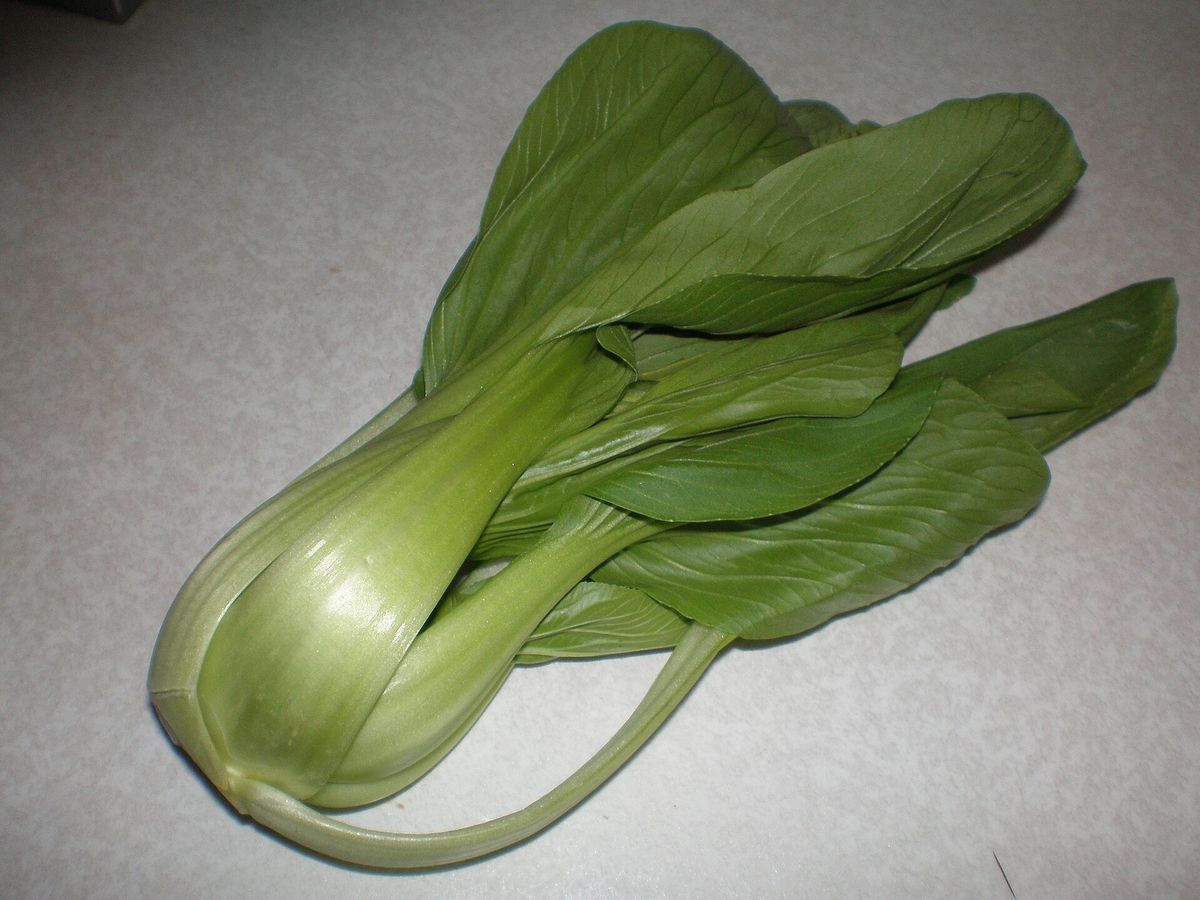
- Full-size heads: stalks thick and crisp, leaves glossy, before any flower stalk emerges.
- Cut at the base just above the soil line with a knife.
Storing & keeping
Refrigerate unwashed in a perforated bag at 32-40°F for 1-2 weeks. Best used fresh; stir-fries and soups hold up better than long freezing, which softens the crisp stalk texture.
What to expect
Per plant: 0.5-1.5 lb per head depending on variety size
Per sq ft: 2-4 heads per sq ft
Troubleshooting bok choy
Bolts to flower quickly after transplant
Likely cause: Cold shock below 50°F on young plants, or long summer days
What to do: Direct-seed rather than transplant where possible, and grow as a spring or fall crop.
Slimy stalk bases
Likely cause: Soft rot bacteria entering through wounds in wet, warm soil
What to do: Improve drainage, avoid overhead watering late in the day, harvest promptly at maturity.
Varieties worth growing
Toy Choy
Baby-type bred for quick, tender single-serving heads.
Joi Choi
Reliable full-size hybrid, more bolt-resistant than open-pollinated types.
Shanghai Green
Pale-green spoon-shaped stalks, smaller and fast-maturing.
Growing bok choy in containers
8-10 in pot for baby types; works well in containers with frequent watering since shallow roots dry out fast.
Nutrition
Sulforaphane, glucosinolates, vitamin K, calcium. Brassicas are the vegetable powerhouse.
Common questions
Why did my bok choy bolt right after transplanting?
A cold snap while seedlings are small can vernalize them, triggering premature flowering. Direct-seeding or waiting for stable warmth avoids it.
Can I regrow bok choy from a kitchen scraps base?
It will resprout leaves briefly in water, but the regrowth is weak and won't produce a comparable head; treat it as a novelty, not a real harvest strategy.
Where these numbers come from
- USDA Plant Hardiness Zone Map (2023 revision). Zone assignment and the 30-year normals behind every cold-hardiness figure.
- NOAA NCEI 1991-2020 Climate Normals. Frost dates, growing-season length, and the probability bands on both.
- Cornell, UMN, and UC Davis Cooperative Extension crop guides. Spacing, days to maturity, soil pH targets, and per-plant yield ranges.
- USDA FSIS / FDA Produce Safety guidance. Wash, cure, and cold-storage handling numbers.
Ranges are regional guidance, not a promise for your yard. Your own logged results always override the published range.