
How to grow cantaloupe / melon
Family Cucurbitaceae. Hardy to USDA hardiness zone 4a+ (U.S. Department of Agriculture). Full sun. Ready in 70-90 days.
Sun
Full sun
Spacing
24-36 in on a mound
Days to harvest
70-90 days
Hardiness
Zone 4a+
What growers actually recorded
Loading zone 7b results…
When to plant cantaloupe / melon
- Start indoors: ~3 weeks before last frost.
- Transplant out: ~2 weeks after last frost.
- Direct sow: ~2 weeks after last frost.
Companion plants for cantaloupe / melon
Plant with: Corn, Radish, Bean.
Avoid near: Potato.
Common pests & problems
Cucumber beetle, aphid.
Feeding & fertilizer
N-P-K ratio: Balanced 5-5-5, ease off N at flowering
Organic options: Compost + aged manure in the hill · Fish emulsion until first blossom · Kelp meal + wood ash at flowering
When to feed: Big feed at transplant, side-dress once vines run, potassium boost at flowering.
Watch for: Female flowers dropping = pollination issue, not fertilizer.
N = nitrogen (leaves), P = phosphorus (roots and flowers), K = potassium (fruit and disease resistance). How to read a fertilizer label →
Grower's tip
Ripe fruit slips off the vine with a gentle tug. The smell alone tells you.
When to plant cantaloupe / melon in your zone
Free month-by-month sowing and transplanting lists, built from frost dates for your USDA (United States Department of Agriculture) hardiness zone.
Soil & water for cantaloupe / melon
Soil & pH
6.0-6.8
Warm, well-drained soil enriched with compost. Cool wet soil = damping-off in seedlings.
Build a low mound (hill) 12-18 in wide, mix in a shovel of compost per hill. Wait until soil hits 65°F to plant.
Watering
1.5-2 in / week: cucurbits are 90% water
Drip at the base. Never wet the leaves: powdery mildew loves damp foliage.
Morning leaf droop is normal; afternoon droop that hasn't recovered by sunset means water now. Dull, slightly blue-green leaves are the first sign before wilt even shows.
Knowing when to harvest
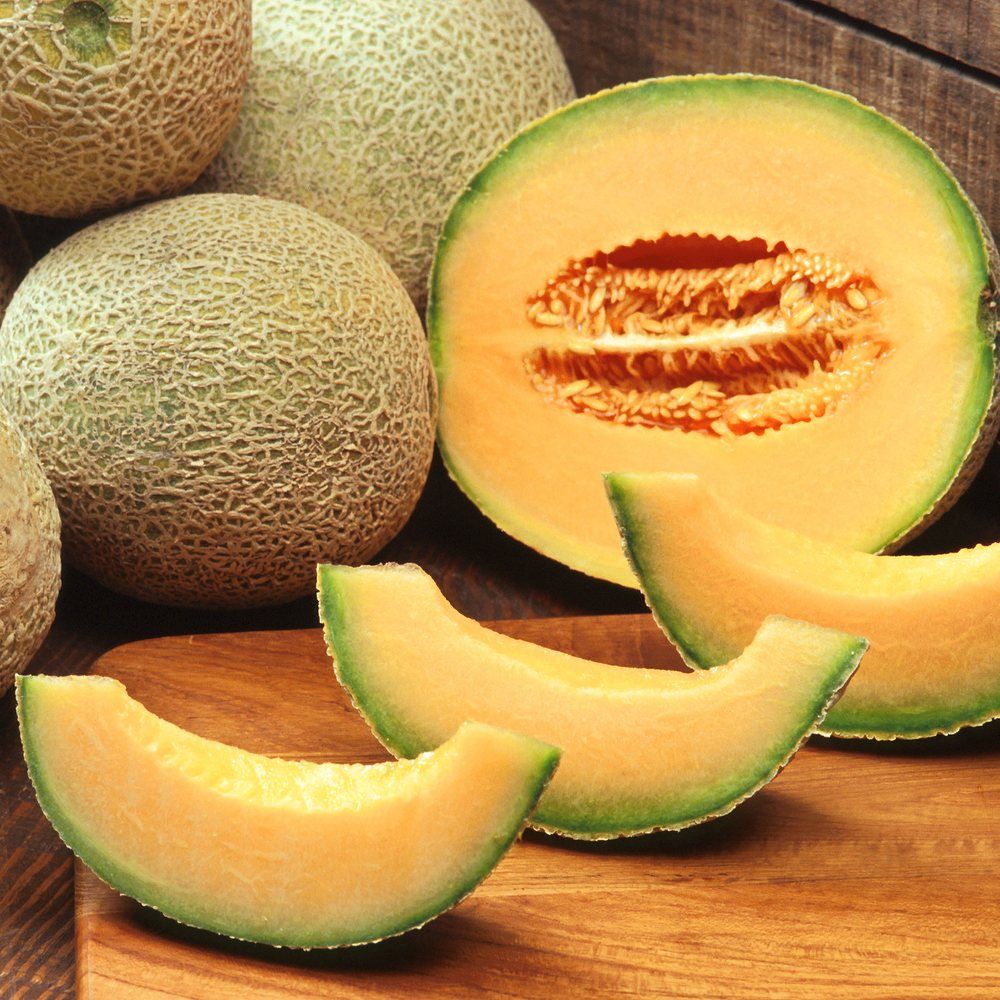
- Full slip: fruit falls off the vine with a gentle tug.
- Netting on rind is corky and pronounced.
- Fruity aroma at the blossom end.
Storing & keeping
Whole: room temp 2-4 days to fully ripen; then fridge 5 days.
What to expect
Per plant: 3-6 fruits per plant
Troubleshooting cantaloupe / melon
Bland or watery melons
Likely cause: Over-watering close to harvest
What to do: Cut water 1 week before harvest; more sun.
Fruit does not slip from the vine and tastes flat
Likely cause: Picked early, or overcast cool weather during ripening
What to do: Wait until the stem cracks fully around the fruit and the rind netting is raised and tan. True muskmelons separate with light thumb pressure.
White powdery film covers the leaves in late summer
Likely cause: Powdery mildew, which thrives in warm humid nights
What to do: Space vines for airflow, water at the base, and use resistant cultivars. Sulfur or potassium bicarbonate sprays help when applied before it spreads.
Varieties worth growing
Hale's Best
Heirloom classic, deep orange flesh.
Ambrosia
Modern hybrid with intense sweetness.
Growing cantaloupe / melon in containers
10-gallon minimum + trellis + fruit slings.
Nutrition
Beta-carotene (winter squash), silica, vitamin K, hydration mineral profile.
Common questions
How do I know it's not too ripe?
Full-slip melons off the vine are perfect. On the vine past that = overripe within 24 hrs.
Where these numbers come from
- USDA Plant Hardiness Zone Map (2023 revision). Zone assignment and the 30-year normals behind every cold-hardiness figure.
- NOAA NCEI 1991-2020 Climate Normals. Frost dates, growing-season length, and the probability bands on both.
- Cornell, UMN, and UC Davis Cooperative Extension crop guides. Spacing, days to maturity, soil pH targets, and per-plant yield ranges.
- USDA FSIS / FDA Produce Safety guidance. Wash, cure, and cold-storage handling numbers.
Ranges are regional guidance, not a promise for your yard. Your own logged results always override the published range.