
How to grow cherry
Family Rosaceae. Hardy to USDA hardiness zone 4a+ (U.S. Department of Agriculture). Full sun. Ready in Yr 3-5 fruiting (tree).
Sun
Full sun
Spacing
15-25 ft (8-10 ft dwarf)
Days to harvest
Yr 3-5 fruiting (tree)
Hardiness
Zone 4a+
What growers actually recorded
Loading zone 7b results…
When to plant cherry
- Transplant out: ~-6 weeks after last frost.
Companion plants for cherry
Plant with: Chives, Garlic, Clover understory, Marigold.
Avoid near: Walnut (juglone).
Common pests & problems
Birds above all, cherry fruit fly, aphid, brown rot in wet springs.
Feeding & fertilizer
N-P-K ratio: Balanced 5-5-5, avoid fresh manure
Organic options: Compost mulch every spring · Blood meal + bone meal before flowering · Kelp meal after harvest
When to feed: Once in spring, once after fruiting. Renovate strawberry beds every 3 yrs.
Watch for: Runner overload but few berries = too much N.
N = nitrogen (leaves), P = phosphorus (roots and flowers), K = potassium (fruit and disease resistance). How to read a fertilizer label →
Grower's tip
Sour cherries are self-fertile and far easier for beginners; sweet cherries usually need a pollinator partner. Net the tree a week before ripening or the birds will beat you to every one.
When to plant cherry in your zone
Free month-by-month sowing and transplanting lists, built from frost dates for your USDA (United States Department of Agriculture) hardiness zone.
Soil & water for cherry
Soil & pH
5.8-6.5 (berries lower; apples/pears 6.0-7.0)
Deep loam with sharp drainage. Berries dislike heavy clay and wet feet.
Compost mulch each spring. For strawberries, renovate the bed every 3 years to keep yields up.
Watering
1-1.5 in / week; 2 in during fruit swell
Drip. Overhead watering causes berry rot and apple scab.
Small, seedy fruit = drought during ripening. Steady water two weeks before harvest fixes it.
Knowing when to harvest
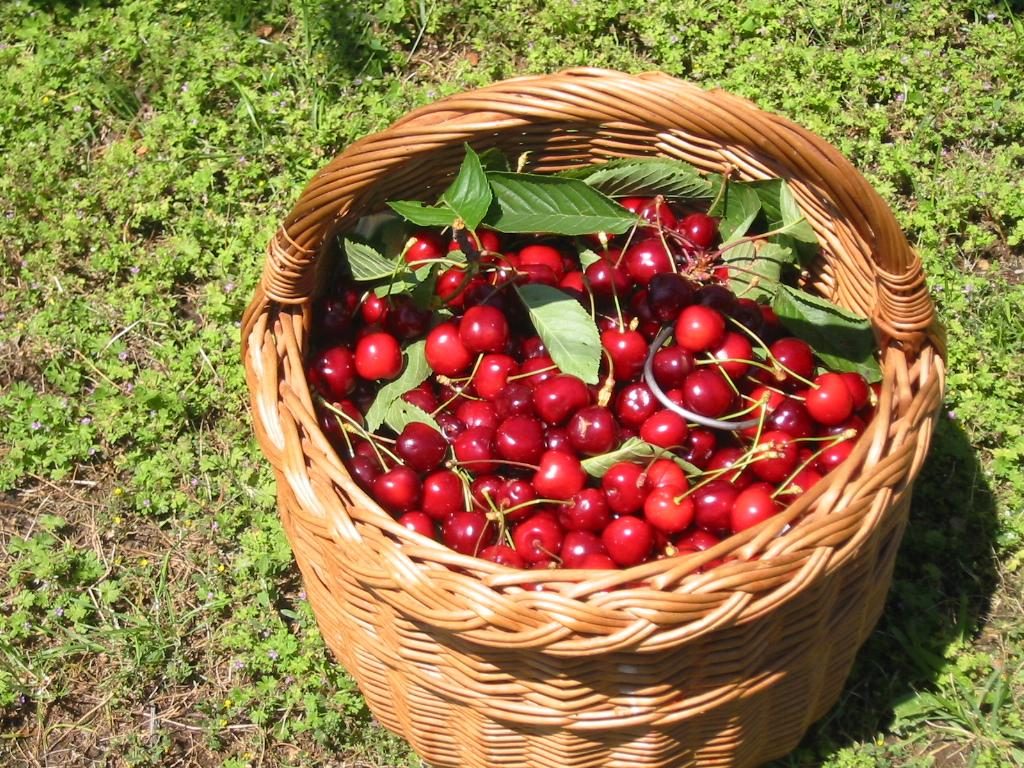
- Full mature color for the variety (deep red to near-black for sweet types) and firm-plump feel.
- Sweetness does not improve after picking; taste a few before a full harvest.
- Snip or pull with the stem attached to reduce stem-end tearing and rot in storage.
Storing & keeping
Fridge unwashed at 30-32°F, 90-95% humidity, 1-2 weeks. Freeze pitted on a tray then bag. Sour cherries hold their flavor well canned or dried.
What to expect
Per plant: 30-50 lb sweet cherry, 15-30 lb sour/tart, mature tree; 4-7 years to first real crop on standard rootstock
Netting is close to mandatory; birds take a full crop in days.
Troubleshooting cherry
Fruit splits after rain
Likely cause: Rapid water uptake through the skin near ripening
What to do: Choose split-resistant varieties, keep even irrigation, and pick promptly after rain if fruit is near ripe.
Small holes with worms inside fruit
Likely cause: Spotted wing drosophila or cherry fruit fly
What to do: Time yellow sticky-trap monitoring, harvest promptly at ripeness, use exclusion netting with fine mesh.
No fruit despite heavy bloom
Likely cause: Self-incompatible sweet cherry variety with no compatible pollinizer nearby
What to do: Plant a second, bloom-overlapping sweet cherry variety, or choose a self-fertile type.
Varieties worth growing
Bing (sweet)
Classic sweet cherry flavor, needs a pollinizer such as Black Tartarian or Rainier.
Stella (sweet)
Self-fertile, doubles as a pollinizer for Bing.
Montmorency (sour/tart)
Self-fertile, the standard pie cherry, more cold-hardy than sweet types.
Growing cherry in containers
Possible on dwarfing rootstock (Gisela 5) in a 15-25 gallon pot, but full-size sweet cherries are poor container candidates due to root spread.
Nutrition
Vitamin C, anthocyanins, ellagic acid (berries); pectin and quercetin (pome fruit).
Common questions
Why did my sweet cherry bloom heavily but set almost no fruit?
Most sweet cherries are self-incompatible. Without a genetically compatible variety blooming at the same time, pollination fails.
Are cherry pits dangerous?
Yes, like other stone fruit kernels they contain cyanogenic compounds; the flesh is fine, don't chew the pits.
Where these numbers come from
- USDA Plant Hardiness Zone Map (2023 revision). Zone assignment and the 30-year normals behind every cold-hardiness figure.
- NOAA NCEI 1991-2020 Climate Normals. Frost dates, growing-season length, and the probability bands on both.
- Cornell, UMN, and UC Davis Cooperative Extension crop guides. Spacing, days to maturity, soil pH targets, and per-plant yield ranges.
- USDA FSIS / FDA Produce Safety guidance. Wash, cure, and cold-storage handling numbers.
Ranges are regional guidance, not a promise for your yard. Your own logged results always override the published range.