
How to grow chives
Family Amaryllidaceae. Hardy to USDA hardiness zone 3a+ (U.S. Department of Agriculture). Full sun to part shade. Ready in 80-90 days (perennial).
Sun
Full sun to part shade
Spacing
6-8 in
Days to harvest
80-90 days (perennial)
Hardiness
Zone 3a+
What growers actually recorded
Loading zone 7b results…
When to plant chives
- Start indoors: ~8 weeks before last frost.
- Transplant out: ~-3 weeks after last frost.
- Direct sow: ~-3 weeks after last frost.
Companion plants for chives
Plant with: Carrot, Tomato, Apple, Strawberry.
Avoid near: Bean, Pea.
Common pests & problems
Rarely bothered. Repels aphids and Japanese beetles nearby.
Feeding & fertilizer
N-P-K ratio: Moderate N + high P (5-10-10)
Organic options: Compost + bone meal at planting · Fish emulsion monthly through spring · Stop feeding as bulbs swell
When to feed: Feed through spring leaf growth, then stop once tops start to yellow so bulbs cure hard.
Watch for: Thick, soft necks = too much late nitrogen; bulbs won't store.
N = nitrogen (leaves), P = phosphorus (roots and flowers), K = potassium (fruit and disease resistance). How to read a fertilizer label →
Grower's tip
Divide the clump every 3 years: one plant becomes six with no effort.
When to plant chives in your zone
Free month-by-month sowing and transplanting lists, built from frost dates for your USDA (United States Department of Agriculture) hardiness zone.
Soil & water for chives
Soil & pH
6.0-7.0
Loose, well-drained loam.
Compost + bone meal. Cut nitrogen once bulbing begins.
Watering
1 in / week during bulbing; taper before harvest
Drip; keep foliage dry to prevent purple blotch.
Falling, yellowing tops = pull water and cure.
Knowing when to harvest
- Cut leaves at soil level once plant is 6+ in tall.
- Cut in bunches: leaves regrow in 2-3 weeks.
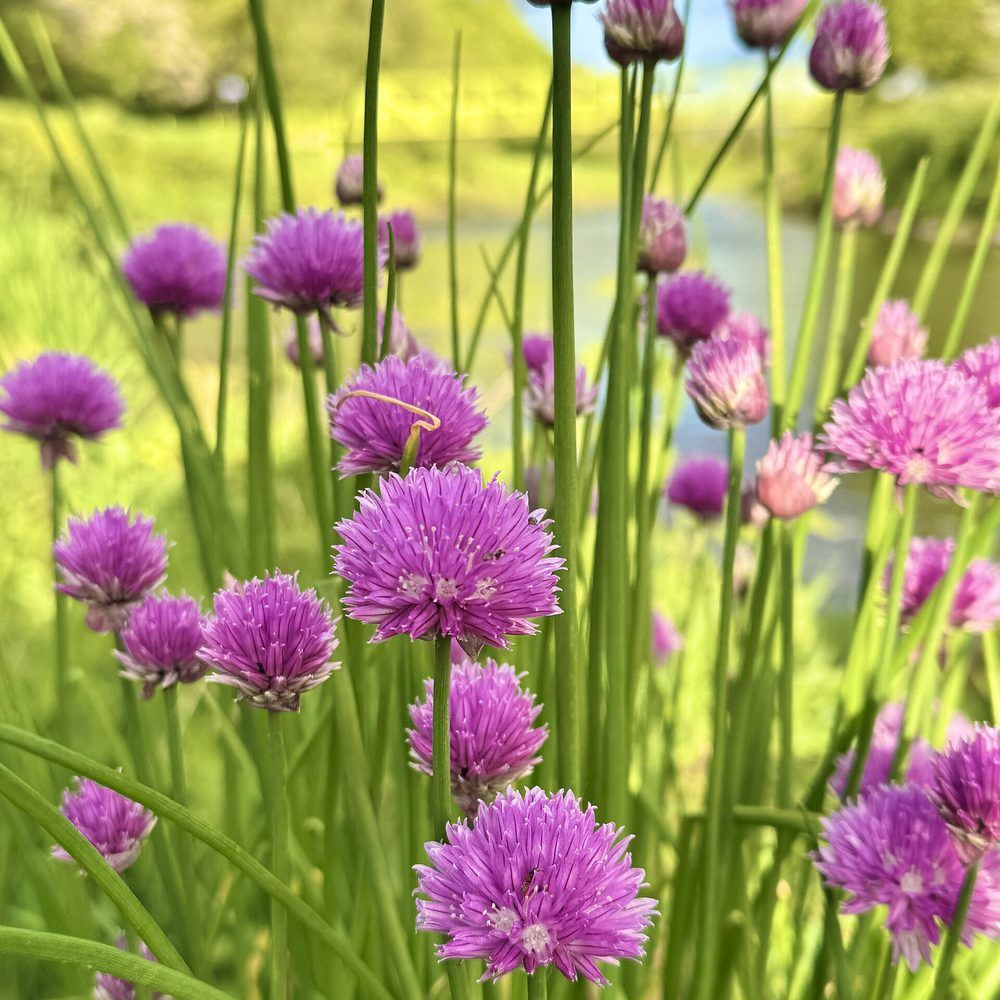
- Flowers are edible (violet, mild onion) and freeze for garnish.
Storing & keeping
Chop and freeze in ice cube trays with water for months. Fresh: crisper 1 week.
What to expect
Per plant: 1-2 oz per cut, 4-6 cuts per season
Troubleshooting chives
Clumps die out in center
Likely cause: Overcrowded. Needs division
What to do: Divide every 3 years in spring or fall.
Clump becomes woody with thin, pale leaves after a few years
Likely cause: Crowded crown competing with itself for nutrients
What to do: Divide the clump every 3 years in early spring, replant divisions 8 in apart, and side-dress with compost.
Orange powdery pustules on the leaf blades
Likely cause: Allium rust, favoured by humid crowded growth
What to do: Cut the clump back to 2 in and remove the debris, then improve spacing and airflow. New growth generally comes back clean.
Varieties worth growing
Common chives
The standard: mild onion flavor.
Garlic chives
Flat leaf, mild garlic flavor, white summer flowers.
Growing chives in containers
6 in deep pot; divides easily in year 2.
Nutrition
Allicin, quercetin, prebiotic fiber.
Common questions
Do chives really repel aphids?
The oils are a mild deterrent. Planting near roses or tomatoes helps a bit, but they're not a full defense.
Where these numbers come from
- USDA Plant Hardiness Zone Map (2023 revision). Zone assignment and the 30-year normals behind every cold-hardiness figure.
- NOAA NCEI 1991-2020 Climate Normals. Frost dates, growing-season length, and the probability bands on both.
- Cornell, UMN, and UC Davis Cooperative Extension crop guides. Spacing, days to maturity, soil pH targets, and per-plant yield ranges.
- USDA FSIS / FDA Produce Safety guidance. Wash, cure, and cold-storage handling numbers.
Ranges are regional guidance, not a promise for your yard. Your own logged results always override the published range.