
How to grow cranberry
Family Ericaceae. Hardy to USDA hardiness zone 3a+ (U.S. Department of Agriculture). Full sun. Ready in 2-3 years to bearing (perennial groundcover).
Sun
Full sun
Spacing
6-12 in (dense groundcover)
Days to harvest
2-3 years to bearing (perennial groundcover)
Hardiness
Zone 3a+
What growers actually recorded
Loading zone 7b results…
When to plant cranberry
- Transplant out: ~2 weeks after last frost.
Companion plants for cranberry
Plant with: Blueberry.
Common pests & problems
Cranberry fruitworm, tipworm; needs consistently acidic, wet soil.
Feeding & fertilizer
N-P-K ratio: Acid-loving: 4-3-4 for blueberries, pH 4.5-5.5
Organic options: Pine bark or peat worked into the planting hole · Cottonseed meal or soy meal in spring · Elemental sulfur to hold pH down
When to feed: Feed twice: bud break and again 6 weeks later. Never after midsummer.
Watch for: Yellow leaves with green veins = pH is too high, not a nitrogen shortage.
N = nitrogen (leaves), P = phosphorus (roots and flowers), K = potassium (fruit and disease resistance). How to read a fertilizer label →
Grower's tip
Needs boggy, acidic soil, pH 4-5; without a naturally wet, peaty spot, grow it in a lined bed you can flood periodically.
When to plant cranberry in your zone
Free month-by-month sowing and transplanting lists, built from frost dates for your USDA (United States Department of Agriculture) hardiness zone.
Soil & water for cranberry
Soil & pH
4.0-5.5: strongly acidic, non-negotiable
Peaty, sandy, poorly drained by design; commercial cranberry is grown in bogs. Home growers use raised beds lined and backfilled with peat and sand.
Build a dedicated acidic bed with peat moss and coarse sand; test pH and add elemental sulfur as needed. Standard garden soil will fail this crop.
Watering
1-2 in / week, always
Drip: chlorine-heavy tap water is fine short-term, but rainwater is better for pH.
Yellowing between leaf veins = iron chlorosis from creeping pH. Acidify.
Knowing when to harvest
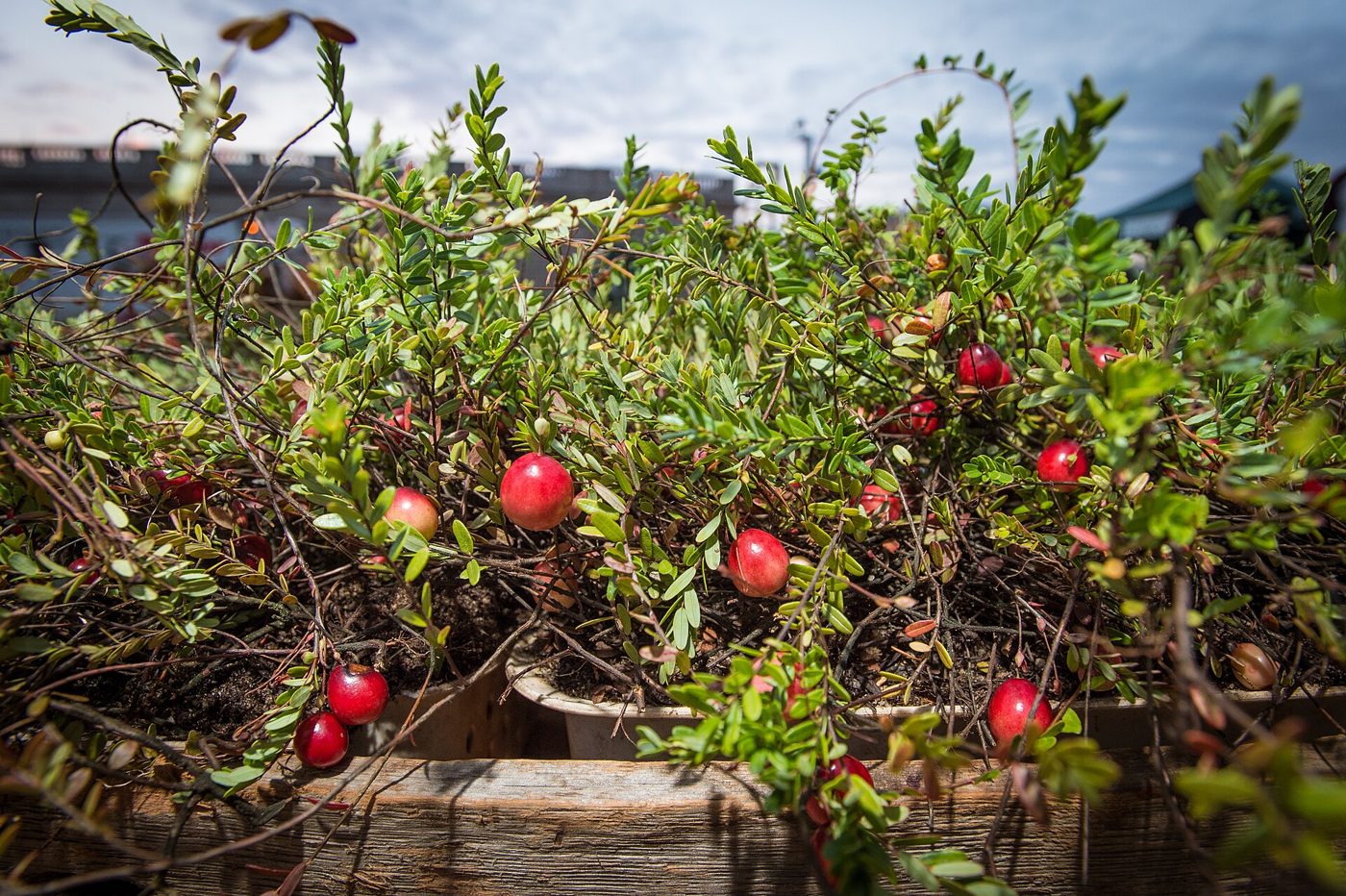
- Berries turn deep red and bounce when dropped (the trait behind commercial 'bounce testing').
- Harvest before hard freeze in most regions, typically fall.
- Fruit firms and reddens over several weeks; taste-test for tartness level desired.
Storing & keeping
Fridge 36-40°F, high humidity, up to 2 months. Freezes for a year or more without blanching. Dries into sweetened craisins with added sugar.
What to expect
Per plant: Low per individual runner; a mature 4x4 ft bed yields 1-3 lb of fruit, bearing by year 3
Grown as a spreading groundcover, not an individual plant, so yield is best measured per bed area.
Troubleshooting cranberry
Vines grow lush but produce little fruit
Likely cause: Soil pH has drifted above the acidic range cranberry requires
What to do: Retest pH; amend with elemental sulfur to bring it back to 4.0-5.5.
Vines dry out and brown quickly
Likely cause: Cranberry has shallow roots and needs consistently moist, not flooded, soil outside of the commercial bog method
What to do: Keep peat-sand bed evenly moist, mulch with sand or pine needles.
Varieties worth growing
Stevens
Standard commercial variety, high-yielding and disease-resistant.
Early Black
Traditional Massachusetts variety, reliable in home beds.
Growing cranberry in containers
Viable in a wide, shallow container filled with peat-sand mix if strict pH and moisture control can be maintained; more forgiving in a dedicated in-ground bed.
Nutrition
Anthocyanins, vitamin C, manganese: top-tier antioxidant score per cup.
Common questions
Do I need to flood my cranberry bed to grow it at home?
No, flooding is a commercial harvest and frost-protection technique, not a requirement. Home growers hand-pick and just need consistently acidic, moist soil.
Is cranberry self-fertile?
Yes, a single planting sets fruit.
Where these numbers come from
- USDA Plant Hardiness Zone Map (2023 revision). Zone assignment and the 30-year normals behind every cold-hardiness figure.
- NOAA NCEI 1991-2020 Climate Normals. Frost dates, growing-season length, and the probability bands on both.
- Cornell, UMN, and UC Davis Cooperative Extension crop guides. Spacing, days to maturity, soil pH targets, and per-plant yield ranges.
- USDA FSIS / FDA Produce Safety guidance. Wash, cure, and cold-storage handling numbers.
Ranges are regional guidance, not a promise for your yard. Your own logged results always override the published range.