
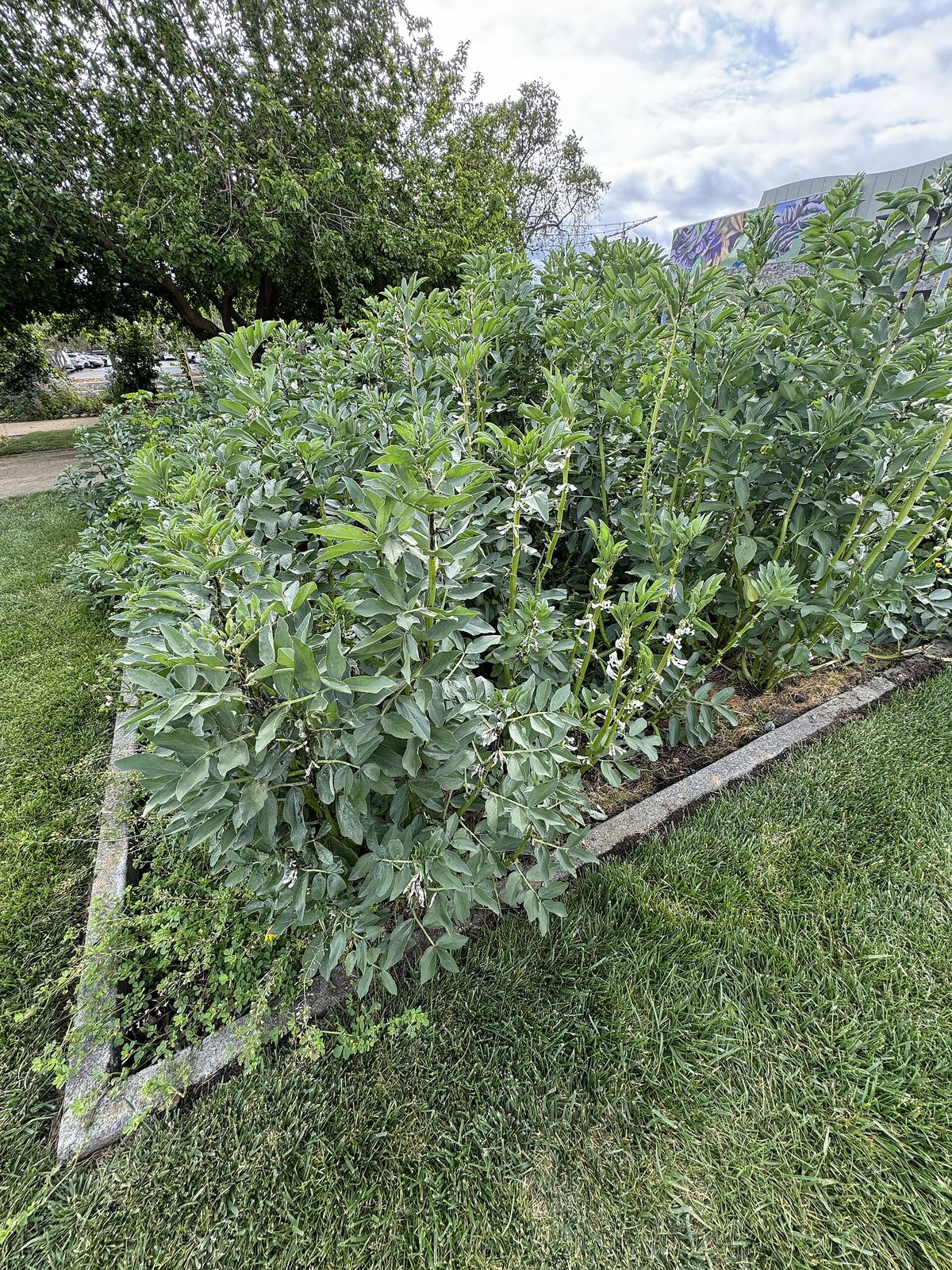
How to grow fava bean
Family Fabaceae. Hardy to USDA hardiness zone 3a+ (U.S. Department of Agriculture). Full sun. Ready in 80-100 days.
Sun
Full sun
Spacing
6-10 in
Days to harvest
80-100 days
Hardiness
Zone 3a+
What growers actually recorded
Loading zone 7b results…
When to plant fava bean
- Direct sow: ~-6 weeks after last frost.
Companion plants for fava bean
Plant with: Potato, Cabbage, Corn.
Avoid near: Onion, Garlic.
Common pests & problems
Black bean aphid clusters at the growing tip, chocolate spot in wet weather.
Feeding & fertilizer
N-P-K ratio: LOW N: beans fix their own nitrogen
Organic options: Compost at planting is enough · Rock phosphate for pods · Wood ash for potassium if soil is deficient
When to feed: Do not add nitrogen fertilizer. You'll get leaves, no pods. One compost dose at planting.
Watch for: Inoculate seeds with rhizobia the first time you grow legumes in a bed.
N = nitrogen (leaves), P = phosphorus (roots and flowers), K = potassium (fruit and disease resistance). How to read a fertilizer label →
Grower's tip
One of the few legumes that thrives in cold soil: sow as soon as ground can be worked, well before last frost.
When to plant fava bean in your zone
Free month-by-month sowing and transplanting lists, built from frost dates for your USDA (United States Department of Agriculture) hardiness zone.
Soil & water for fava bean
Soil & pH
6.0-6.8
Tolerates heavier, cooler soil than snap beans; still wants drainage.
Work in compost only; skip nitrogen. Inoculate seed with pea/vetch-type rhizobia the first season in a new bed.
Watering
1 in / week, steady through flowering and pod fill
Base watering; fava foliage is thick but pods spot if kept wet.
Favas root deeply and tolerate short dry spells better than heat; the bigger risk is heat, not drought. Water through any stretch above 80°F.
Knowing when to harvest
- Pods glossy and full-looking, felted lining still white inside (open one to check).
- For fresh shell use, pick as soon as the seed scar is green, before it darkens: older beans get starchy and tough-skinned.
- For dry beans, wait until pods are black and papery and rattle when shaken.
- Harvest before hot weather sets in; fava bean is a cool-season crop that stops setting pods and declines once days run consistently above 80°F.
Storing & keeping
Fresh-shelled favas: fridge in a bag, 3-5 days, or blanch 2 minutes and freeze up to a year. Dry favas: cure pods fully, thresh, and store the dried seed in a sealed jar in a cool, dark spot for a year or more.
What to expect
Per plant: 0.5-1 lb shelled pods per plant
Per sq ft: ~0.5 lb / sq ft
Yield drops sharply if flowering coincides with a heat spike; plant early enough that pod set finishes before summer heat.
Troubleshooting fava bean
Blackfly (aphid) clusters at the growing tip
Likely cause: Fava bean is a magnet for black bean aphid, especially once flowering starts
What to do: Pinch out the top 4 inches of each plant once the lowest pods have set; this removes the aphids' favorite tissue and doesn't hurt yield.
Chocolate-brown spots on leaves and pods
Likely cause: Chocolate spot (Botrytis fabae), worse in wet, humid, crowded plantings
What to do: Space plants for airflow, avoid overhead water, remove infected debris at season end.
Plants stop setting pods in early summer
Likely cause: Fava bean is cool-season and shuts down once temperatures run consistently above 80°F
What to do: Sow as early as soil can be worked (or overwinter in mild climates) so the crop finishes before heat arrives.
Varieties worth growing
Windsor
Large-seeded English favorite, reliable in cool climates.
Broad Windsor Long Pod
Long pods with more beans per pod, widely available and heavy-yielding.
Sweet Lorane
Small-seeded, very cold-hardy; can overwinter for an earlier crop in mild-winter regions.
Growing fava bean in containers
Possible in a deep (12+ in) container, but the plants run 3-4 ft tall and need staking; a garden bed with good airflow is a better fit.
Nutrition
Fava bean is rich in protein, folate, and iron, but contains vicine and convicine, compounds that trigger a serious hemolytic reaction (favism) in people with G6PD deficiency. Anyone with G6PD deficiency, or unsure of their status, should avoid eating fava beans, including inhaling pollen from flowering plants.
Common questions
Is it true fava beans can be dangerous to eat?
For most people, no. But for people with G6PD deficiency, an inherited enzyme condition, eating fava beans can trigger favism, a serious hemolytic reaction. This is a real medical hazard, not a myth, and applies to raw, cooked, and dried beans alike.
Do I need to peel the individual beans?
Older, larger favas have a tough outer skin that most cooks slip off after a quick blanch. Young, small favas can be eaten skin-on.
Can I grow fava beans through summer?
Not productively. It is a cool-season crop; plant it to mature before summer heat, or in mild winter climates, overwinter it for an early spring harvest.
Where these numbers come from
- USDA Plant Hardiness Zone Map (2023 revision). Zone assignment and the 30-year normals behind every cold-hardiness figure.
- NOAA NCEI 1991-2020 Climate Normals. Frost dates, growing-season length, and the probability bands on both.
- Cornell, UMN, and UC Davis Cooperative Extension crop guides. Spacing, days to maturity, soil pH targets, and per-plant yield ranges.
- USDA FSIS / FDA Produce Safety guidance. Wash, cure, and cold-storage handling numbers.
Ranges are regional guidance, not a promise for your yard. Your own logged results always override the published range.