
How to grow pineapple guava
Family Myrtaceae. Hardy to USDA hardiness zone 8a+ (U.S. Department of Agriculture). Full sun. Ready in 3-4 years to bearing (perennial shrub).
Sun
Full sun
Spacing
12-15 ft
Days to harvest
3-4 years to bearing (perennial shrub)
Hardiness
Zone 8a+
What growers actually recorded
Loading zone 7b results…
When to plant pineapple guava
- Transplant out: ~2 weeks after last frost.
Companion plants for pineapple guava
Plant with: Rosemary, Lavender.
Common pests & problems
Few serious pests; fruit flies in warm regions.
Grower's tip
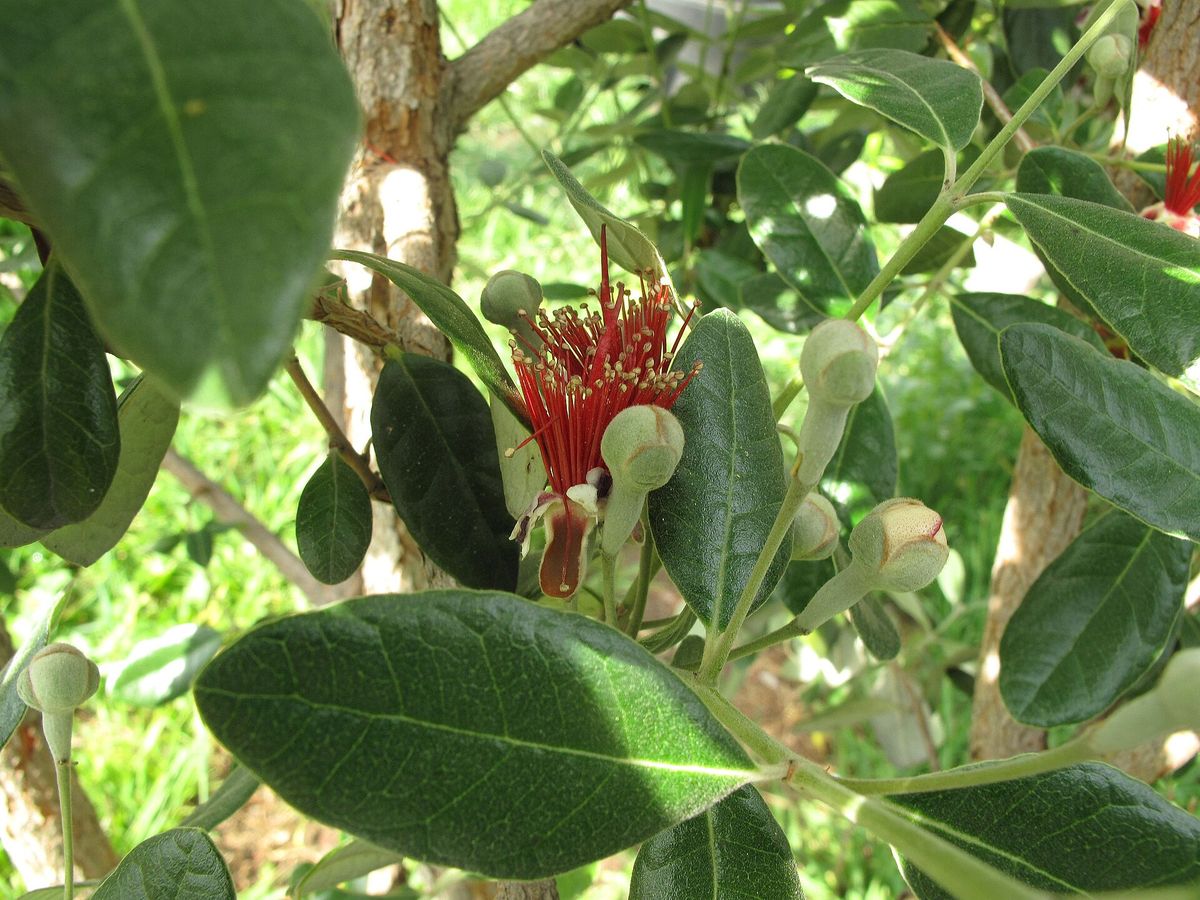
Most named varieties set far more fruit with a second plant nearby, and the petals are edible while the flowers are open.
When to plant pineapple guava in your zone
Free month-by-month sowing and transplanting lists, built from frost dates for your USDA (United States Department of Agriculture) hardiness zone.
Soil & water for pineapple guava
Soil & pH
6.0-7.0: near neutral
Loose, well-drained loam with 3-5% organic matter.
Compost 2 in worked into the top 6 in of soil each spring.
Watering
1 in / week
Deep drip at the base twice a week beats a daily shallow sprinkle.
Consistent moisture prevents most crop problems.
Knowing when to harvest
- Fruit drops from the plant when ripe; do not pull it, since feijoa does not soften predictably while still attached.
- Gather drops daily and let them finish softening a few days at room temperature.
- A slightly wrinkled skin and gentle give indicate peak ripeness.
Storing & keeping
Room temperature 3-5 days once dropped, or fridge for slightly longer. Pulp freezes well and holds its distinctive pineapple-guava flavor for months.
What to expect
Per plant: 10-30 lb from a mature shrub, bearing by year 3-4
Troubleshooting pineapple guava
Heavy bloom, little fruit set
Likely cause: Many feijoa cultivars benefit from or require cross-pollination
What to do: Plant two different cultivars, or hand-pollinate with a brush between flowers of the same plant if only one is available.
Fruit drops before it seems ripe
Likely cause: Normal ripening behavior for feijoa: fruit is meant to drop, then finish ripening off the plant
What to do: Collect drops regularly rather than waiting for fruit to soften on the branch.
Varieties worth growing
Coolidge
Self-fertile, reliable without a second plant.
Mammoth
Larger fruit but benefits from a pollinizer like Coolidge nearby.
Growing pineapple guava in containers
Viable in a 15-20 gallon pot; a moderately cold-hardy evergreen shrub that tolerates container culture well and can be moved to shelter in marginal climates.
Nutrition
A meaningful source of vitamins, minerals, and fiber when eaten fresh.
Common questions
Why did all my feijoa fruit fall off the plant?
That's how it ripens: feijoa is meant to drop when mature, then soften further on the ground or counter, not soften while attached.
Where these numbers come from
- USDA Plant Hardiness Zone Map (2023 revision). Zone assignment and the 30-year normals behind every cold-hardiness figure.
- NOAA NCEI 1991-2020 Climate Normals. Frost dates, growing-season length, and the probability bands on both.
- Cornell, UMN, and UC Davis Cooperative Extension crop guides. Spacing, days to maturity, soil pH targets, and per-plant yield ranges.
- USDA FSIS / FDA Produce Safety guidance. Wash, cure, and cold-storage handling numbers.
Ranges are regional guidance, not a promise for your yard. Your own logged results always override the published range.