
How to grow gooseberry
Family Grossulariaceae. Hardy to USDA hardiness zone 3a+ (U.S. Department of Agriculture). Full sun to part shade. Ready in 2-3 years to bearing (perennial shrub).
Sun
Full sun to part shade
Spacing
4-5 ft
Days to harvest
2-3 years to bearing (perennial shrub)
Hardiness
Zone 3a+
What growers actually recorded
Loading zone 7b results…
When to plant gooseberry
- Transplant out: ~2 weeks after last frost.
Companion plants for gooseberry
Plant with: Black currant, Raspberry.
Common pests & problems
Gooseberry sawfly, powdery mildew.
Grower's tip
Prune to an open vase shape each dormant season; good airflow through the center is the best defense against mildew.
When to plant gooseberry in your zone
Free month-by-month sowing and transplanting lists, built from frost dates for your USDA (United States Department of Agriculture) hardiness zone.
Soil & water for gooseberry
Soil & pH
6.0-6.8
Well-drained loam; tolerates cooler, partly shaded sites better than most fruiting shrubs.
Compost at planting; mulch to keep roots cool, since gooseberry struggles in hot, dry conditions.
Watering
1 in / week
Deep drip at the base twice a week beats a daily shallow sprinkle.
Consistent moisture prevents most crop problems.
Knowing when to harvest
- For fresh eating, wait for full color and slight softness; for pies and jam, pick slightly underripe and firm, when tartness is highest.
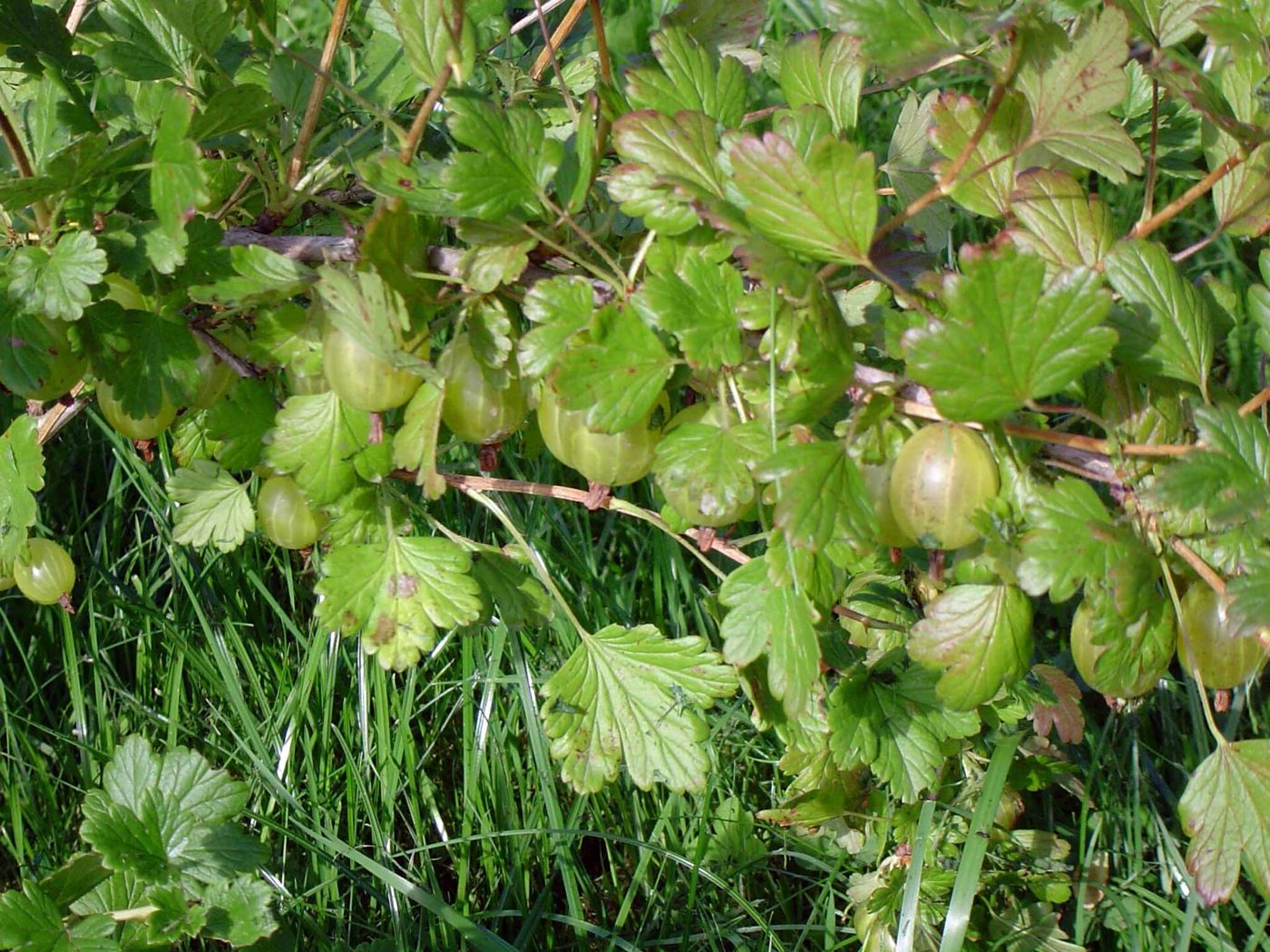
- Berries vary from green to red to yellow depending on variety at full ripeness.
- Thorny stems make harvest slow; wear gloves and use long sleeves.
Storing & keeping
Fridge 32-35°F for 1-2 weeks. Freezes well whole for a year or more. Underripe fruit is preferred for cooking and holds its shape better.
What to expect
Per plant: 8-10 lb from a mature bush, bearing by year 2-3
Troubleshooting gooseberry
White powdery coating on leaves and fruit
Likely cause: American gooseberry mildew, favored by poor air circulation
What to do: Prune the center of the bush open each dormant season, choose mildew-resistant varieties.
Leaves stripped rapidly by caterpillars
Likely cause: Gooseberry sawfly larvae
What to do: Hand-pick or spray Bt while larvae are small; check the undersides of leaves regularly in early summer.
Varieties worth growing
Invicta
Mildew-resistant, heavy-yielding, the standard modern choice.
Pixwell
Very cold-hardy, fewer thorns, popular in northern plantings.
Growing gooseberry in containers
Viable in a 10-15 gallon pot; tolerates part shade, making it one of the better fruiting shrubs for a partly shaded patio.
Nutrition
A meaningful source of vitamins, minerals, and fiber when eaten fresh.
Common questions
Is gooseberry self-fertile?
Yes, a single bush sets a full crop.
Why does my gooseberry get powdery mildew every year?
Poor air circulation in a dense center is the usual cause; open up the bush with dormant pruning and choose resistant varieties.
Where these numbers come from
- USDA Plant Hardiness Zone Map (2023 revision). Zone assignment and the 30-year normals behind every cold-hardiness figure.
- NOAA NCEI 1991-2020 Climate Normals. Frost dates, growing-season length, and the probability bands on both.
- Cornell, UMN, and UC Davis Cooperative Extension crop guides. Spacing, days to maturity, soil pH targets, and per-plant yield ranges.
- USDA FSIS / FDA Produce Safety guidance. Wash, cure, and cold-storage handling numbers.
Ranges are regional guidance, not a promise for your yard. Your own logged results always override the published range.