
How to grow honeydew melon
Family Cucurbitaceae. Hardy to USDA hardiness zone 5a+ (U.S. Department of Agriculture). Full sun, 8+ hrs. Ready in 80-100 days.
Sun
Full sun, 8+ hrs
Spacing
24-36 in on a mound
Days to harvest
80-100 days
Hardiness
Zone 5a+
What growers actually recorded
Loading zone 7b results…
When to plant honeydew melon
- Start indoors: ~3 weeks before last frost.
- Transplant out: ~2 weeks after last frost.
- Direct sow: ~2 weeks after last frost.
Companion plants for honeydew melon
Plant with: Corn, Radish, Bean.
Avoid near: Potato.
Common pests & problems
Cucumber beetle, aphid, powdery mildew.
Feeding & fertilizer
N-P-K ratio: Balanced 5-5-5, ease off N at flowering
Organic options: Compost + aged manure in the hill · Fish emulsion until first blossom · Kelp meal + wood ash at flowering
When to feed: Big feed at transplant, side-dress once vines run, potassium boost at flowering.
Watch for: Female flowers dropping = pollination issue, not fertilizer.
N = nitrogen (leaves), P = phosphorus (roots and flowers), K = potassium (fruit and disease resistance). How to read a fertilizer label →
Grower's tip
Unlike cantaloupe, honeydew doesn't slip from the vine when ripe; judge by a faint sweet smell and a slight give at the blossom end.
When to plant honeydew melon in your zone
Free month-by-month sowing and transplanting lists, built from frost dates for your USDA (United States Department of Agriculture) hardiness zone.
Soil & water for honeydew melon
Soil & pH
6.0-6.8
Warm, well-drained soil enriched with compost. Cool wet soil = damping-off in seedlings.
Build a low mound (hill) 12-18 in wide, mix in a shovel of compost per hill. Wait until soil hits 65°F to plant.
Watering
1.5-2 in / week: cucurbits are 90% water
Drip at the base. Never wet the leaves: powdery mildew loves damp foliage.
Morning leaf droop is normal; afternoon droop that hasn't recovered by sunset means water now. Dull, slightly blue-green leaves are the first sign before wilt even shows.
Knowing when to harvest
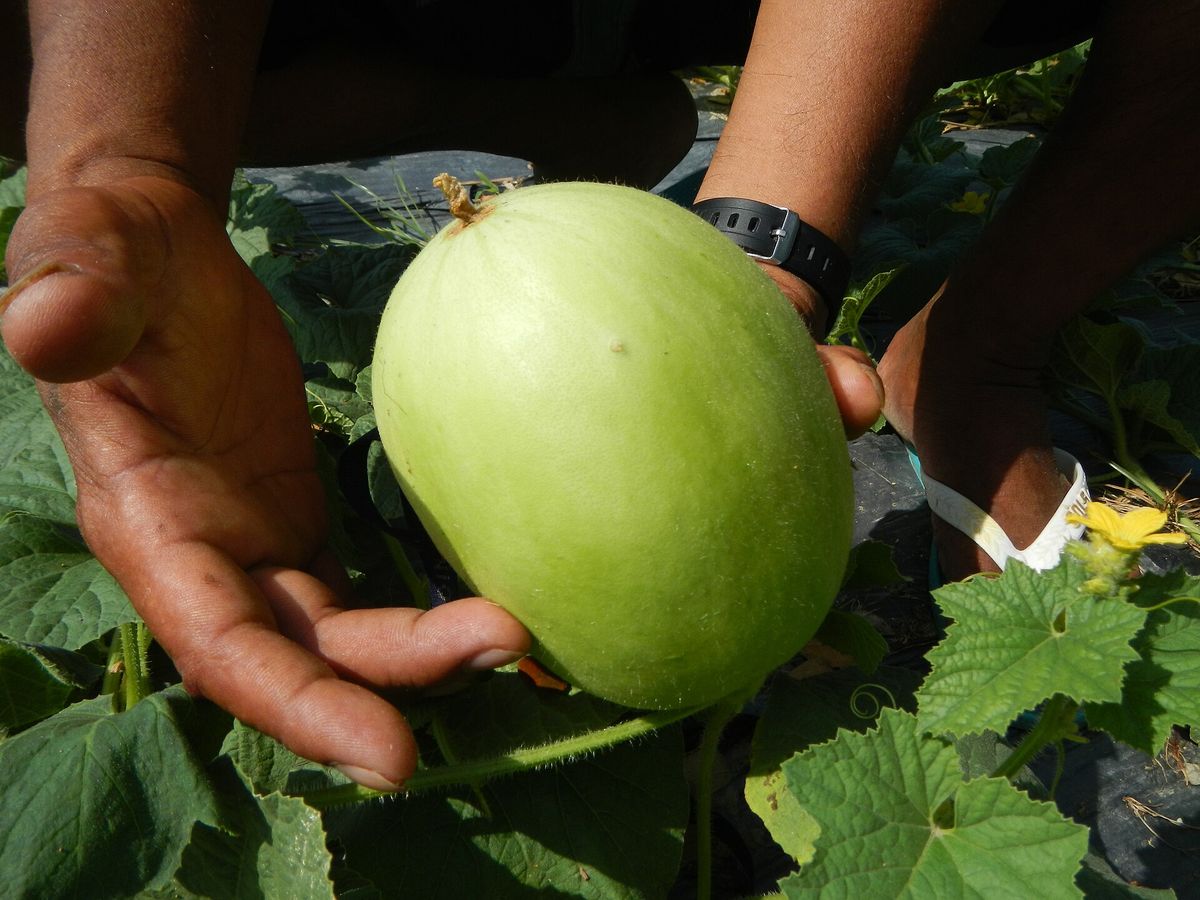
- Rind shifts from waxy green to a creamy yellow-white and develops a faint sweet aroma at the blossom end.
- Unlike cantaloupe, honeydew does not slip from the vine; a slight softening at the blossom end is the main cue.
- The surface loses its slick, waxy feel and becomes slightly velvety or tacky to the touch.
Storing & keeping
Whole, uncut: counter, 65-70°F, ripens further for 2-3 days, then fridge crisper up to 1 week. Cut melon: refrigerate in a sealed container up to 4 days.
What to expect
Per plant: 2-4 melons per vine
Troubleshooting honeydew melon
Melon never sweetens even though it looks ripe by color
Likely cause: Overwatering near harvest dilutes sugars
What to do: Cut back water significantly in the final 1-2 weeks before expected ripening.
Cracked rind
Likely cause: Heavy rain or watering after a dry spell
What to do: Keep moisture even throughout fruit development; mulch to buffer swings.
No fruit set despite flowers
Likely cause: Poor pollinator visits or picking flowers before female blooms open
What to do: Avoid insecticide during bloom and hand-pollinate with a brush if bee activity is low.
Varieties worth growing
Honey Yellow
Reliable rind color change makes ripeness easier to judge without a slip cue.
Tam Dew
Bred for disease resistance and consistent sweetness in home gardens.
Green Flesh
The traditional pale green interior with classic honeydew flavor.
Growing honeydew melon in containers
Needs 20+ sq ft of sprawling room or a very strong trellis with fruit slings; a large grow bag (15+ gallon) can work if vertically trained.
Nutrition
Beta-carotene (winter squash), silica, vitamin K, hydration mineral profile.
Common questions
Why doesn't my honeydew slip off the vine like a cantaloupe?
Honeydew is a non-slip melon by nature; rely on rind color change and blossom-end softening instead of waiting for it to detach.
How do I know if I'm watering too much near harvest?
Bland, watery flesh despite full color is the tell; taper irrigation for the last week to ten days before the expected harvest window.
Where these numbers come from
- USDA Plant Hardiness Zone Map (2023 revision). Zone assignment and the 30-year normals behind every cold-hardiness figure.
- NOAA NCEI 1991-2020 Climate Normals. Frost dates, growing-season length, and the probability bands on both.
- Cornell, UMN, and UC Davis Cooperative Extension crop guides. Spacing, days to maturity, soil pH targets, and per-plant yield ranges.
- USDA FSIS / FDA Produce Safety guidance. Wash, cure, and cold-storage handling numbers.
Ranges are regional guidance, not a promise for your yard. Your own logged results always override the published range.