
How to grow jicama
Family Fabaceae. Hardy to USDA hardiness zone 8a+ (U.S. Department of Agriculture). Full sun, 8+ hrs. Ready in 150-180 days.
Sun
Full sun, 8+ hrs
Spacing
12 in on a trellis
Days to harvest
150-180 days
Hardiness
Zone 8a+
What growers actually recorded
Loading zone 7b results…
When to plant jicama
- Start indoors: ~8 weeks before last frost.
- Transplant out: ~3 weeks after last frost.
Companion plants for jicama
Plant with: Corn, Bean.
Avoid near: Nothing documented; needs a long frost-free season.
Common pests & problems
Aphid, spider mite in dry heat.
Feeding & fertilizer
N-P-K ratio: LOW N: beans fix their own nitrogen
Organic options: Compost at planting is enough · Rock phosphate for pods · Wood ash for potassium if soil is deficient
When to feed: Do not add nitrogen fertilizer. You'll get leaves, no pods. One compost dose at planting.
Watch for: Inoculate seeds with rhizobia the first time you grow legumes in a bed.
N = nitrogen (leaves), P = phosphorus (roots and flowers), K = potassium (fruit and disease resistance). How to read a fertilizer label →
Grower's tip
Needs 150+ frost-free days: outside zone 8+ it's best in a greenhouse or very large container brought in before frost. Pinch off flowers so energy goes into the root, not seed pods, which are toxic.
When to plant jicama in your zone
Free month-by-month sowing and transplanting lists, built from frost dates for your USDA (United States Department of Agriculture) hardiness zone.
Soil & water for jicama
Soil & pH
6.0-7.0
Loose, well-drained. Beans dislike heavy clay; loosen with compost or grow in a raised bed.
Skip nitrogen fertilizer entirely. Inoculate seed with rhizobia inoculant the first time you grow legumes in a bed: pod set doubles.
Watering
1-1.5 in / week during active growth; taper as the root nears harvest
Deep soak at the base; jicama needs a long, warm, frost-free season (often 5-9 months) to size up properly.
Pinch off flower buds as they appear; jicama channels more energy into the root when not allowed to set seed pods.
Knowing when to harvest
- Dig roots before the first frost, typically 5-9 months after planting depending on climate.
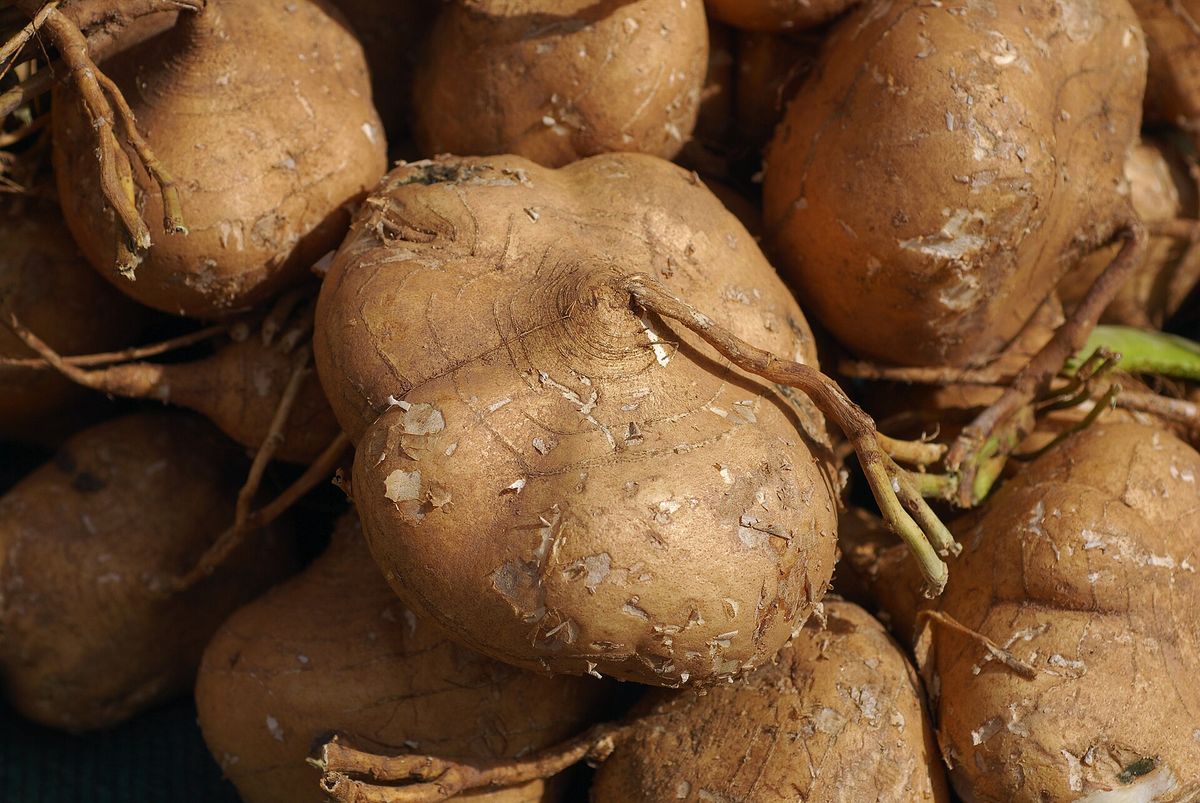
- Root diameter of 4-6 in at the widest point is a good harvest target; larger roots can turn fibrous and starchy.
- Only the root is harvested and eaten; the vine, leaves, flowers, and especially the seed pods contain rotenone and are toxic and must not be consumed.
Storing & keeping
Uncut, unwashed roots store at 55-60°F, moderate humidity, out of the fridge, for 1-2 months in a dry, cool spot; refrigeration below 50°F shortens keeping life. Cut jicama: wrap tightly and refrigerate, use within a week.
What to expect
Per plant: 1 large root (1-5 lb) per vine after a full-length season
Troubleshooting jicama
Root stays small at the end of the season
Likely cause: Season was too short, or the vine was allowed to flower and set seed pods, diverting energy away from the root
What to do: Pinch off all flower buds as soon as they form and grow the longest possible frost-free window, starting indoors if needed.
Someone in the household is unaware the vine and pods are poisonous
Likely cause: Jicama's edible root looks unremarkable, but the rest of the plant, especially the pods, contains rotenone, a natural insecticide toxic if eaten
What to do: Clearly label the planting, remove flower/seed pods promptly, and keep vines away from children and pets who might sample them.
Varieties worth growing
Agua (jicama de agua)
The common juicy, thin-skinned type most widely grown and sold.
Leche (jicama de leche)
A milkier, starchier type with a longer storage life, less common outside Mexico.
Growing jicama in containers
Not a good container crop: jicama needs a long, warm season and a large, deep root run to size up a worthwhile harvest; in-ground planting in warm climates is far more productive.
Nutrition
Complete plant protein (with grains), folate, iron, molybdenum.
Common questions
Which parts of the jicama plant can I eat?
Only the root. The vine, leaves, flowers, and seed pods contain rotenone and are toxic; never eat any part above ground.
Why is my jicama root still small after a full summer?
Jicama typically needs 5-9 frost-free months to size up; short growing seasons and unpinched flowers (which divert energy to seed pods) both stunt root growth.
Where these numbers come from
- USDA Plant Hardiness Zone Map (2023 revision). Zone assignment and the 30-year normals behind every cold-hardiness figure.
- NOAA NCEI 1991-2020 Climate Normals. Frost dates, growing-season length, and the probability bands on both.
- Cornell, UMN, and UC Davis Cooperative Extension crop guides. Spacing, days to maturity, soil pH targets, and per-plant yield ranges.
- USDA FSIS / FDA Produce Safety guidance. Wash, cure, and cold-storage handling numbers.
Ranges are regional guidance, not a promise for your yard. Your own logged results always override the published range.